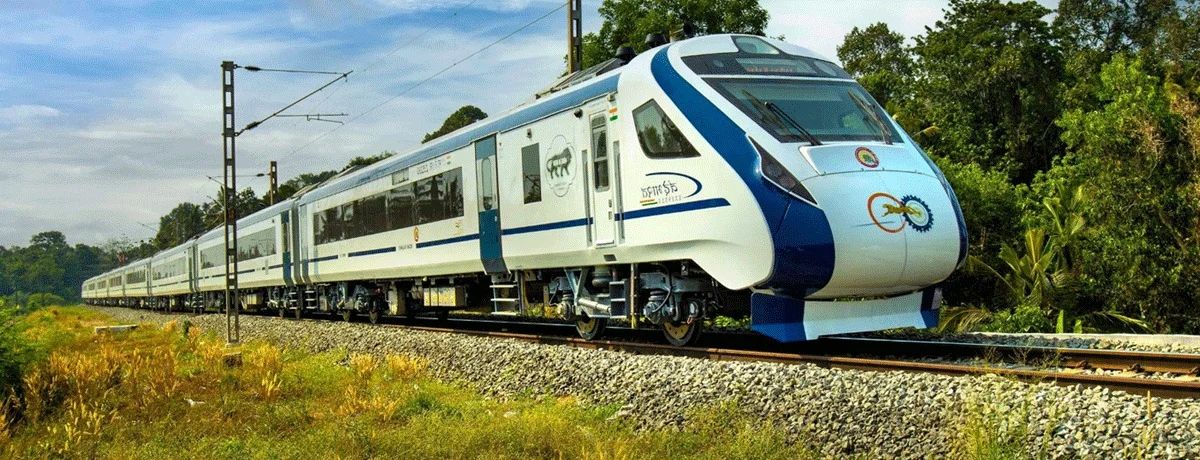
Indian Railways has approved ₹206 crore to install the indigenous "Kavach 4.0" safety system across 680 route kilometers in the Northern Railway zone. This automatic train protection technology aims to enhance operational safety by preventing collisions, as part of a broader nationwide initiative to modernize rail infrastructure for improved passenger security.
Indian Railways has sanctioned a ₹206 crore project to deploy the advanced Kavach 4.0 safety system across 680 kilometers of critical Northern Railway routes.
NEW DELHI — In a major move to enhance train safety and operational reliability, Indian Railways officially approved a ₹206 crore initiative on July 10, 2026, to implement its indigenous Automatic Train Protection (ATP) system, "Kavach," on key segments of the Northern Railway.
The project covers 680 route kilometers (RKm) spanning the Rewari–Delhi and Shakurbasti–Bathinda sections, along with associated feeder branch lines under the Delhi Division. This deployment marks a pivotal step in the nationwide modernization of railway infrastructure, as the organization continues to prioritize technology-driven solutions to mitigate risks and human error.
Expanding the Kavach Network
Kavach, an indigenously developed ATP system, is designed to serve as a critical safety net for India’s sprawling rail network. By continuously monitoring train movements, the system automatically engages brakes if a locomotive pilot fails to respond to safety warnings or signals.
According to the Ministry of Railways, Kavach Version 4.0—the latest iteration of the technology—offers superior positioning accuracy, faster communication, and improved signaling integration. Its primary objective is to prevent Signal Passed at Danger (SPAD) incidents and train collisions, ensuring that operations remain consistent even under challenging environmental conditions, such as dense fog.
Infrastructure and Operational Impact
Beyond the Kavach deployment, Indian Railways also sanctioned a separate ₹175 crore project on the same day to expand locomotive maintenance facilities in Raipur. This facility will provide "homing"—dedicated maintenance and upkeep—for 250 three-phase electric locomotives under the South East Central Railway (SECR).
Combined, these approvals represent a ₹381 crore investment aimed at modernizing India's rail assets. As passenger and freight traffic grows, these upgrades are expected to:
Enhance Safety: Drastically reduce the risk of collision through automated intervention.
Improve Efficiency: Allow trains to operate safely at maximum permissible speeds.
Boost Reliability: Modernize maintenance bases to ensure fleet readiness.
Why It Matters
For passengers and freight operators, this rollout represents a commitment to "zero-collision" operations. By automating critical safety decisions, Kavach mitigates the potential for human error—the leading cause of railway incidents. Furthermore, as a "Made in India" technology, the system reduces reliance on imported safety tech, fostering domestic innovation while creating a scalable model for the rest of the country's 3,103+ RKm already equipped with the system as of March 2026.
Key Facts at a Glance
Project Cost: ₹206 crore allocated for Kavach 4.0 deployment.
Scope: 680 route kilometers on the Rewari-Delhi and Shakurbasti-Bathinda sections.
Core Technology: Automatic Train Protection (ATP) system that prevents collisions and SPAD incidents.
System Version: Kavach 4.0, featuring enhanced signaling and communication capabilities.
FAQ
What is Kavach?
Kavach is India’s indigenous Automatic Train Protection (ATP) system designed to prevent train collisions and unauthorized signal passing through automatic braking.
Why is Kavach 4.0 significant?
It is the latest version of the technology, offering better reliability, faster data communication, and integration, making it more suitable for large-scale, high-speed rail deployment.
When will the project be completed?
While specific timelines are managed by regional zones, the project is part of an ongoing nationwide modernization drive intended to accelerate the installation of safety infrastructure across the Golden Quadrilateral and other high-density routes.
Source: Economic Times, Sarkaritel, Youtude