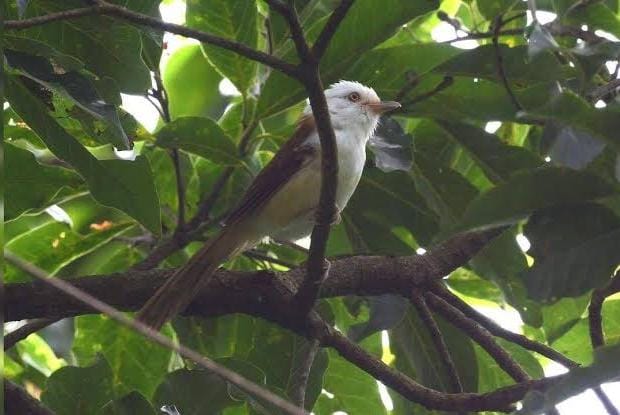
The white-hooded babbler has made a historic comeback in West Bengal after 95 years, documented near Rongtong by birder Sandeep Biswas. Unseen since 1931, the species relies on fragmented low-altitude bamboo groves. The discovery underscores the vital need for habitat protection along the Himalayan foothill corridor.
KOLKATA, India — A rare bird species long feared to have vanished from northern West Bengal has been documented in the wild for the first time in nearly a century. The white-hooded babbler (Gampsorhynchus rufulus), last recorded in the region in 1931, was photographed near Rongtong in the Himalayan foothills of Darjeeling district, confirming its continued presence in the eastern Himalayan biodiversity corridor.
The photographic evidence was captured during a birding expedition led by eBird reviewer Sandeep Biswas alongside co-birder Mitali Biswas and local guide Bikram Monda. The discovery marks the first documented record of the resident species in north Bengal after a 95-year gap, renewing scientific interest in the conservation of low-altitude bamboo ecosystems along the Terai belt.
Historical Context and Scientific Significance
The white-hooded babbler holds a historic presence in ornithological records of the Bengal Terai and eastern Himalayas. Historical specimens collected from Darjeeling and surrounding forests during the early 20th century remain preserved in global natural history museums. The last verified physical specimen from the state was collected by naturalist H. Stevens on January 15, 1931, at Tarkhola in the Teesta Valley.
Although documented in foundational regional ornithological literature by Salim Ali, S. Dillon Ripley, Pamela C. Rasmussen, and John C. Anderton, field sightings in West Bengal had ceased for decades, leading researchers to question its local status.
| Species Metric | Field Record Details |
| Common Name | White-hooded babbler |
| Scientific Name | Gampsorhynchus rufulus |
| Family | Pellorneidae |
| Primary Habitat | Low-altitude dense bamboo thickets |
| Last Prior Sighting | January 15, 1931 (Tarkhola, Teesta Valley) |
| Rediscovery Site | Rongtong outskirts, Darjeeling district |
Ecological Challenges and Habitat Requirements
Ornithologists attribute the long hiatus in sightings to the bird's specialized habitat preferences and cryptic behavior. The species relies heavily on dense, low-altitude bamboo thickets, a habitat type that has experienced fragmentation and reduced continuity across the lower reaches of the Mahananda Wildlife Sanctuary and broader foothills.
The white-hooded babbler remains resident in fragmented pockets extending across Bhutan, Northeast India, Bangladesh, Myanmar, and southwestern China. While classified globally as a species of Least Concern by the International Union for Conservation of Nature (IUCN), it is considered locally uncommon throughout its native distribution.
Official Sources Section
Ornithological data, historical records, and field documentation were verified through official research bodies and environmental networks:
Quote Section
According to official commentary from ornithological researchers following the sighting:
"The low continuity of low-altitude bamboo groves and the accessibility of these habitats are perhaps making sightings of this bird very difficult," stated Biswapriya Rahut, a founder member of the Birdwatchers' Society. "Perhaps, the birds were here but not sighted."
"Our birding guide Bikram Monda led us along the slopes as we were looking for a pale-headed woodpecker in the bamboo thickets when we accidentally came across this babbler," noted birder Sandeep Biswas, who captured the photograph.
Why It Matters
The rediscovery of the white-hooded babbler highlights the biological importance of preserving low-elevation forest tracts in the Himalayan foothills. For conservationists and forest officials, the confirmation of a breeding or resident population provides empirical justification for protecting contiguous bamboo habitats outside designated sanctuary zones. For eco-tourism and local guides in the Darjeeling foothills, renewed focus on rare avian species supports community-based conservation and wildlife tourism initiatives.
Key Facts at a Glance
Unseen Gap: The white-hooded babbler was re-photographed in West Bengal after 95 years of unconfirmed status.
Location: Sighted in bamboo thickets on the outskirts of Rongtong, Darjeeling district.
Last Historic Record: A specimen was last collected in the Teesta Valley on January 15, 1931.
Habitat Depletion: Specialist dependence on low-altitude bamboo groves contributed to its extended absence.
Conservation Need: Prompting requests for targeted field surveys across the Mahananda Wildlife Sanctuary corridor.
Frequently Asked Questions (FAQ)
What is the white-hooded babbler?
The white-hooded babbler (Gampsorhynchus rufulus) is a passerine bird species in the family Pellorneidae known for its distinct white head, thicket-dwelling habits, and reliance on bamboo vegetation.
When was the white-hooded babbler last seen in West Bengal?
Prior to the August 2026 photographic documentation in Rongtong, the last confirmed record from West Bengal was a physical specimen collected on January 15, 1931, in the Teesta Valley.
Why was the bird missing for nearly a century?
The species inhabits low-altitude bamboo groves that have suffered fragmentation. Its secretive nature in dense understory vegetation made field detection extremely difficult for wildlife researchers.
Source: Birdwatchers' Society, eBird India, Department of Forests, Government of West Bengal, The Times of India.