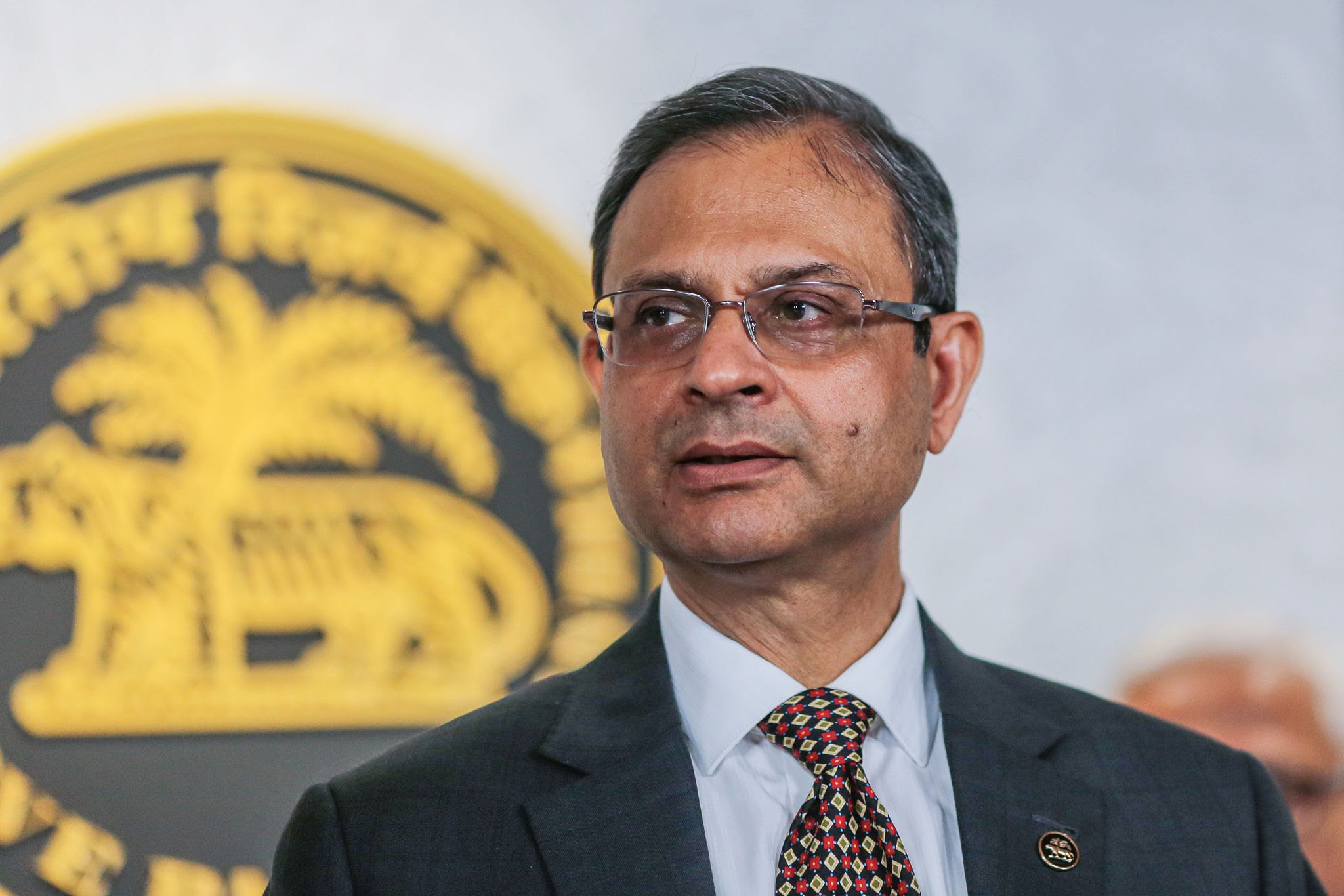
RBI Governor Sanjay Malhotra announced that domestic monetary frameworks are built around a baseline crude assumption of $95 per barrel. While standing ready to curb speculative trading in FX if required, the central bank restricted concessional currency swaps to infrastructure-focused PSUs and prohibited unapproved differential bank deposit interest rates.
MUMBAI, India — Reserve Bank of India (RBI) Governor Sanjay Malhotra on Friday formalized the central bank’s baseline macroeconomic projections, disclosing that its updated inflation and growth matrices assume an average global crude price of $95 per barrel. Speaking during an official briefing on June 5, 2026, Malhotra reconfirmed that the regulator is prepared to implement active measures to curb speculative trading in FX if required to maintain systematic capital alignment.
The monetary statement coincided with highly targeted policy clarifications regarding who qualifies for state-backed financial shock absorbers. Addressing questions on why recent concessional External Commercial Borrowing (ECB) currency swap arrangements exclude corporate groups, Governor Malhotra stated that extending these specialized liquidity windows to private entities risks dispersing economic benefits too thinly, failing to maximize public utility.
Strategic Restriction of ECB Swap Windows
The decision to limit the concessional foreign exchange swap facility strictly to Public Sector Undertakings (PSUs) reflects a deliberate prioritization of core national infrastructure. The central bank emphasizes that public infrastructure entities require targeted protection because their operations directly affect essential citizen services, utility grids, and structural development channels.
Governor Malhotra explained that private corporate treasuries are equipped with independent, diverse hedging mechanisms to navigate open-market currency shifts. By restricting the state-subsidized swap framework to public firms, the government prevents specialized public capital from subsidizing commercial private equity structures.
Enforcement Action on Differential Bank Deposit Rates
Turning to domestic banking operations, Governor Malhotra issued a stern warning regarding compliance with commercial interest mandates. The apex bank noted that while clear, consistent policies exist defining exactly when commercial deposits can carry differential interest rates based on tenure or bulk thresholds, non-permissible variations will face strict enforcement.
The central bank reiterated that any differential rate offered by a financial institution beyond what is strictly permitted under established statutory guidelines is unacceptable. Commercial inspectors have been ordered to increase auditing frequency to ensure retail savers and institutional depositors receive uniform treatment across all active commercial banking branches.
Corporate Developments: New CFO at Sungold Media
In a separate corporate development unfolding parallel to the macroeconomic updates, domestic media firm Sungold Media and Entertainment Limited announced a major restructuring of its executive leadership. The company confirmed via official stock exchange filings that it has appointed Amit Kotia as Chief Financial Officer (CFO), effective June 5, 2026.
The strategic leadership transition comes as small-and-medium enterprise (SME) platforms adjust their internal operational structures to meet tightening capital disclosure laws overseen by the market regulator.
Official Sources Section
The macroeconomic parameters, policy restrictions, and interest rate enforcement guidelines detailed in this coverage are drawn directly from the official monetary policy statement transcript released by the Reserve Bank of India (RBI). Corporate structural changes are verified via administrative compliance filings submitted to the BSE Limited by the secretarial desk of Sungold Media and Entertainment Limited.
Quote Section
"According to officials accompanying the governor during the monetary review, the $95 per barrel crude baseline serves as a prudent fiscal shield. It ensures that domestic consumer price calculations remain grounded even if international energy corridors face abrupt transport disruptions."
Why It Matters
For everyday consumers, businesses, and institutional investors, the RBI's tight stance on FX speculation and oil indexing helps stabilize local consumer product pricing. Setting a realistic, higher baseline for international crude at $95 per barrel ensures that national budgetary planning remains resilient against global oil shocks. Furthermore, the strict enforcement of standard interest rules protects general savers from misleading or unapproved bank deposit schemes.
Key Facts at a Glance
Oil Cost Indexing: The RBI's monetary forecasts are built on a baseline assumption of international crude oil stabilizing at $95 per barrel.
Targeted Swaps: Concessional ECB swap allocations remain strictly restricted to state-run PSUs to protect public utilities.
Speculation Alert: The central bank will proactively intervene to curb speculative trading in FX if market volatility spikes artificially.
Rate Compliance: The regulator declared any differential interest rate beyond permitted statutory limits completely unacceptable.
Corporate Appointment: Sungold Media and Entertainment formally appointed Amit Kotia as its new Chief Financial Officer.
FAQ Section
Q1: Why does the RBI assume global crude oil will average $95 per barrel?
Using a baseline of $95 per barrel allows the central bank to formulate conservative, resilient inflation and growth models that account for ongoing international geopolitical disruptions without underestimating import costs.
Q2: Why are private companies excluded from the concessional ECB swap window?
Governor Malhotra stated that private entities have access to commercial hedging tools, whereas public sector undertakings directly manage public utility infrastructure and require specific state protection to ensure stable public services.
Q3: What are the legal requirements for a bank to offer differential deposit rates?
Commercial banks can only offer differential interest rates on deposits if they strictly conform to uniform corporate parameters based on transparent deposit size brackets or specific time horizons explicitly pre-approved by the RBI.
Source: Reserve Bank of India Official Communications Desk and statutory listing disclosures filed with BSE Limited.