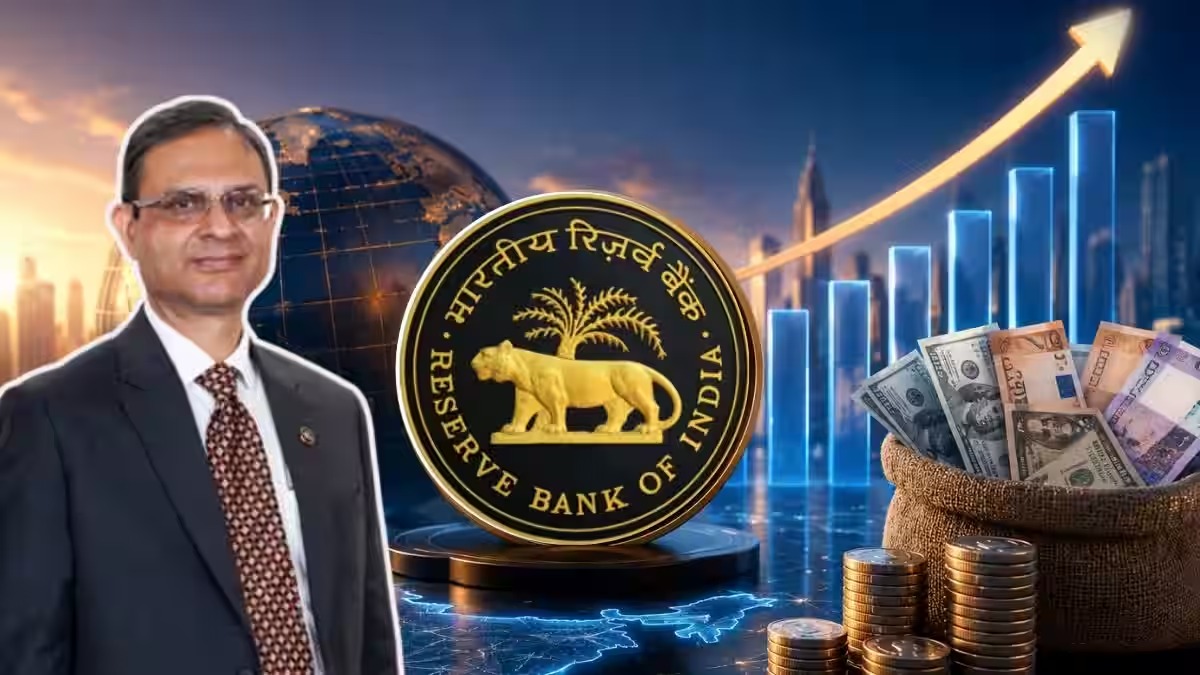
The Reserve Bank of India and the central government have launched aggressive structural reforms expected to draw $45-80 billion in foreign inflows. By expanding quota-free bond access, eliminating taxes on sovereign yields, and opening listed equities to global individuals, policymakers aim to reinforce the rupee amid ongoing global volatility.
MUMBAI — A sweeping package of coordinated financial measures unveiled by the Reserve Bank of India (RBI) and the central government could channel between $45 billion and $80 billion in fresh foreign inflows into the country's financial markets over the coming year. The joint regulatory blitz, announced alongside the June monetary policy review, aims to aggressively court international capital, fortify the domestic currency, and address a widening balance-of-payments gap amid heightened global macroeconomic uncertainty.
By combining systemic central bank liberalizations with targeted sovereign tax exemptions, policymakers are attempting to aggressively reverse recent capital flight without relying on destabilizing interest rate hikes. Financial institutions and market economists calculate that the cumulative policy adjustments could generate an immediate buffer of up to $5 billion in monthly foreign capital injections.
Sweeping Overhaul of Debt Market Frameworks
The cornerstone of the joint initiative involves a structural restructuring of how foreign portfolio investors (FPIs) interact with Indian sovereign debt markets. According to the monetary policy statement delivered by RBI Governor Sanjay Malhotra, the central bank has significantly expanded the universe of government securities (G-secs) eligible under the Fully Accessible Route (FAR).
The FAR framework which permits international entities to acquire designated sovereign debt without any quantitative investment ceilings will now encompass all newly issued long-term bonds across the 15-year, 30-year, and 40-year tenor categories throughout 2026. Prior to this adjustment, FAR eligibility was primarily concentrated within the 10-year and shorter maturities.
Furthermore, the central government has implemented a comprehensive income tax exemption for FPIs regarding interest and capital gains generated via these benchmark government securities. Market analysts project that this fiscal concession will boost net yields on Indian sovereign debt by approximately 15% to 20%, significantly enhancing the country’s profile ahead of deeper integrations into major emerging-market global bond indices.
Liberalization of Equity Rules for Non-Resident Individuals
Beyond sovereign debt, the policy intervention marks a fundamental shift in the accessibility of India's corporate equity landscape. The Ministry of Finance has authorized an expansive relaxation of investment restrictions targeting individual Persons Resident Outside India (PROIs).
Under the revised guidelines, overseas retail investors will be permitted to directly purchase listed domestic shares through the standardized Portfolio Investment Scheme (PIS) a regulatory avenue previously sequestered exclusively for Non-Resident Indians (NRIs) and Overseas Citizens of India (OCIs).
The operational adjustments enacted by the government include:
An increase in the individual investment cap for separate PROIs from 5% to 10% of a domestic company's total paid-up equity capital.
An elevation of the aggregate investment ceiling for all such overseas individual buyers within a single corporate entity, moving from 10% to 24%.
According to finance ministry briefs, the initiative leverages existing digital onboarding architectures to dramatically compress compliance times, aiming to anchor a sticky, diversified base of global retail shareholders within the National Stock Exchange and Bombay Stock Exchange ecosystems.
Easing Pressures on Capital Flows and the Rupee
The aggressive joint intervention follows sharp pressure on the Indian rupee, driven heavily by an escalating trade deficit and persistent capital flight. External tracking data from the National Securities Depository Limited (NSDL) reveals that foreign portfolio investors extracted nearly $14 billion from local capital markets during the current financial year, with the vast majority leaking out of the equity segment.
To immediately counter these pressures and buffer India's $682.3 billion foreign exchange reserves, Governor Malhotra introduced highly specialized, time-bound currency management mechanisms. Most notable is a concessional foreign exchange swap window tailored for public sector undertakings (PSUs) securing foreign currency via external commercial borrowings (ECBs), alongside an identical hedging subsidy provided to banks mobilizing long-term Foreign Currency Non-Resident (FCNR) deposits. Both credit facilities are scheduled to remain active until September 30, 2026.
Official Sources Section
The policy amendments, individual quota modifications, and regulatory updates were formalized via overlapping official announcements. These include the June 2026 Monetary Policy Statement broadcast by the Reserve Bank of India and parallel administrative circulars published by the Ministry of Finance.
Quote Section
Commenting on the rationale behind utilizing capital-flow liberalizations rather than altering the benchmark repo rate—which was held steady at 5.25% economists emphasized the strategic nature of the package.
"The RBI and government delivered a tightly coordinated effort towards shoring up capital flows into Indian assets to ease the pressure on the rupee," stated Sakshi Gupta, principal economist at HDFC Bank. "These measures should help bridge the $40-50 billion gap in the balance of payments estimated for FY27."
Why It Matters
For global fund managers, the policy changes eliminate significant regulatory bottlenecks and materially elevate net-of-tax returns on Indian yields. For domestic consumers and businesses, the anticipated influx of $45 billion to $80 billion offers a crucial structural safety net. By defending the rupee via capital account inflows rather than defensive domestic rate hikes, the RBI preserves local borrowing liquidity, preventing commercial loan rates from climbing further and keeping corporate credit accessible for expanding infrastructure and manufacturing operations.
Key Facts at a Glance
Projected Inflow Scale: Financial institutions estimate the total package could mobilize between $45 billion and $80 billion in international investment over 12 months.
Bond Market Opening: All new 15-, 30-, and 40-year government securities are now free of quantitative investment caps under the updated FAR guidelines.
Tax Concessions: The central government has completely exempted FPIs from income tax obligations on returns yielded by eligible sovereign bonds.
Equity Deregulation: Foreign retail individuals can now acquire up to 10% of an individual listed Indian firm's capital via the streamlined PIS pathway.
Deadline for Swap Facilities: The central bank's concessional dollar-rupee swap facilities for corporate borrowing and FCNR deposits will expire on September 30, 2026.
FAQ Section
1. What are the primary measures being taken to drive foreign inflows into India?
The primary measures include widening foreign investor access to long-term government bonds, removing investment sub-limits, eliminating income tax on sovereign debt returns, and doubling the permissible equity investment caps for foreign individuals in listed companies.
2. How much foreign capital is expected to enter the market from these changes?
Economic estimates from prominent banking institutions indicate that these combined reforms could attract between $45 billion and $80 billion in foreign inflows over the fiscal year, translating to roughly $5 billion in monthly capital additions.
3. What is the Fully Accessible Route (FAR) expansion?
The FAR allows overseas investors to buy Indian government debt without any upper limit constraints. The expansion extends this privilege to all newly issued 15-year, 30-year, and 40-year sovereign bonds issued during 2026.
4. How do these financial reforms directly impact domestic consumers?
By using foreign capital inflows to support the rupee, the RBI avoids having to raise domestic interest rates to defend the currency. This keeps local home loans, car loans, and business borrowing costs lower than they otherwise would be.
Source: Official regulatory briefs, monetary policy statements, and statutory notifications released by the Reserve Bank of India (RBI) and the Ministry of Finance.