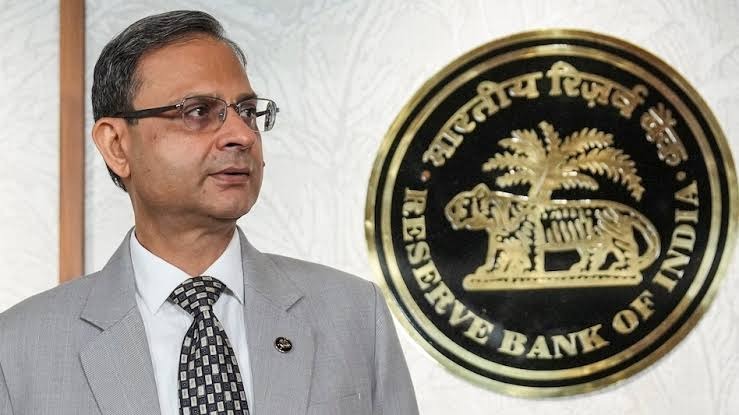
The Reserve Bank of India's Monetary Policy Committee voted to keep the benchmark repo rate unchanged at 5.25 percent with a neutral stance during its August 2026 review. Governor Sanjay Malhotra emphasized ongoing vigilance against inflation risks, ensuring stable loan EMIs and predictable financial conditions nationwide.
Reserve Bank of India Governor Sanjay Malhotra announced the central bank's decision to hold benchmark interest rates steady amid evolving inflation dynamics.
Overview of India's August 2026 Monetary Policy
MUMBAI — The Reserve Bank of India (RBI) Monetary Policy Committee (MPC) voted unanimously to keep the policy repo rate unchanged at 5.25 percent during its bi-monthly review on August 5, 2026.
Announcing the decision, RBI Governor Sanjay Malhotra stated that the central bank will maintain its neutral policy stance. The resolution follows a detailed evaluation of domestic macroeconomic indicators, global trade volatility, and shifting inflation trajectories influenced by seasonal food prices and international crude oil movements.
Alongside the benchmark repo rate, the central bank opted to retain the Standing Deposit Facility (SDF) rate at 5.0 percent, while keeping the Marginal Standing Facility (MSF) rate and the bank rate steady at 5.5 percent.
Macroeconomic Context and Inflation Assessment
The decision to maintain status quo reflects a cautious approach as policymakers balance robust economic growth against lingering price pressures. Recent retail inflation figures crossed the central bank's targeted 4 percent threshold, prompting the MPC to emphasize continued vigilance.
Governor Malhotra noted that while overall economic activity remains resilient, external uncertainties—including geopolitical tensions and global commodity price swings—necessitate a flexible yet steady monetary framework. The committee evaluated high-frequency indicators confirming steady domestic demand, providing sufficient headroom to pause and monitor incoming macroeconomic data.
Impact on Borrowers, Businesses, and Financial Markets
For retail borrowers, the decision ensures immediate stability, as home, auto, and corporate loan equated monthly installments (EMIs) will remain unaffected. Commercial enterprises and industrial planners gain predictable borrowing costs, allowing for uninterrupted capital expenditure execution.
Meanwhile, fixed deposit holders can expect stable interest rate structures across commercial banks. Equity and debt markets responded with measured stability, as the outcome aligned closely with consensus forecasts from major financial institutions.
Official Sources Section
The policy announcements, monetary resolutions, and forward-looking economic assessments are based on official statements and regulatory documents published by the Reserve Bank of India (RBI).
Quote Section
"According to officials and Governor Sanjay Malhotra, the Monetary Policy Committee unanimously decided to keep the policy repo rate unchanged at 5.25 percent, maintaining a neutral stance to anchor inflation expectations while supporting sustainable economic expansion."
Why It Matters
Maintaining benchmark interest rates at 5.25 percent prevents sudden financial shocks for consumers while safeguarding the banking sector's liquidity health. For investors and policymakers, the RBI’s neutral stance preserves the agility required to navigate unpredictable global trade policies and weather patterns in the months ahead.
Key Facts at a Glance
Repo Rate Unchanged: The benchmark policy repo rate is maintained at 5.25 percent.
Standing Deposit Facility: Retained at 5.0 percent.
MSF and Bank Rate: Kept steady at 5.5 percent.
Policy Stance: The MPC continues with a neutral monetary stance to evaluate incoming economic data.
FAQ Section
What is the current RBI repo rate?
The benchmark repo rate stands unchanged at 5.25 percent following the August 2026 monetary policy review.
Will my home loan EMI change after the August 2026 policy?
No. Because the repo rate was held steady, existing retail loan EMIs linked to external benchmarks will remain unaffected.
Why did the RBI choose to keep rates on hold?
The central bank cited the need to monitor evolving inflation trends, global geopolitical uncertainties, and seasonal monsoon patterns before adjusting rates.
Where can I read the full RBI monetary policy statement?
Complete regulatory filings and Governor Sanjay Malhotra's address are available directly on the official Reserve Bank of India web portal.
Source: Reserve Bank of India, Reuters