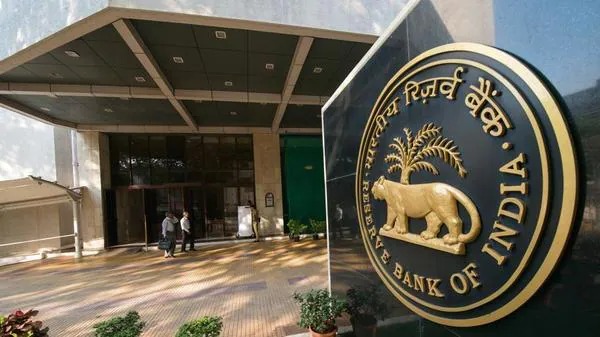
The Reserve Bank of India announced that commercial banks' cash balances stood at 8.11 trillion rupees on July 16, 2026. While the government's surplus auction cash remained steady at 184.25 billion rupees, lenders drew 57.41 billion rupees via the MSF window, indicating localized overnight funding pressure within the interbank network.
MUMBAI — The Reserve Bank of India (RBI) confirmed that commercial banks' cash balances reached a total of 8.11 trillion rupees on July 16, 2026. According to standard liquidity data released by the central bank on Friday, July 17, 2026, domestic lenders experienced a notable surge in overnight borrowing metrics alongside a moderate reduction in sovereign surplus holdings. The latest operational disclosure highlights the evolving liquidity management strategy enforced by the RBI to anchor short-term interbank lending rates while balancing broad economic growth concerns against persistent core inflation parameters in Asia's third-largest economy.
Heavy Emergency Window Tapping Points to Distribution Asymmetry
A deeper examination of the central bank's operational report shows a sharp rise in short-term emergency window reliance. On July 16, Indian banks borrowed 57.41 billion rupees through the RBI's Marginal Standing Facility (MSF). The MSF serves as a critical safety valve, allowing scheduled commercial banks to borrow overnight capital by dipping into their statutory liquidity ratio (SLR) portfolios at a premium rate above the standard repo threshold.
Money market analysts note that the concurrent rise in total banks' cash balances to 8.11 trillion rupees and increased MSF reliance signals unequal liquidity distribution across the domestic banking system. While large public sector institutions hold substantial structural surplus funds, smaller private lenders and foreign institutions face short-term funding gaps, forcing them to access the central bank's emergency windows to resolve daily settlement mismatches.
Central Government Surplus Cash Drops Prior to Auctions
The monetary brief also detailed a reduction in public treasury reserves. The Indian government’s surplus cash balance held with the RBI for auction purposes stood at 184.25 billion rupees as of July 16. This metric represents the available capital the central government stores with the monetary authority that can be temporarily re-injected into the interbank ecosystem via variable rate reverse repo (VRRR) auctions.
Concurrently, commercial institutions drew 100.84 billion rupees through the central bank's standard daily refinance windows, reflecting active demand for structured liquidity support. Fixed income strategists suggest that the current scale of the government surplus indicates high tax collection distributions alongside steady infrastructure spending, preventing a major drain on systemic liquidity.
Official Sources Section
All operational banking figures, systemic cash balances, and credit facility metrics are compiled directly from the statistical market operations ledger published by the Reserve Bank of India (RBI) and cross-verified against treasury settlement releases prepared by the Ministry of Finance.
Quote Section
"According to officials familiar with central treasury operations, the current macro numbers reflect standard mid-quarter tax payment cycles," a fixed-income trading head at a major public sector bank stated. "The high total banks' cash balances confirm that systemic liquidity is not under structural duress, though localized resource constraints will keep the MSF window active over the near term."
Why It Matters
The underlying trends within the central bank's liquidity matrix introduce direct practical implications for multiple market sectors:
For Corporate Borrowers: Unequal liquidity distribution across commercial institutions could lead to higher short-term commercial paper costs as smaller banks protect their cash reserves.
For Fixed Income Investors: Steady government surplus balances reduce the need for sudden government debt buyback interventions, supporting stability in short-term sovereign bond yields.
For Banking Consumers: High total banks' cash balances mean retail lending institutions retain adequate loan processing capacity, minimizing the immediate need to adjust retail deposit interest rates.
Key Facts at a Glance
Aggregate Reserves: Indian banks' cash balances hit 8.11 trillion rupees during the July 16 operational cycle.
Emergency Demand: Commercial lenders pulled 57.41 billion rupees from the high-premium Marginal Standing Facility (MSF).
Public Treasury Stash: The central government's surplus cash balance available for market auction was reported at 184.25 billion rupees.
Refinance Outlays: Active usage of the standing refinance facility amounted to 100.84 billion rupees.
FAQ Section
What do high banks' cash balances mean for the economy?
It shows the total volume of liquid funds commercial banks hold with the central bank. High levels indicate strong broad liquidity, lowering the risk of a systemic credit crunch.
Why do banks use the Marginal Standing Facility (MSF) if systemic cash is high?
The MSF is utilized by individual lenders facing short-term liquidity mismatches at the end of the clearing day, often because cash is unevenly distributed across the banking sector.
How does the government's surplus cash balance affect everyday markets?
When the government maintains a lower cash balance with the RBI, more money remains active within the commercial banking system, helping keep short-term loan rates stable.
Source: Reserve Bank of India (RBI) Data Release, Ministry of Finance Treasury Reports, Clearing Corporation of India (CCIL) Transaction Summaries.