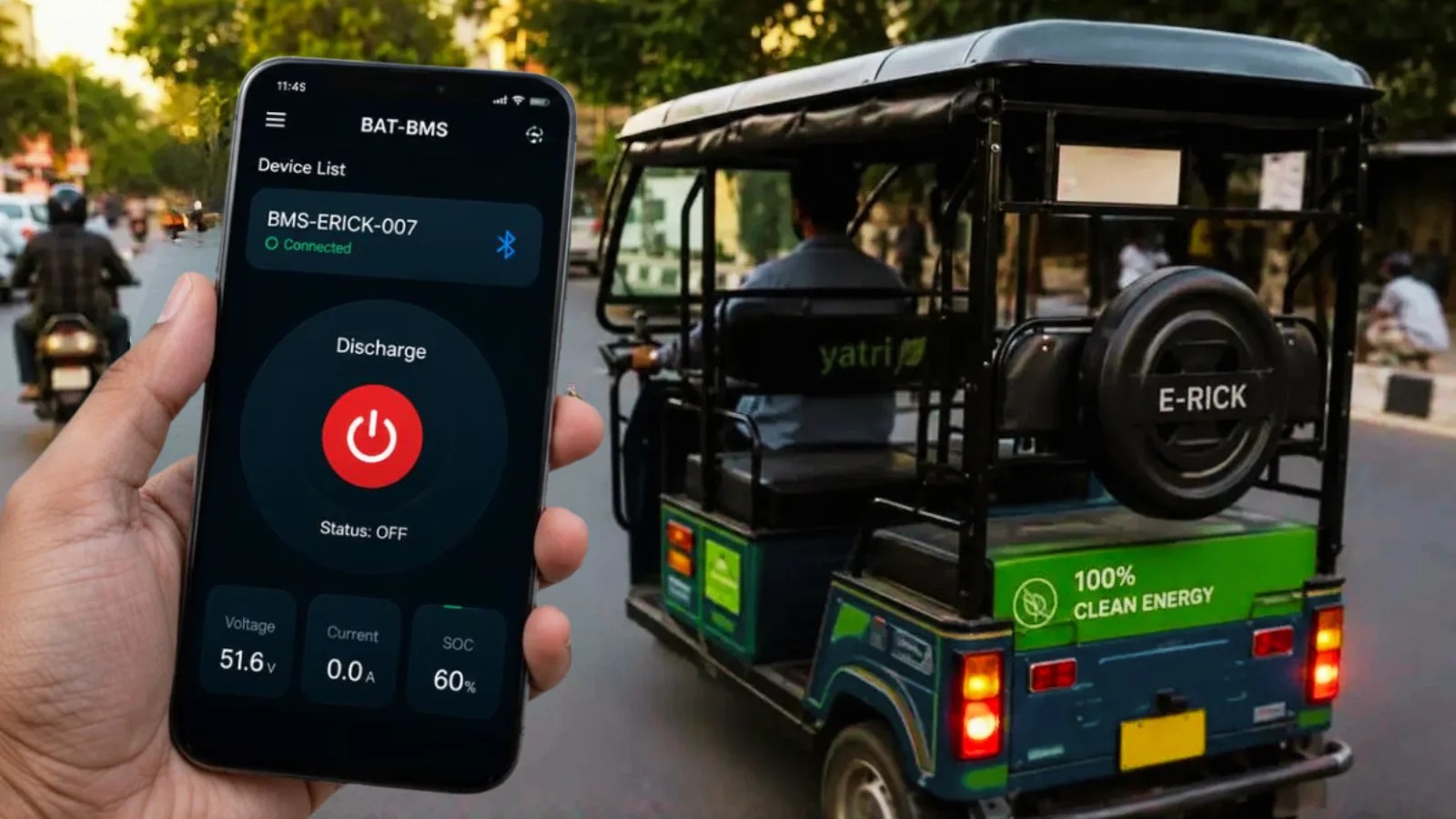
India's cyber agencies issued an urgent cybersecurity warning regarding unverified battery management systems in e-rickshaws. Cheap imported components lack basic encryption, enabling hackers to remotely execute firmware changes that can cause vehicles to stall simultaneously or bypass vital thermal safety controls, threatening urban transport networks.
NEW DELHI — India’s primary cyber intelligence agencies have issued an urgent cybersecurity warning targeting the nation's rapidly expanding commercial electric vehicle fleet. The specialized dynamic alert, broadcasted on Friday, July 17, 2026, details severe hardware vulnerabilities embedded within the electronic battery management systems (BMS) of imported smart components.
Security experts have traced multiple cases where hundreds of urban e-rickshaws suddenly stalled simultaneously across critical logistics zones. Initial technical diagnostics point to foreign-sourced microcontrollers capable of executing unauthorized firmware changes. Because these localized low-speed public transit fleets form the structural backbone of last-mile urban transport, a large-scale cyber disruption risks halting public mobility across major metropolitan hubs.
Smart Components Exposed to Remote Interdiction
The underlying danger highlighted in the cybersecurity warning centers on the digital architecture of modern Lithium-ion and advanced battery packs. To ensure thermal safety, cellular balance, and efficient charging, modern battery units rely heavily on a Battery Management System. A BMS functions as an integrated circuit board loaded with custom microcontrollers that monitor voltage, heat levels, and discharge rates.
However, a vast majority of the low-speed e-rickshaws operating across Tier-1 and Tier-2 Indian cities are assembled via unorganized gray-market channels. These assemblers regularly procure unvetted, ultra-low-cost BMS units fitted with integrated Internet-of-Things (IoT) modules or Bluetooth controllers sourced from overseas hubs.
Cybersecurity researchers have demonstrated that these components frequently contain hardcoded administrative credentials and unencrypted transmission ports. This structural flaw allows remote bad actors to scan local wireless networks, inject malicious firmware overrides, and systematically alter safety shutoff configurations, forcing vehicles to lock up during live operation.
Disruption Potential for Last-Mile Logistics Infrastructure
The tactical implications of a coordinated vehicular cyber attack extend beyond standard digital data theft. India's low-speed three-wheeler ecosystem represents one of the fastest-growing EV spaces globally, accounting for over 50% of the country's total electric vehicle registration base.
If foreign operators exploit these security gaps to compromise charging hubs or vehicle batches simultaneously, the practical fallout could cripple major distribution arteries. Modern intra-city courier networks, fresh produce suppliers, and short-distance public transit systems depend heavily on small-scale electric fleets.
Furthermore, altered thermal thresholds within compromised BMS units present direct physical safety hazards. Malicious actors could theoretically disable automatic temperature limiters during rapid charging cycles, significantly increasing the probability of short-circuits and structural battery fires inside congested public charging centers.
Official Sources Section
The engineering parameters and localized vulnerability assessments are compiled according to public threat advisories circulated by the Indian Computer Emergency Response Team (CERT-In) and regulatory safety guidelines maintained by the Ministry of Heavy Industries.
Quote Section
"According to officials at state cyber defense units, the dependency on unvetted, generic communication chipsets introduces a clear blind spot in our national smart transport framework," a principal threat architect at a public data security lab stated. "If we do not enforce absolute encryption standards on internal vehicle networks, these battery systems can easily be transformed into tools for localized economic disruption."
Why It Matters
The escalation of hardware-level vulnerabilities introduces urgent challenges across the urban landscape:
For Fleet Fleet Operators: Commercial transit owners face sudden operational downtime, asset damage, and financial losses if unverified vehicle batches are targeted by remote lockouts.
For Everyday Passengers: Daily commuters face sudden trip cancellations and safety risks if low-cost three-wheelers experience abrupt power failures on busy thoroughfares.
For Component Manufacturers: Domestic tech developers must rapidly accelerate production of secure, localized chipsets to replace cheap, unencrypted foreign imports before strict compliance mandates take effect.
Key Facts at a Glance
The Core Alert: CERT-In issued an urgent cybersecurity warning regarding unencrypted battery management systems in low-speed electric vehicles.
Primary Threat Vector: Cheap, imported BMS circuits use insecure communication ports that allow remote firmware modification.
Physical Hazard: Hackers can remotely alter thermal cutoff parameters, which increases the risk of dangerous battery fires.
Economic Scale: Low-speed three-wheelers comprise over half of all operational electric vehicles deployed across India.
FAQ Section
How can a vehicle battery be vulnerable to a cybersecurity attack?
Modern electric vehicle batteries use smart Battery Management Systems (BMS) with wireless chips to track performance. If these chips lack proper encryption, unauthorized users can access the system and alter operational settings.
What happens to an e-rickshaw if it gets compromised?
A hacked vehicle can be forced into a sudden safety shutdown, stalling it completely in traffic. In extreme cases, its internal temperature overrides could be disabled, leading to severe battery overheating.
How can fleet operators protect their electric vehicles from these threats?
Operators should source vehicles from certified manufacturers who use encrypted, verified BMS components, perform regular hardware checks, and avoid generic, unbranded replacement parts from the gray market.
Source: Indian Computer Emergency Response Team (CERT-In), Ministry of Heavy Industries, Society of Manufacturers of Electric Vehicles (SMEV) Security Briefings.