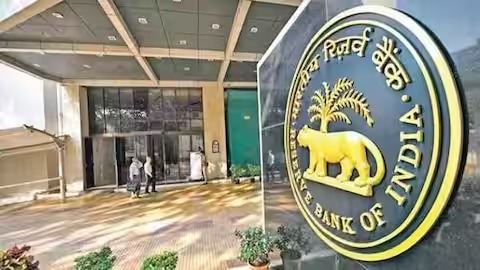
The Reserve Bank of India has fixed the underwriting commission for its July 10 sovereign bond auction at 0.0066 rupee for the 2066 tranche and 0.0027 rupee for the 2031 tranche. The low commission rates reflect high dealer confidence and strong market demand ahead of the government's ₹32,000 crore debt issuance.
MUMBAI — The Reserve Bank of India (RBI) has finalized the cut-off rates for the underwriting commission payable to Primary Dealers (PDs) participating in the upcoming sale of federal government bonds. In an official operational summary released on July 10, 2026, the central bank locked the underwriting commission for the ultra-long 2066 maturity bonds at 0.0066 rupee per 100 rupees of notified face value.
Concurrently, the central bank established a lower underwriting commission of 0.0027 rupee per 100 rupees for the medium-term 2031 sovereign debt tranche. The aggressive bidding by primary dealers, resulting in thin commission margins, signals strong market appetite and minimal subscription risk for the government’s scheduled ₹32,000 crore market borrowing installment.
Technical Allocation Breakdown Across Bond Maturities
According to technical notices uploaded via the Reserve Bank of India (RBI) core e-Kuber banking software architecture, the underwriting auction was finalized using a multiple price-based competitive bidding mechanism. The central bank divided the total funding requirements across two distinct maturity corridors to cater to differing institutional investment horizons:
The 2031 Maturity Tranche: Officially designated as the 6.36% Government Security (GS) 2031, this paper carries a primary notified issuance target of ₹21,000 crore.
The 2066 Maturity Tranche: Classified as the 7.71% GS 2066, this ultra-long capital asset has a target threshold of ₹11,000 crore.
The low cut-off rates for the underwriting commission show that financial institutions are highly comfortable absorbing this major debt supply without demanding extra risk premiums. The entire fee allocation is scheduled to be credited to the primary dealers' current institutional accounts on the formal settlement date of July 13.
Strong Foreign Demand Cushions Heavy Government Supply
Debt market analysts note that the low pricing for this underwriting commission comes during a heavy period of federal debt issuance. The government has set its first-half gross market borrowing target for the current fiscal cycle at approximately ₹8.20 lakh crore. Typically, such substantial supply puts upward pressure on yields, forcing primary dealers to demand higher safety fees to guarantee the debt sale.
However, this supply pressure is being actively balanced by record foreign portfolio investment (FPI) demand. Following India's inclusion in major global emerging market bond indexes and recent tax exemptions on long-term capital gains, overseas funds have consistently increased their sovereign debt allocations. This growing international demand has helped the domestic market smoothly absorb large weekly debt offerings.
Official Sources Section
The underlying allocation statistics, minimum commitments, and commission schedules are verified directly through the Financial Markets Operations department at the RBI Central Office in Mumbai. All procedures comply with the structural framework guidelines updated under the statutory Public Debt Act protocols.
Quote Section
"According to officials keeping tabs on daily money market counters, the highly competitive bidding for this week's underwriting commission indicates that dealers see very little risk of under-subscription," trading desk summaries noted. "The strong demand from long-term institutional buyers, such as domestic insurance funds and international index trackers, continues to provide a solid baseline for smooth government debt operations."
Why It Matters
The cost of this underwriting commission serves as an important early indicator of stability for the broader financial sector. When primary dealers accept thin commission margins, it shows the market can smoothly handle government borrowing without pushing interest rates higher. For regular consumers and retail borrowers, this structural stability helps prevent sudden spikes in home loans, vehicle financing, and corporate lending rates, supporting steady credit access across the domestic economy.
Key Facts at a Glance
2066 Commission Rate: Fixed at 0.0066 rupee per 100 rupees of face value.
2031 Commission Rate: Established at 0.0027 rupee per 100 rupees of face value.
Total Auction Volume: The underlying sovereign debt sale targets an aggregate allocation of ₹32,000 crore.
Core Drivers: Steady domestic institutional buying and strong foreign portfolio inflows help smooth supply pressures.
FAQ Section
What is the role of an underwriting commission in government bond sales?
The underwriting commission is a fee paid by the central bank to Primary Dealers for guaranteeing the full sale of government securities, protecting the state against the risk of an incomplete auction.
Why are the commission rates for the 2066 bonds higher than the 2031 bonds?
Longer-term bonds generally carry higher commission rates because ultra-long maturities carry more inflation and interest rate risk over their extended lifecycles.
How do foreign portfolio inflows affect these bond auctions?
Strong foreign portfolio inflows add significant fresh capital to the domestic debt market. This helps absorb large government bond offerings and allows dealers to commit to low underwriting fees.
Source: Underwriting Auction Operations Index, Reserve Bank of India market statistics portal.