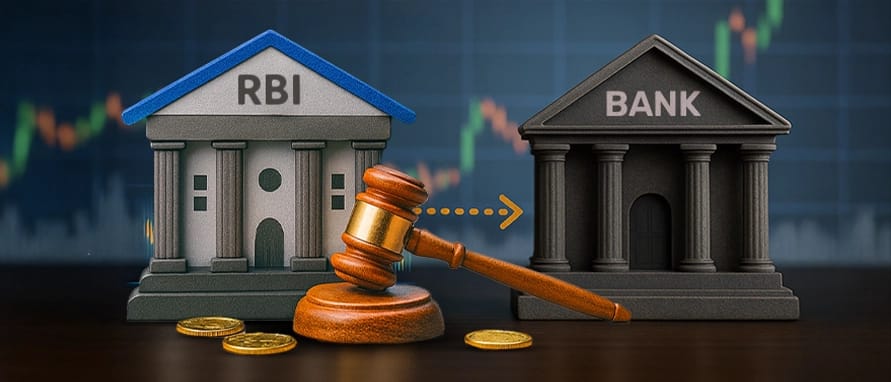
The Reserve Bank of India announced a 4-day Variable Rate Reverse Repo (VRRR) auction worth ₹1.50 trillion, scheduled for August 06, 2026. Designed to absorb temporary liquidity surpluses from commercial banks, the auction window will open from 09:30 AM to 10:00 AM, with funds returning to the system on August 10, 2026.
MUMBAI — The Reserve Bank of India (RBI) announced on Wednesday, August 05, 2026, that it will conduct a four-day Variable Rate Reverse Repo (VRRR) auction under its Liquidity Adjustment Facility (LAF) on August 06, 2026, to manage short-term liquidity conditions in the financial system. The central bank has set a notified amount of ₹1,50,000 crore ($1.50 trillion) for the auction. The move comes following a periodic review of current and evolving liquidity dynamics in the Indian banking sector, aiming to maintain stability in overnight call money rates and prevent excess liquidity from distorting money market yields.
Operational Details of the VRRR Auction
The central bank outlined the specific operational parameters for the liquidity-absorption mechanism in an official communication issued from its Mumbai headquarters.
Auction Date: Thursday, August 06, 2026.
Notified Amount: ₹1,50,000 crore (1.50 trillion Indian Rupees).
Tenor: 4 Days.
Bidding Window: 09:30 AM to 10:00 AM IST on August 06, 2026.
Reversal Date: Monday, August 10, 2026.
According to the official release, the operational guidelines for this VRRR auction remain unchanged from the revised liquidity management framework issued by the central bank in its Press Release dated February 13, 2020. Eligible financial institutions and commercial banks will submit their bids during the designated half-hour window through the central bank's electronic bidding system.
Banking System Liquidity and Financial Context
The Variable Rate Reverse Repo is a primary tool utilized by the central bank under the Liquidity Adjustment Facility to pull excess cash out of the banking ecosystem for a specified duration. When commercial banks hold surplus funds that are not immediately deployed into credit markets or interbank lending, they place these funds with the central bank through VRRR auctions to earn interest at competitive rates determined by the auction process.
The decision to hold a 4-day auction absorbing ₹1.50 trillion reflects an accumulation of systemic cash surplus, often driven by government spending distributions, sustained deposit growth across scheduled commercial banks, or reduced demand for short-term credit lines. By conducting a VRRR auction with a reversal date aligned with the following Monday, the RBI ensures that money market rates stay closely aligned with the benchmark policy repo rate, reducing volatility across overnight interbank call rates, Treps (Triparty Repo), and short-term commercial paper yields.
Market Impact on Banks, Investors, and Borrowers
The liquidity mop-up operation has direct operational implications across multiple segments of the financial sector:
Commercial Banks: Scheduled commercial banks with surplus cash balances can secure fixed overnight returns from the central bank, optimizing their short-term treasury management ahead of the weekend.
Short-Term Money Markets: By temporarily removing ₹1.50 trillion from circulation, the RBI prevents overnight interbank lending rates from falling below the lower bound of the liquidity corridor, reinforcing monetary policy transmission.
Bond Markets and Yields: The absorption of excess funds stabilizes short-duration treasury bills and money market instrument yields, preventing premature easing of financial conditions before official policy adjustments.
Retail Consumers and Borrowers: While short-term VRRR auctions primarily affect wholesale money markets, maintaining balanced systemic liquidity prevents sudden liquidity crunches that could otherwise lead to temporary spikes in retail lending rates.
Official Sources Section
The announcement was formally communicated through Press Release 2026-2027/817 issued on August 05, 2026, by Ajit Prasad, Deputy General Manager (Communications) at the Reserve Bank of India Central Office in Fort, Mumbai. All guidelines governing submission timings, allocation methodology, and fund settlement adhere strictly to the central bank's regulatory framework established on February 13, 2020.
Quote Section
According to official central bank statements released by the Department of Communication:
"On a review of the current and evolving liquidity conditions, it has been decided to conduct a Variable Rate Reverse Repo (VRRR) auction on Thursday, August 06, 2026... The operational guidelines for the auction as given in the Reserve Bank's Press Release dated February 13, 2020, will remain the same."
Why It Matters
The RBI's active liquidity management ensures that overnight market rates remain anchored near the policy rate. When banking system liquidity runs in heavy surplus, overnight lending rates tend to crash below the policy floor, diluting the central bank's intended monetary stance. By conducting targeted 4-day VRRR auctions, the RBI fine-tunes systemic cash levels without committing to permanent liquidity drains, providing flexibility as liquidity conditions shift heading into the next week.
Key Facts at a Glance
Total Auction Value: ₹1,50,000 crore (₹1.50 trillion).
Auction Date & Time: August 06, 2026, from 09:30 AM to 10:00 AM IST.
Duration: 4-day tenor, with reversal scheduled for Monday, August 10, 2026.
Regulatory Authority: Reserve Bank of India (RBI) under the Liquidity Adjustment Facility framework.
FAQ Section
What is a Variable Rate Reverse Repo (VRRR) auction?
A VRRR auction is a liquidity management tool used by the central bank to absorb excess funds from commercial banks for a set period at market-determined variable interest rates.
Why is the RBI conducting a 4-day VRRR auction on August 06, 2026?
The RBI is conducting the auction following a review of current liquidity conditions to manage excess cash surplus in the banking system and stabilize short-term interest rates.
When will the funds absorbed in this auction be returned to banks?
The funds will be returned on the reversal date of Monday, August 10, 2026.
How does this VRRR auction affect retail banking customers?
The operation primarily targets institutional treasury liquidity and overnight interbank rates, ensuring overall financial stability without directly altering retail loan or deposit rates in the immediate term.
Source: Official press release issued by the Reserve Bank of India.