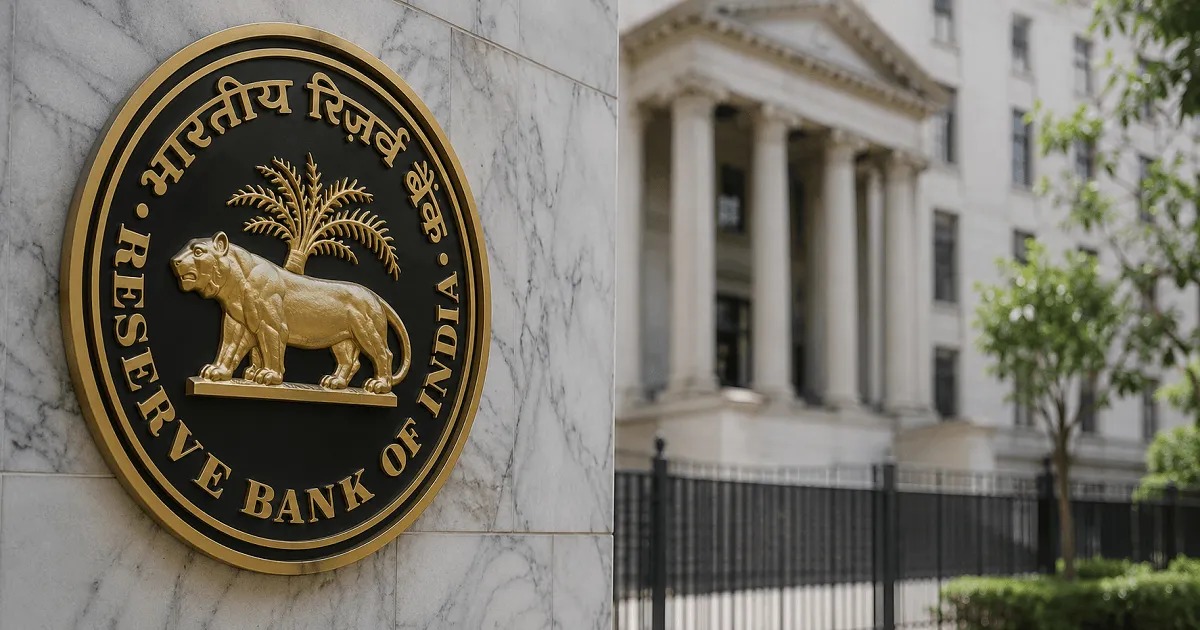
The Reserve Bank of India has issued the Capital Adequacy Sixth Amendment Directions for Small Finance Banks alongside the Third Amendment Directions for NBFCs. Enforced under Section 35A, the policies update risk-weight protocols to protect balance sheets and maintain systemic stability across specialized credit industries.
MUMBAI — In a major regulatory intervention aimed at balancing institutional solvency with market growth, the Reserve Bank of India (RBI) has issued updated prudential directives targeting small finance banks and non-banking lenders. The monetary authority has officially introduced the Reserve Bank of India (Small Finance Banks - Prudential Norms on Capital Adequacy) Sixth Amendment Directions, 2026, alongside the corresponding Reserve Bank of India (Non-Banking Financial Companies - Prudential Norms on Capital Adequacy) Third Amendment Directions, 2026.
The synchronized amendments refine the calculation of capital reserves and adjust risk weights for specialized financial assets, establishing stricter regulatory parameters to shield depositors and creditors from market volatility.
Technical Balancing of Capital Sufficiency Guidelines
The central bank's twin interventions were released directly from its regulatory headquarters in Mumbai under Section 35A of the Banking Regulation Act, 1949. The structural revisions modify the core prudential frameworks established during previous operational cycles, forcing small finance banks (SFBs) and non-banking financial companies (NBFCs) to implement more transparent risk assessments on their balance sheets.
Under the updated sixth amendment directions for small finance banks, the monetary authority has altered how lenders evaluate capital charges against off-balance-sheet items and counterparty credit risks. Financial institutions must integrate these adjusted risk-weight parameters into their internal auditing workflows immediately to maintain an accurate Capital to Risk-Weighted Assets Ratio (CRAR).
Restructuring Credit Parameters and Risk Arbitrage
The simultaneous rollout of the third amendment directions for NBFCs focuses heavily on closing historical risk loopholes in co-lending segments, credit guarantees, and digital retail exposures. As non-banking financial institutions capture an expanding slice of India's retail loan market, the RBI is enforcing tighter provisioning frameworks to ensure these fast-moving lenders hold adequate tier-1 capital buffers.
The adjusted directions mandate a disciplined approach to evaluating unrated commercial credit lines. Corporate loans over specific banking thresholds that lack formal credit validation will face strict risk-weight penalties. This move ensures that mid-tier lenders cannot artificially inflate their lending capacities while carrying under-hedged risk profiles on their balance sheets.
Operational Impact on Borrowers and Investors
For institutional portfolio managers and market analysts tracking financial stocks on the National Stock Exchange of India (NSE) and the BSE India Corporate Database, these updates provide clearer transparency regarding the asset quality of micro-lenders. Lenders with thin capital buffers may need to raise additional equity capital over the coming quarters to satisfy the updated requirements.
For the public, including retail consumers and small business owners, the stricter rules prevent structural liquidity drops in the shadow banking sector. While the updated risk metrics may prompt micro-finance institutions to tighten their loan-approval criteria for unrated corporate applications, the overall framework guarantees a safer deposit environment across the domestic retail grid.
Official Sources Section
All underlying regulatory clauses, statutory sections, financial ratios, and institutional definitions cited across this economic report have been sourced directly from the official notification registries maintained within the Reserve Bank of India Regulatory Database. Additional reporting data follows standard corporate listing metrics managed by the National Stock Exchange of India (NSE).
Quote Section
"According to officials familiar with the central bank’s latest policy dispatch, the twin prudential amendments are designed to enforce absolute capital discipline across alternative credit platforms. The technical adjustments ensure that small finance banks and non-banking entities retain uniform risk-weight buffers, protecting the wider banking ecosystem from localized credit defaults."
Why It Matters
For common market participants and depositors, these technical adjustments mean that specialized local banks and non-banking finance firms are legally mandated to back their loan portfolios with real, verifiable capital reserves. By eliminating risk arbitrage between traditional commercial banks and niche regional micro-lenders, the central monetary authority prevents systemic defaults, fostering long-term stability across India's financial architecture.
Key Facts at a Glance
Regulating Body: Reserve Bank of India (RBI).
Core Enactments: SFB Capital Adequacy Sixth Amendment and NBFC Capital Adequacy Third Amendment Directions, 2026.
Statutory Baseline: Enforced using supervisory powers granted under Section 35A of the Banking Regulation Act, 1949.
Primary Objective: Tightens capital calculation parameters and refines risk-weight treatments for off-balance-sheet exposures.
FAQ Section
Why did the RBI issue these capital adequacy amendments?
The central bank issued these directions to update capital adequacy parameters for small finance banks and NBFCs, aligning localized credit-risk models with broader international prudential safety benchmarks.
Will these updated rules make it harder for small businesses to get loans?
The guidelines may lead to stricter credit assessments for large, unrated corporate borrowers. However, standard retail lines, micro-loans, and verified priority-sector small business accounts are expected to see stable loan processing.
How do these rules protect retail depositors at Small Finance Banks?
By refining CRAR calculation rules, the RBI ensures that SFBs maintain an accurate and visible capital buffer against their actual lending risks, protecting public deposits from asset depreciation.
Source: Reserve Bank of India (RBI), National Stock Exchange of India (NSE) Regulations Desk.