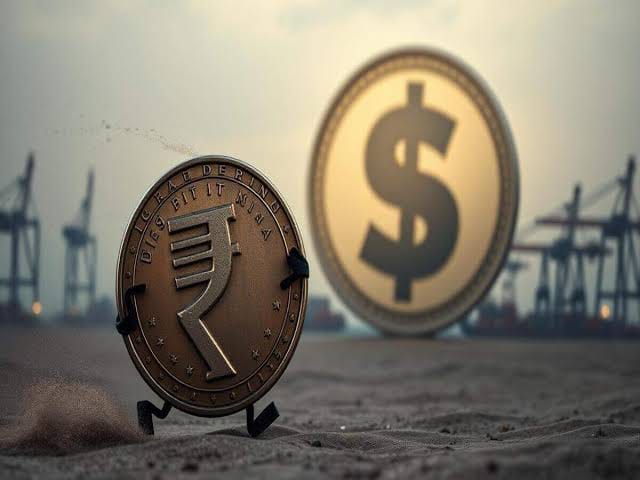
A Reuters poll of foreign exchange strategists released on August 5, 2026, projects the Indian rupee will trade at 95.25 per U.S. dollar through end-October 2026 and end-January 2027. Active central bank management and capital-account measures are expected to keep the currency stable despite global economic uncertainties.
MUMBAI — The Indian rupee is projected to trade at 95.25 per U.S. dollar by the end of October 2026 and maintain that same level through end-January 2027, according to the latest Reuters poll of foreign exchange strategists released on Wednesday, August 5, 2026. Foreign exchange analysts surveyed in the comprehensive industry poll indicate that while the local currency has experienced fluctuations throughout the first half of the year, active liquidity management by the Reserve Bank of India (RBI) and coordinated fiscal measures are expected to anchor the exchange rate within a narrow trading band over the next two quarters.
The forecast comes at a crucial juncture for South Asia's largest economy as policymakers navigate international trade developments, shifting energy import bills, and evolving monetary policies across major Western central banks.
Reuters Survey Highlights Stable Exchange Rate Trajectory
The monthly Reuters survey, which gathered projections from dozens of currency analysts and institutional economists between late July and early August 2026, shows a broad consensus that volatility in the Indian rupee will remain subdued compared to earlier in the year.
After swinging between a low of 89.86 and a record high of 96.84 per U.S. dollar during the first half of 2026, the Indian rupee has stabilized in recent weeks. Market strategists attribute this range-bound outlook to the central bank's substantial foreign exchange reserves, which allow monetary authorities to cushion sharp currency swings caused by global market disruptions.
Key survey findings and exchange projections include:
End-October 2026 Target: Median projection of 95.25 per U.S. dollar.
End-January 2027 Target: Median projection of 95.25 per U.S. dollar.
12-Month Horizon: Projections suggest potential modest strengthening depending on trade negotiations and global interest rate adjustments.
Historical Context: Follows first-half trading swings that saw the Indian rupee touch an all-time low of 96.84 in May 2026 before recovering.
Macroeconomic Drivers Behind Currency Expectations
Several key fundamental factors underpin the median forecasts reported in the Reuters poll. Global crude oil prices remain a dominant driver for the Indian rupee, given India's reliance on imported energy to meet domestic demand. Lower or stabilized international crude prices typically ease the nation's trade deficit, supporting the domestic currency.
Simultaneously, the Reserve Bank of India’s decision to maintain its policy repo rate at 5.25% has preserved interest rate differentials relative to Western central banks. Furthermore, recent capital-account liberalisation measures introduced by the RBI—including expanding foreign portfolio investor access to government securities and easing foreign currency deposit norms—have helped attract foreign capital inflows to offset trade headwinds.
However, analysts noted that structural headwinds persist. Ongoing trade tariff discussions with international partners and slowing global growth continue to cap significant sharp appreciation for the Indian rupee in the immediate term.
Economic Impact on Businesses, Investors, and Consumers
A stable foreign exchange environment around 95.25 per U.S. dollar carries wide-ranging implications across domestic economic sectors:
Importers and Manufacturers: Predictable currency levels reduce hedging costs for industrial importers purchasing raw materials, machinery, and electronic components denominated in U.S. dollars.
Exporters: A steady exchange rate around 95.25 allows Indian textile, IT services, and pharmaceutical exporters to plan pricing structures without sudden margin erosion from currency swings.
Non-Resident Indians (NRIs): Remittance flows back to India are expected to remain steady, offering reliable converted values for families receiving funds domestically.
International Travelers and Students: Families funding overseas education or foreign travel face stable currency conversion rates through late 2026 and early 2027.
Equity and Bond Investors: Reduced currency risk encourages steady foreign portfolio investment (FPI) into Indian capital markets listed on domestic stock exchanges.
Official Sources Section
The exchange rate projections and economic survey findings were released by Reuters. Macroeconomic background statistics and monetary policy settings are reported according to official publications by the Reserve Bank of India (RBI), the Ministry of Finance, and market trading statistics from BSE Limited and the National Stock Exchange of India (NSE).
Quote Section
According to currency strategists and economists participating in the survey:
"The Reuters poll consensus reflects a market belief that the Reserve Bank of India will continue using its foreign exchange reserves to curb sharp volatility. A steady exchange rate around 95.25 provides needed predictability for importers and corporate treasuries while domestic economic growth normalizes."
Why It Matters
Exchange rate stability is vital for maintaining domestic price stability and investor confidence in South Asia's primary economic hub. When the Indian rupee trades within a controlled corridor, headline inflation remains protected from severe imported inflation shocks, enabling domestic businesses to execute multi-quarter investment projects with certainty.
Key Facts at a Glance
October 2026 Forecast: Indian rupee expected to trade at 95.25 per U.S. dollar.
January 2027 Forecast: Median target held flat at 95.25 per U.S. dollar.
Primary Drivers: RBI market intervention, crude oil price trends, and interest rate differentials.
Policy Rate Context: RBI repo rate stands at 5.25% with a neutral monetary stance.
Trade Context: Capital account liberalisation measures continue supporting portfolio flows.
Frequently Asked Questions (FAQ)
Q1: What is the projected value of the Indian rupee against the U.S. dollar for late 2026?
According to the latest Reuters poll, the Indian rupee is forecast to trade at 95.25 per U.S. dollar by end-October 2026 and remain at that level through end-January 2027.
Q2: What factors are preventing sharp depreciation of the Indian rupee?
Active Reserve Bank of India foreign exchange interventions, capital account liberalisation measures, and manageable domestic inflation are cushioning the currency against external shocks.
Q3: How does a stable exchange rate affect retail consumers in India?
Currency stability prevents unexpected price increases on imported consumer goods, electronics, and fuel, helping keep household budgets predictable.
Q4: Where can official foreign exchange data and policy announcements be verified?
Official currency statistics and policy releases are available on the official portal of the Reserve Bank of India (RBI) and market platforms like BSE Limited.
Source: Reuters, Reserve Bank of India (RBI), Ministry of Finance, National Stock Exchange of India (NSE), BSE Limited