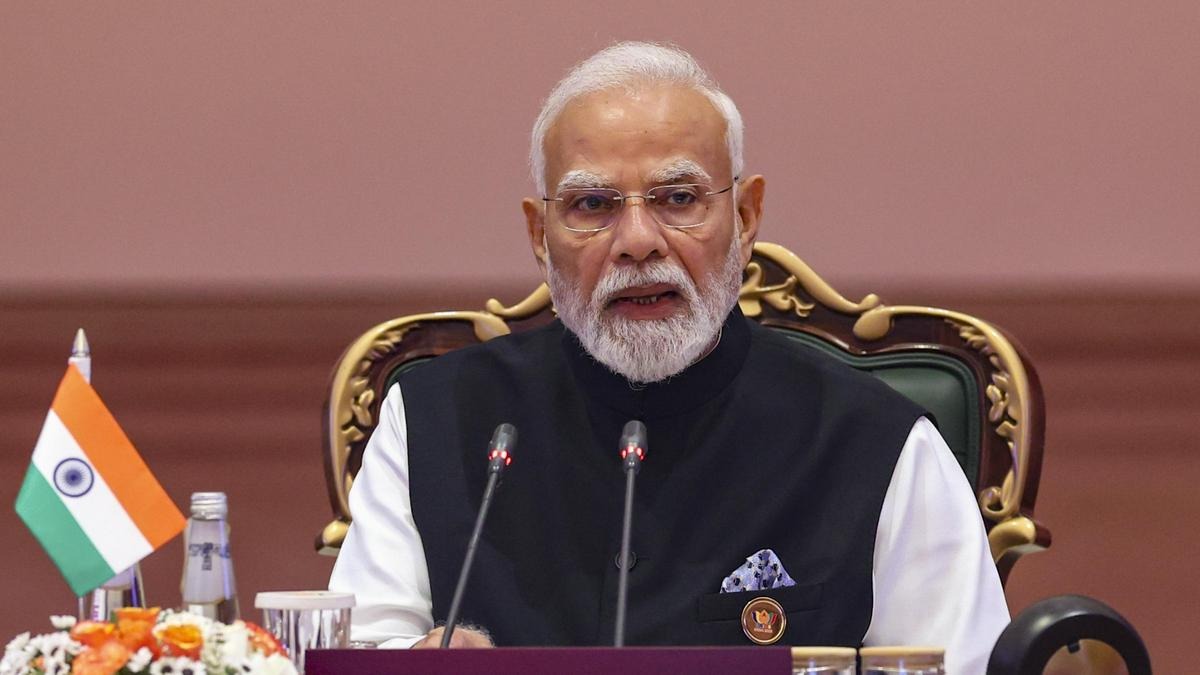
Prime Minister Narendra Modi delivered a compelling address at the 18th BRICS Summit in New Delhi, urging developing nations to transition from "rule-takers" to "rule-shapers." Proposing a comprehensive governance reform roadmap, Modi emphasized restructuring the United Nations Security Council and amplifying the voice of the Global South.
Prime Minister Narendra Modi calls for structural global governance reforms, urging developing nations to transition from rule-takers to rule-shapers.
Opening the 18th BRICS Summit in New Delhi on September 12, 2026, Prime Minister Narendra Modi delivered a sharp critique of existing international architectures, arguing that the Global South remains relegated to the background of critical decision-making. Addressing leaders from member states under the summit's core theme of resilience, innovation, and cooperation, PM Modi stressed that developing nations must shift from being passive "rule-takers" to active "rule-shapers". The high-level gathering convenes key international figures to evaluate multilateral framework updates, supply chain security, and equitable economic governance.
Dismantling the 'Pyramid of Privilege'
Characterizing current multilateral governance as a "pyramid of privilege," PM Modi noted that developing economies bear the brunt of global crises while lacking proportional influence in major international bodies. To rectify this imbalance, he proposed a comprehensive 10-point roadmap focused on three pillars: Representation, Responsiveness, and Rule-making.
On representation, the Prime Minister asserted that reform of the United Nations Security Council (UNSC) can no longer be delayed. He called for structural updates within international financial institutions to ensure voting rights and leadership positions reflect contemporary economic weights. Regarding rule-making, PM Modi emphasized that emerging sectors—including artificial intelligence, cyberspace, outer space, and biotechnology—require equal participation from the Global South to prevent future digital and technological disparities.
Institutional Efficiency and Global Impact
Marking the 20th anniversary of the BRICS formation, PM Modi urged the bloc to evolve past annual symbolic dialogues into a mechanism of continuous execution. He introduced a proposal for a BRICS Continuity and Implementation Mechanism to preserve momentum across rotational chairmanships. Furthermore, addressing frontline economic participants, he proposed a Seafarers' Emergency Support Network to protect international transport crews navigating conflict or crisis zones.
According to official summit communiqués and ministerial press statements released by the Ministry of External Affairs, Government of India, the grouping remains committed to inclusive multilateralism without functioning as an adversarial or exclusionary bloc.
"According to officials, the New Delhi declaration seeks to consolidate emerging market cooperation while providing developing nations with legal training, negotiation frameworks, and institutional enforcement tools."
Key Facts at a Glance
Event: 18th BRICS Summit, hosted in New Delhi on September 12–13, 2026.
Core Proposal: A 10-point roadmap focusing on representation, responsiveness, and rule-making for the Global South.
Key Focus Areas: UN Security Council reform, critical technology governance, and a new BRICS implementation mechanism.
Grouping Scope: Represents major emerging economies aiming to foster South-South cooperation.
Frequently Asked Questions
What did PM Modi mean by 'rule-takers to rule-shapers'? He emphasized that developing nations must transition from merely complying with global rules set by Western powers to actively participating in drafting future international frameworks.
What specific reforms were proposed at the 2026 BRICS Summit? PM Modi outlined a 10-point roadmap targeting UNSC restructuring, equitable voting power in financial institutions, and advanced tech governance.
Where can official summit documents and updates be tracked? Official briefings and declarations are published via the Ministry of External Affairs, Government of India portal.
Is BRICS positioned as an anti-Western alliance? Leadership statements clarify that BRICS operates through consensus and is "not against anyone," prioritizing cooperative multilateral development.
Source: Ministry of External Affairs (MEA), India, United Nations Office for South-South Cooperation (UNOSSC)