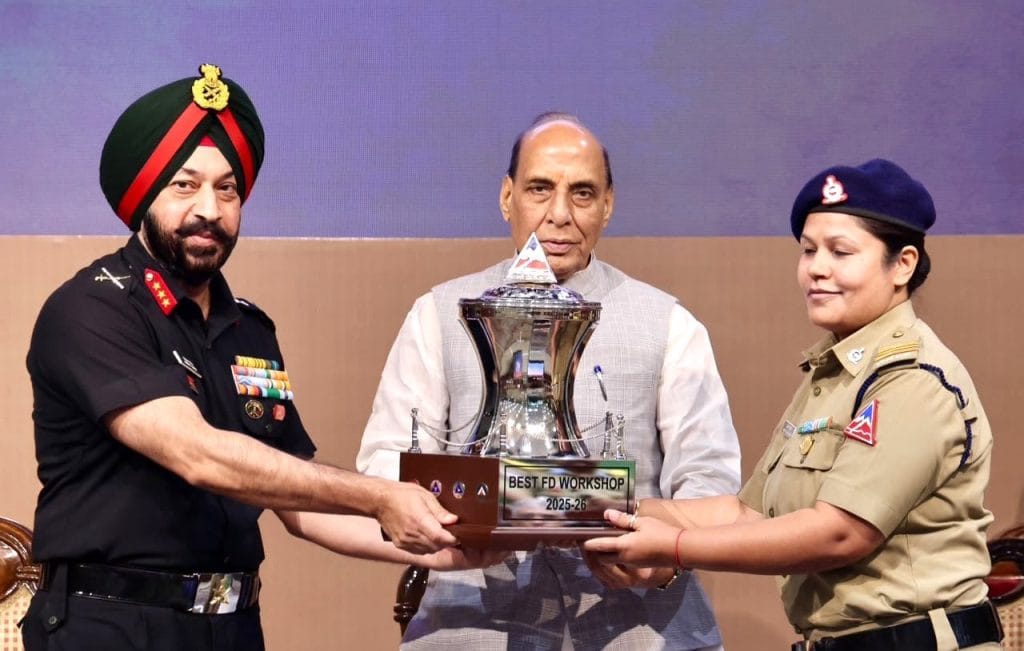
Defence Minister Rajnath Singh stated at the BRO Conclave that strategic roads and tunnels remain as crucial as advanced weapons in modern warfare. Emphasizing technology-driven infrastructure, he highlighted digital platforms, AI planning, and the Vibrant Village Programme as keys to strengthening national security and border area connectivity.
NEW DELHI, India — Indian Defence Minister Rajnath Singh declared on July 16, 2026, that strategic infrastructure like roads, tunnels, ports, and airfields are just as vital to military success as advanced weapons systems and precision technologies. Speaking at the Border Roads Organisation (BRO) Strategic Infrastructure Conclave in New Delhi, Singh emphasized that while modern warfare increasingly relies on cutting-edge military platforms, the ability to rapidly mobilize troops and deploy equipment through robust infrastructure will continue to dictate operational readiness. The development signals a intensified focus on securing remote frontiers amidst evolving geopolitical friction along India's borders.
The Indispensable Frontline of Border Infrastructure
The two-day conclave, which commenced on July 15, 2026, under the theme "Enhancing Capability through Technology, Innovation and Execution Excellence," served as a policy platform to evaluate emerging engineering methodologies. Addressing senior military leadership, policymakers, and industry partners, Singh stated that basic logistical channels remain central to enabling all military operations.
According to the Defence Minister, the first front of a war is frequently not at the border itself, but on the roads that transport soldiers to the frontline. Consequently, the personnel tasking themselves with constructing these pathways act as crucial guardians of national security alongside active combat troops.
The government highlighted that over the past six and a half decades, the BRO has evolved from a conventional road construction agency into one of the world's most prominent strategic infrastructure organizations. Singh pointed to landmark engineering achievements such as the Atal Tunnel, Sela Tunnel, and the high-altitude Umling La Pass road as definitive proof of India's capacity to build in the world's harshest environmental terrains.
Technological Shifts and Digital Transformation in Defence Logistics
To address future challenges, the Ministry of Defence is steering the BRO through an organizational overhaul heavily reliant on advanced digital tools and automation. During the conclave, the Defence Minister officially launched two digital platforms designated for automated project management and streamlined recruitment to improve institutional speed and monitoring transparency.
The strategic capability of the nation, according to military officials, is no longer measured solely by physical volume, but by how intelligently infrastructure is planned, how rapidly it is executed, and how sustainably it is maintained. To achieve this, the government is incorporating several key modernization fields:
Artificial Intelligence: Implementing AI-enabled solutions for real-time project monitoring and predictive structural assessments.
Advanced Tunnelling Techniques: Deploying specialized machinery that has revolutionized highway development in mountainous borders.
Digital Planning: Collaborating with industry partners and academia to introduce modern mechanization and digital mapping workflows.
Impact on Border Communities: The Vibrant Village Programme
Beyond the immediate military context, the accelerated focus on strategic connectivity directly alters the lives of local citizens inhabiting remote border regions. Singh reiterated the administration's policy under the Vibrant Village Programme, which seeks to transform border settlements—previously regarded as the country's "last villages"—into India's "first villages".
By establishing all-weather road, rail, air, and digital connectivity, the initiative prevents remote populations from feeling cut off from the mainstream economic narrative. The government asserts that building robust infrastructure today ensures a resilient civilization for centuries to come, directly boosting local commerce, safety, and rural stabilization.
Official Sources Section
The declarations and technological frameworks discussed were detailed in an official press release issued by the Ministry of Defence on July 16, 2026. Additional operational highlights were documented across three new BRO publications released by the minister: Path Pradarshak, Oonchi Sadken, and Path Vikas.
Quote Section
Addressing the audience at the conclave, Defence Minister Rajnath Singh stated:
"Even as state-of-the-art weapons and platforms are being inducted into the defence forces to address the challenges posed by the evolving nature of warfare, ports, airfields, roads and tunnels will continue to play an indispensable role in the future. Sometimes, the first front of a war is not at the border itself, but on the road that leads our soldiers to the frontline."
Why It Matters
The shift toward technology-driven border infrastructure indicates that India is altering its defensive posture along its frontiers. Rather than treating remote logistics as secondary to firepower, robust all-weather connectivity is now integrated into proactive combat readiness. For business logistics, engineering firms, and regional populations, this ensures long-term capital investments, specialized technological contracts, and heightened safety protocols along key northern and eastern borders.
Key Facts at a Glance
Core Assertion: Ports, tunnels, and airfields are as vital to modern military success as precision weapons.
Digital Integration: The BRO launched two new digital platforms for advanced project management and recruitment tracking.
Flagship Projects: Atal Tunnel, Umling La Pass, and Sela Tunnel were cited as benchmarks of modern engineering capability.
Strategic Vision: The infrastructure layout aligns with the 'Vibrant Village Programme' to develop border communities.
FAQ Section
What was the main focus of the BRO Conclave in July 2026?
The conclave focused on incorporating technology, innovation, and execution excellence to build resilient and future-ready strategic infrastructure across challenging border terrains.
How is the Border Roads Organisation utilizing technology for project management?
The BRO is integrating digital planning, AI-enabled solutions, and advanced automated construction methodologies, alongside launching custom digital platforms to monitor project progress.
What is the purpose of the Vibrant Village Programme mentioned by the minister?
The program aims to upgrade infrastructure in remote border villages, transforming them into seamlessly connected regions so local populations remain securely integrated with the country's mainstream economy.
Source: Ministry of Defence, Government of India, Border Roads Organisation Corporate Announcements