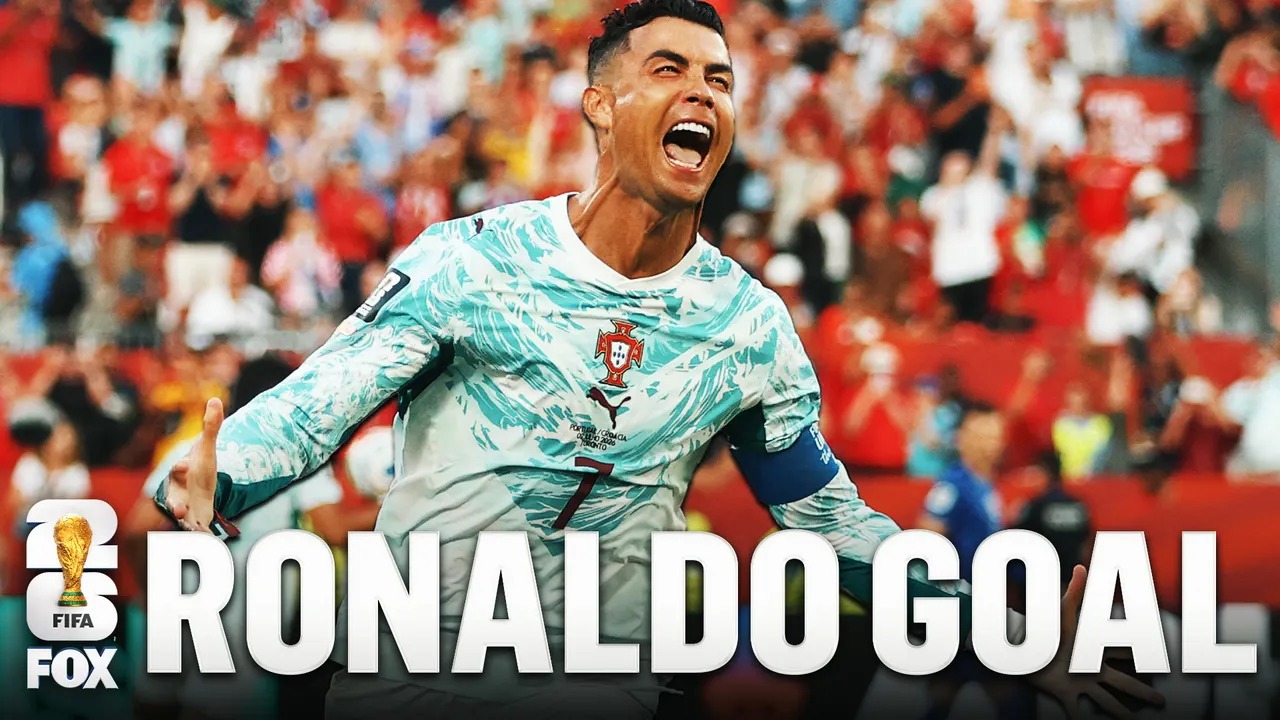
Cristiano Ronaldo scored his first-ever career World Cup knockout stage goal from the penalty spot as Portugal defeated Croatia 2–1 in Toronto. The 41-year-old became the oldest knockout goalscorer in history before a late Gonçalo Ramos header and a VAR offside call sealed Portugal's Round of 16 spot.
TORONTO — Portugal captain Cristiano Ronaldo scored his first-ever career FIFA World Cup knockout goal on Thursday, July 2, 2026, leading his nation to a dramatic 2–1 comeback victory over Croatia in the Round of 32. The high-stakes match at the Toronto stadium saw the 41-year-old icon break a career-long knockout stage drought before being strategically substituted minutes later. A stoppage-time header by Gonçalo Ramos and a last-second VAR offside decision ultimately secured Portugal's advancement to the Round of 16, keeping Ronaldo's international career alive for at least one more match.
Historical Landmarks and Tactical Adjustments
The intense summer clash between two European heavyweights quickly transformed into a physical tactical battle. Croatia struck first in the 53rd minute when veteran winger Ivan Perišić capitalised on a clinical counter-attack, beating Portugal goalkeeper Diogo Costa to put the Vatreni ahead. Facing immediate elimination, Portugal manager Roberto Martínez executed an aggressive quadruple substitution, introducing Gonçalo Ramos, Bernardo Silva, Nélson Semedo, and Francisco Conceição to overhaul the offensive shape.
The pressure culminated in the 68th minute when Renato Veiga was pulled down in the penalty area by Croatia’s Nikola Vlašić. Following a swift VAR check, the referee pointed to the penalty spot. Ronaldo confidently stepped forward, blasting his penalty straight down the middle to level the match.
At 41 years and 147 days old, the strike officially established Ronaldo as the oldest goalscorer in FIFA World Cup knockout-stage history, eclipsing the previous records held by Lionel Messi and Bosnia's Edin Džeko. Minutes later, in the 78th minute, Martínez made a bold tactical choice, substituting the legendary captain for defensive midfielder Rúben Neves to stabilize the defensive midfield corridor against late Croatian transitions.
Late Drama and Controversial VAR Interventions
The final minutes of the match provided intense tournament drama. In the fourth minute of stoppage time, Rafael Leão collected a pass from Veiga, burst past his marker on the flank, and delivered an inch-perfect cross into the area. The substituted Gonçalo Ramos timed his run perfectly, powering a header past Croatian goalkeeper Dominik Livaković to give Portugal a 2–1 advantage.
Croatia launched an immediate response. Deep into the final seconds of added time, Joško Gvardiol bundled the ball into the net following a dangerous Perišić cross, sparking wild celebrations on the Croatian bench. However, the referee halted play to consult the semi-automated offside technology network.
The VAR system established that Mario Pašalić had drifted marginally beyond the second-to-last Portuguese defender before participating in the active phase of play. The goal was subsequently ruled out, leaving Croatia devastated at the final whistle.
Official Sources Section
The statistics, match timelines, structural milestones, and roster specifications utilized in this sports brief are compiled directly from:
Quote Section
"Cristiano Ronaldo stepped up when the pressure was highest. Scoring his first-ever World Cup knockout goal at 41 is a testament to his unmatched longevity. The substitution was a tactical necessity to protect the transition lines, and it ultimately paid off with Gonçalo's late winner."
— Roberto Martínez, Head Coach, Portugal National Team
"According to tournament officials, the semi-automated offside technology provided clear sensory data confirming the offside infraction in the final second, justifying the intervention despite the intense emotional weight of the moment."
Why It Matters
The historic knockout result introduces critical shifts across the international sports grid:
For Football History: Ronaldo shatters the psychological narrative of never scoring in a World Cup knockout game across six tournament appearances.
For Fans and Spectators: Global viewers are treated to an Iberian blockbuster, with Portugal advancing to face rivals Spain in a marquee Round of 16 clash in Dallas.
For Technical Coaching: Martínez's bold decision to substitute his star captain highlights a modern shift toward analytical, system-first management over individual sentimentality.
Key Facts at a Glance
Drought Shattered: Cristiano Ronaldo scored the first World Cup knockout stage goal of his career from the penalty spot.
Age Record: At 41 years and 147 days, he becomes the oldest outfield player to ever score in a men's World Cup knockout round.
Tactical Switch: Ronaldo was substituted in the 78th minute for Rúben Neves just ten minutes after equalizing.
VAR Drama: A last-second Croatia equalizer by Joško Gvardiol was overturned for offside via semi-automated tracking systems.
FAQ Section
Why had Cristiano Ronaldo never scored a World Cup knockout goal before this match?
Despite being the all-time leading goalscorer in international football history, Ronaldo had previously appeared in 8 World Cup knockout matches across five tournament editions without finding the net, with all his prior World Cup goals occurring during the group stages.
Why did coach Roberto Martínez decide to substitute Ronaldo so quickly after he scored?
Following the equalizer, Croatia aggressively pushed numbers forward into the attacking third. Martínez substituted Ronaldo in the 78th minute for a defensive midfielder to lock down the midfield center, an analytical adjustment that paid off when fresh attacker Gonçalo Ramos scored the winner.
When and where will Portugal play their next match in the tournament?
Portugal will travel to Dallas on Monday, July 6, 2026, to face reigning European champions Spain in a highly anticipated Round of 16 clash.
Source: FIFA Tournament Media Portal, Portuguese Football Federation (FPF), Reuters Sports, IFFHS Database.