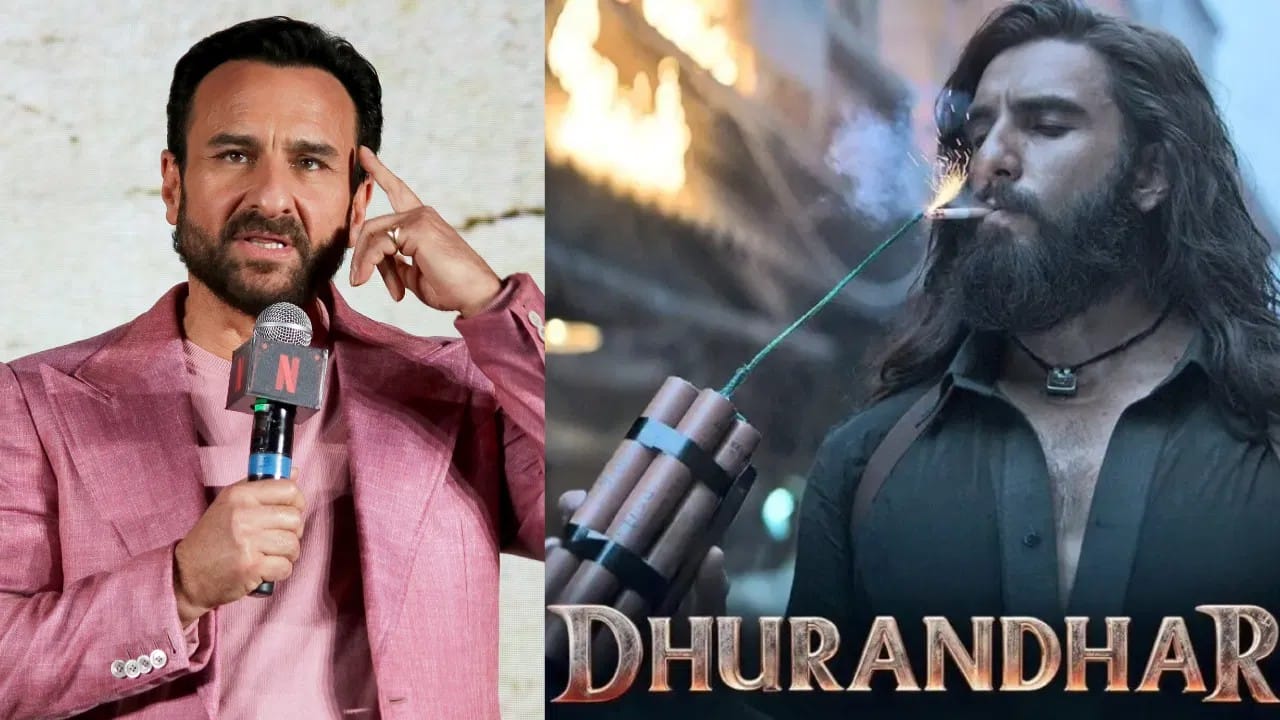
Actor Saif Ali Khan has labeled Aditya Dhar’s Dhurandhar franchise a cinematic game-changer, dividing Bollywood into an era "before and after" its release. Khan praised the Ranveer Singh-led films for their globally inspired soundtracks by Shashwat Sachdev and their revolutionary integration of musical numbers directly into the plot.
MUMBAI, INDIA — National Award-winning actor Saif Ali Khan has stated that filmmaker Aditya Dhar's record-breaking Dhurandhar franchise represents a definitive structural shift for Hindi cinema, splitting the industry's timeline into an era "before and after Dhurandhar." Speaking in an extensive interview with The Hollywood Reporter India on July 9, 2026, the three-decade Bollywood veteran reflected on how the spy action thriller has fundamentally disrupted traditional commercial filmmaking formulas, urging his contemporary peers to adapt to the changing landscape.
"I see a time before Dhurandhar and a time after," Khan told the publication while analyzing modern script selection and industry trends. "So it's up to us whether we catch up or not and wake up or not."
Dismantling the Traditional Item Number Formula
A central pillar of Khan’s assessment focused on how the franchise has radically transformed the implementation of music within mainstream Indian cinema. The actor specifically highlighted Shararat—a highly popular wedding dance sequence featuring Ayesha Khan and Krystle D’Souza—as an example of a revolutionary break from typical tropes.
Traditionally, commercial Bollywood projects rely heavily on decoupled "item numbers"—standalone promotional dance tracks featuring a leading actress that often interrupt the plot. Khan commended filmmaker Aditya Dhar for integrating the sequence naturally into the wedding celebrations of the lead character, Hamza (played by Ranveer Singh), weaving the performance cleanly into ongoing narrative cross-cuts.
"Something as revolutionary as that—imagine if that was to change the way of hiring a beautiful leading lady to do an 'item' for you," Khan noted during the interview. "If you just treat it as a song and have these two girls performing as you would in a wedding, it doesn't jar the eyes at all."
Global Musical Inspiration Without Linguistic Fear
Khan also praised the franchise's auditory architecture, which was designed under the creative leadership of music composer Shashwat Sachdev. Across both installments—Dhurandhar (released in December 2025) and Dhurandhar: The Revenge (released in March 2026)—the soundtrack avoided the conventional pattern of manufacturing isolated radio hits. Instead, Sachdev blended highly international instrumentation, global artist collaborations, and fresh recreations of classic tracks like Run Down the City – Monica, Ishq Jalakar, and Lutt Le Gaye.
According to Khan, the sonic approach demonstrates a maturity that the broader industry needs to study closely, emphasizing the importance of utilizing diverse international influences.
"It seems like an obvious idea to make amazing music rather than creating a new album for each film, and to draw on all kinds of things from all around the world, while not being too frightened of English also as an alienator," Khan explained.
Unprecedented Box Office Domination and Impact
The commercial scale of the Dhurandhar duology lends significant weight to Khan’s commentary. Produced under the banners of Jio Studios and B62 Studios, the interconnected action thrillers have emerged as the defining financial pillars of the 2025–2026 theatrical economy.
According to consolidated box office tracking reports, the two films have collectively grossed over ₹3,100 crore ($372 million USD) worldwide. The sequel, Dhurandhar: The Revenge, single-handedly generated nearly 47% of Bollywood's total domestic net revenue for the first half of 2026, cementing its status as the second-highest-grossing Indian film in history. The project features an ensemble cast including Ranveer Singh, Akshaye Khanna, Sanjay Dutt, Arjun Rampal, and R. Madhavan.
For film distributors, multiplex operators, and creative artists, the franchise's dual triumph proves that adult-rated (A-certified) long-form storytelling with sophisticated narratives can outperform standard masala tropes. Khan's high praise underscores a growing consensus among elite actors that contemporary audiences require higher benchmarks of execution to fill cinema halls.
Official Sources Section
The creative observations and direct quotes cited throughout this article were officially documented during Saif Ali Khan's featured cover interview with The Hollywood Reporter India. Financial data, box office shares, and production attributes of the franchise were validated against historical theatrical registries maintained by Jio Studios and comprehensive domestic box office performance analyses.
Why It Matters
Saif Ali Khan's public endorsement marks a rare structural critique from an active industry insider regarding how Bollywood uses sound, women in dance sequences, and global aesthetics. When a top-tier actor with 30 years of experience declares that an external project has permanently reset the industry's benchmarks, it signals to writers, studios, and streaming financiers that the risk appetite in Indian screenwriting must increase to remain economically competitive.
Key Facts at a Glance
The Statement: Saif Ali Khan claims Bollywood is permanently divided into an era "before and after Dhurandhar."
The Critique: Praised the track Shararat for replacing standard, jarring "item numbers" with texturally integrated narrative music.
The Music: Lauded composer Shashwat Sachdev for creating a globally inspired soundtrack that isn't afraid of English influences.
Commercial Context: The two Aditya Dhar-directed films have grossed over ₹3,100 crore globally, with the sequel holding the number two spot for highest-grossing Indian films.
Khan's Next Projects: Following his role in the thriller Kartavya, Khan will next appear in the period drama Hum Hindustani and Priyadarshan's upcoming horror-comedy Haiwaan.
Frequently Asked Questions (FAQ)
What exactly did Saif Ali Khan say about the film Dhurandhar?
Saif Ali Khan stated that the film has altered the landscape of Indian cinema so deeply that Bollywood can now be viewed as an era "before Dhurandhar and after." He warned fellow filmmakers and actors that they must "wake up or catch up" to its standards of production and music.
Why did Saif Ali Khan call the song 'Shararat' revolutionary?
He noted that instead of pulling audiences out of the movie with a forced "item song" featuring a hired leading lady purely for promotional value, Shararat was woven into the narrative as a natural wedding performance, which prevents it from jarring the viewer's eyes.
Who directed the Dhurandhar franchise and who stars in it?
The spy action thriller duology was written and directed by Aditya Dhar. The films star Ranveer Singh in the lead role alongside Akshaye Khanna, Sanjay Dutt, Arjun Rampal, and R. Madhavan.
Source: Saif Ali Khan's Cover Feature with The Hollywood Reporter India, Box Office Performance Reports (Jio Studios / PVR Inox Pictures), India Today Film Desk Archives.