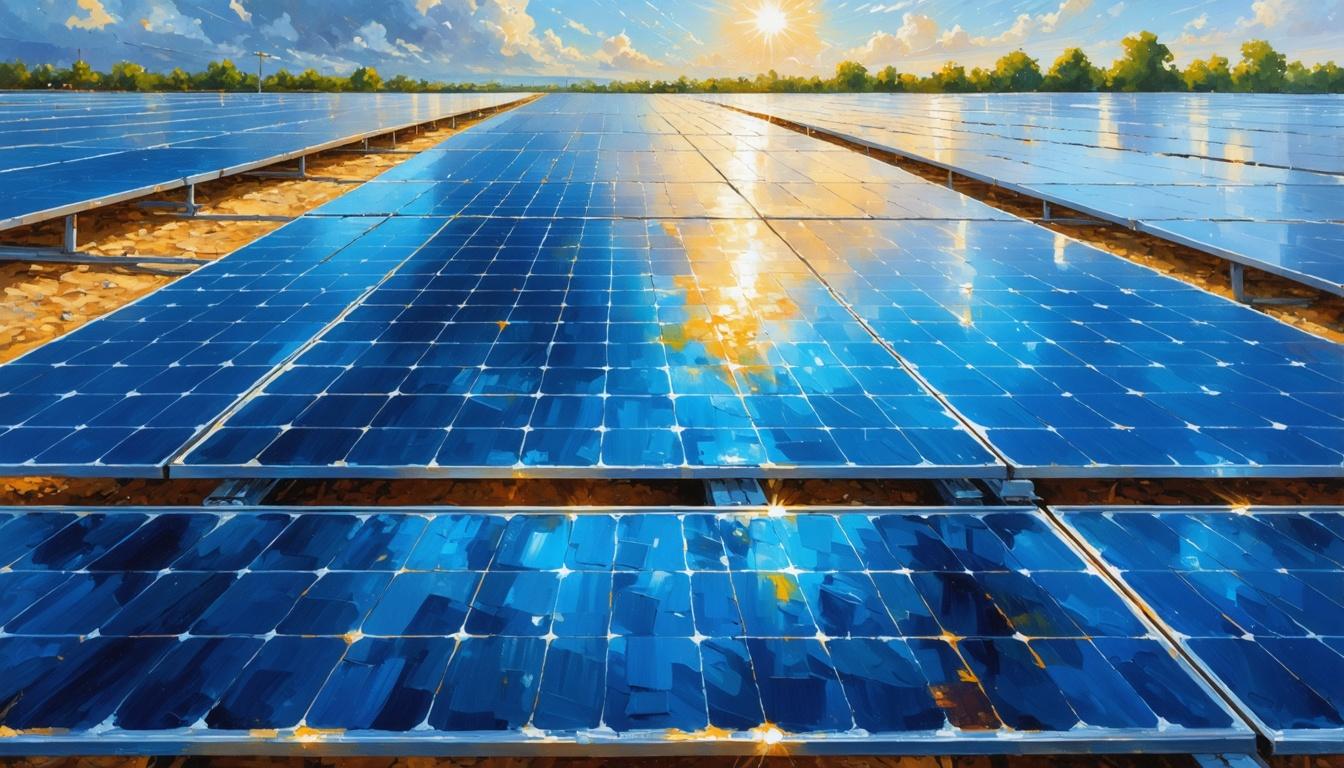
Samvardhana Motherson International Limited, through its subsidiary Motherson New Energy Limited, has commissioned its first 15 MWp captive solar project in Mahoba, Uttar Pradesh. Developed alongside ib vogt, the group-captive project will supply 23.4 GWh of clean electricity annually to regional factories, mitigating 17,000 MT of carbon emissions.
NOIDA, INDIA — Automotive component manufacturing major Samvardhana Motherson International Limited anunció today, June 8, 2026, the successful commissioning of its first ground-mounted captive solar power project in the state of Uttar Pradesh. Executed through its dedicated green energy subsidiary, Motherson New Energy Limited, and special purpose vehicle Onega Solar Private Limited, the newly active 15 megawatt-peak (MWp) facility signifies a major industrial step toward regional decarbonization.
Located in the Mahoba district, the solar grid infrastructure has commenced commercial operations to supply zero-emission electrical energy exclusively to multiple Motherson production facilities operating inside Uttar Pradesh. As Indian manufacturing hubs face stricter carbon footprint compliance mandates alongside volatile state grid tariffs, the independent installation builds reliable operational buffer systems against escalating macro energy costs.
Technical Architecture and Decarbonization Milestones
The ground-mounted clean energy facility was developed in structural alignment with India's revised Group Captive Renewable Energy framework. To maintain compliance under national electricity laws, group entities and promoter stakeholders retain a combined 30% equity shareholding in the underlying special purpose vehicle, ensuring smooth internal wheeling of high-voltage solar loads across state corridors.
The site's construction and baseline engineering parameters were executed in long-term technical alignment with ib vogt, a global renewable energy development group. ib vogt managed primary land aggregation matrices, legal clearances, and electrical engineering, procurement, and construction (EPC) workflows during the project's layout stages.
Operational models projection maps specify the following key performance indicators:
Annual Clean Yield: Expected to generate roughly 23.4 gigawatt-hours (GWh) of renewable electricity each calendar year.
Environmental Offset: Displaces close to 17,000 metric tonnes (MT) of carbon dioxide emissions annually by substituting state thermal grid dependencies.
Asset Optimization: Provides long-term utility cost visibility over a 25-year operational lifecycle for Motherson's high-consumption industrial lines.
Industrial Impact and Strategic Growth
The deployment marks a significant transition within India’s automotive and heavy manufacturing clusters:
For Regional Manufacturers: Proves the financial viability of off-site group captive structures over standard distributed rooftop installations for intensive tier-1 parts factories.
For Clean Energy Investors: Highlights Samvardhana Motherson's structural diversification via its new energy wing, expanding asset portfolios beyond core plastics and wiring systems.
For Citizens and Local Communities: Contributes to state-level carbon reduction mandates in Uttar Pradesh, assisting the region in mitigating heavy industrial emissions.
Official Sources Section
The operational launch data and financial structure frameworks were verified against regulatory compliance filings and media sheets submitted to the National Stock Exchange of India (NSE) and the BSE Limited. Financial structures, including initial SPV cash acquisitions and project milestone developments, adhere directly to internal guidelines ratified by the parent company's board of directors.
Quote Section
"According to organizers and executive updates, the newly commissioned facility forms the baseline structure for the group's domestic energy transformation, ensuring long-term operational resilience and direct access to cost-competitive, reliable clean power profiles."
Why It Matters
Industrial energy costs across India represent one of the most volatile variables in manufacturing balance sheets. By commissioning dedicated solar installations, major automotive suppliers insulate themselves from sudden power grid tariff hikes. Furthermore, modern global auto manufacturers increasingly demand that their tier-1 suppliers document a verified path to zero emissions, making this facility a vital step for securing future global export contracts.
Key Facts at a Glance
Project Capacity: Features a 15 MWp ground-mounted solar grid layout built in Mahoba, Uttar Pradesh.
Development Partner: Built in technical partnership with international clean energy engineering company ib vogt.
Projected Yield: Estimated to inject roughly 23.4 GWh of green electricity into the group's regional factories annually.
Regulatory Form: Utilizes a group-captive delivery model, with group entities holding a joint 30% equity stake in the project vehicle.
FAQ Section
What is a group captive solar project?
A group captive project is an arrangement where an industrial vendor sets up a renewable energy plant for its own consumption. Under Indian law, the collective users must hold at least 26% of the equity in the project and consume at least 51% of the electricity generated.
Which manufacturing facilities will receive this solar energy?
The 15 MWp installation is linked directly via state power lines to supply steady clean electricity to several Samvardhana Motherson manufacturing plants operating within Uttar Pradesh.
How does this installation help Samvardhana Motherson’s business?
It significantly cuts down the company's carbon footprint, ensures fixed-cost energy pricing over multiple decades, and prevents the company from being fully exposed to localized commercial electricity price hikes.
Source: Official regulatory disclosures and press releases from the National Stock Exchange of India and corporate strategy statements from Samvardhana Motherson International Limited.