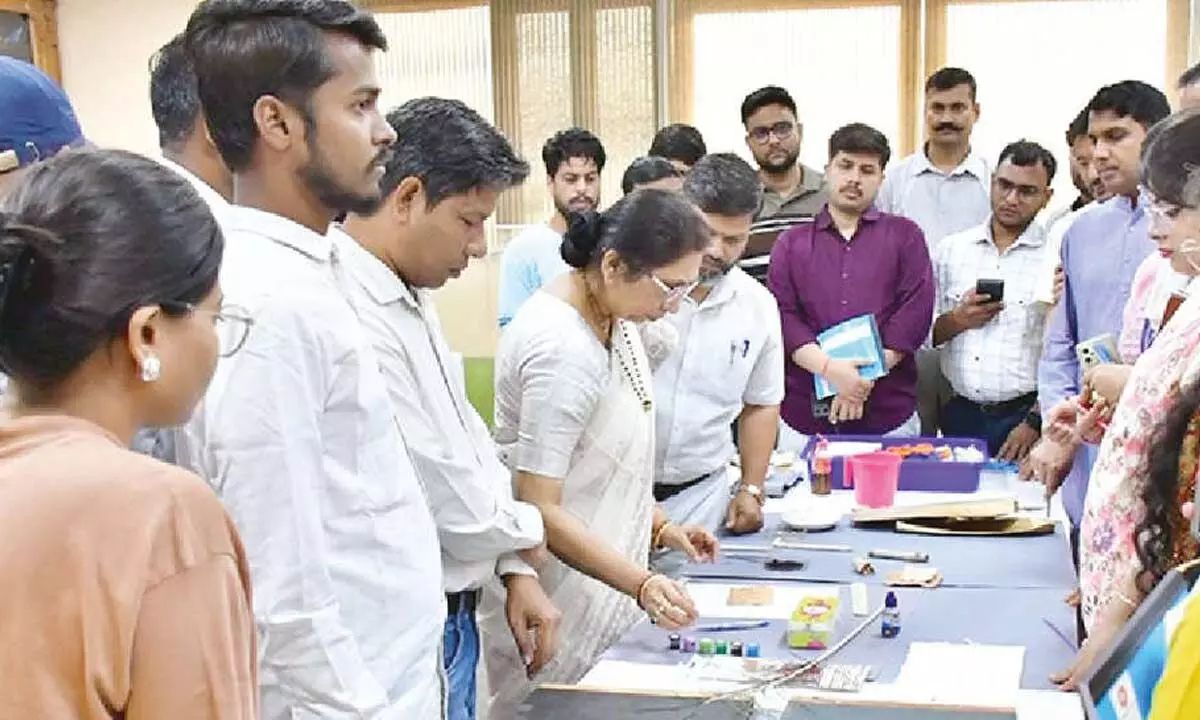
Under the Ministry of Culture’s Gyan Bharatam Mission, Patanjali Research Foundation in Haridwar has hosted a five day workshop on “Prevention and Conservation of Manuscripts.” The programme brought together conservators, archivists and scholars to train participants in scientific, traditional and digital methods to safeguard India’s fragile handwritten heritage for future generations.
Palm leaf pages, birch bark folios and copper plate grants are more than museum curiosities they are primary evidence of how India thought, traded, worshipped and governed across centuries. Recognising how vulnerable these manuscripts have become to moisture, insects and neglect, the National Mission on Manuscripts and Gyan Bharatam Mission partnered with Patanjali to run an intensive conservation workshop. Over five days, experts walked participants through everything from storage science to indigenous materials and global case studies.
What The Workshop Was About
The workshop, held at Patanjali Research Foundation’s campus in Haridwar, focused on the theme “Prevention and Conservation of Manuscripts” and formed part of the Ministry of Culture’s Gyan Bharatam Mission under the National Mission on Manuscripts.
Its stated aim was to raise awareness about manuscript conservation and build hands on skills in identification, storage and preventive care so that manuscripts in institutions and private collections can be stabilised and made accessible.
Who Participated And What They Discussed
Officials and experts from the Ministry of Culture, National Archives of India, academic institutions and conservation bodies such as INTACH addressed the sessions.
Speakers including Dr Ram Swarup from the National Archives and art conservator Dr Mamta Mishra explained what manuscripts are, types of supports (stone, palm leaf, birch bark, copper plates, parchment), and why both chemical and traditional methods must be combined to protect them from humidity, light, dust, insects and natural disasters.
How Manuscripts Are Preserved
Sessions detailed practical techniques such as storing manuscripts in acid free boxes, controlling temperature and humidity, using natural materials and multi layered security to guard against fire, floods and earthquakes.
Trainers also highlighted indigenous writing and support materials palm leaves, birch bark, cloth, leather and copper as part of India’s knowledge tradition, and showed how modern technology can be integrated with these to extend manuscript life without erasing their material character.
Digitisation, Research And Global Links
Under Gyan Bharatam, officials said more than 7.5 million manuscripts have already been registered for long term preservation, with work planned across linguistics, surveys, research, digitisation and text analysis.
Case studies ranged from Mahayana Buddhist texts like the Astasahasrika Prajnaparamita and Ethiopian parchment manuscripts to India’s own Sushruta Samhita palm leaf copy, illustrating how global best practices can guide local projects while AI tools begin to assist in cataloguing and correlating texts.
Patanjali Manuscript Workshop Highlights
Five day “Prevention and Conservation of Manuscripts” workshop held at Patanjali Research Foundation under the Culture Ministry’s Gyan Bharatam Mission
Goal was to build awareness and hands on skills in identifying, storing and conserving manuscripts in institutional and private collections
Experts from National Archives, INTACH and universities covered materials like palm leaves, birch bark and copper plates and demonstrated preventive and remedial conservation methods
Gyan Bharatam officials said 7.5 million manuscripts are already registered, with future work spanning surveys, research, digitisation and AI aided text analysis to keep this civilisational treasure alive
Sources: HealthySoch, The Hans India