The Supreme Court has upheld the expansive 1978 "Triple Test" interpretation of "industry" for all pending matters under the repealed Industrial Disputes Act, 1947. While protecting legacy worker rights in hospitals and educational bodies, the bench clarified that future disputes will be governed independently by the Industrial Relations Code, 2020.
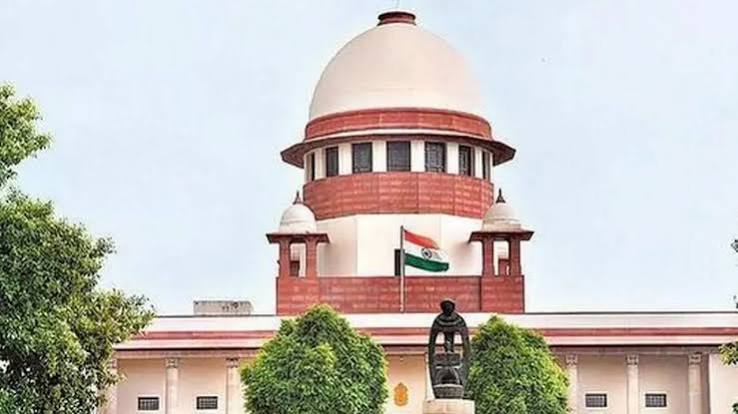
NEW DELHI — In a highly anticipated decision delivered on August 20, 2026, a nine-judge Constitution Bench of the Supreme Court addressed one of the most consequential concepts in Indian labor jurisprudence. Headed by Chief Justice Surya Kant, the bench ruled on the precise legal interpretation of the term "industry" under Section 2(j) of the now-repealed Industrial Disputes Act, 1947.
The ruling resolves decades of judicial debate originating from the historic Bangalore Water Supply & Sewerage Board v. R. Rajappa judgment. By preserving the core of the enduring "Triple Test," the Supreme Court’s majority decision ensures that workers across diverse institutional frameworks retain established legal protections while setting a distinct legal boundary for upcoming statutory frameworks.
Preserving the Legacy Framework and the Triple Test
For nearly five decades, the expansive definition established in 1978 brought millions of employees—spanning hospitals, educational institutions, municipalities, clubs, and charitable organizations—under the umbrella of industrial dispute resolution mechanisms. The recent Constitution Bench reviewed whether this broad formulation required structural alteration.
The majority affirmed that the essential framework of the Triple Test has stood the test of time. Under this standard, an activity qualifies as an industry if it involves:
Systematic Activity: A structured, organized undertaking rather than an isolated or individual engagement.
Employer-Worker Cooperation: Harmonious or organized collaboration between employers and employees.
Production and Distribution: The supply of goods or services aimed at satisfying human wants and wishes, independent of whether a profit motive exists.
Crucially, the Court ruled that all pending disputes governed by the 1947 Act will continue to rely on the traditional Bangalore Water Supply framework. However, future industrial litigation will be evaluated independently under the text and context of the newer Industrial Relations Code, 2020.
Official Sources Section
Quote Section
"The Triple Test has stood the test of time. All pending disputes under the 1947 Industrial Disputes Act will continue to be decided on the basis of the Bangalore Water Supply judgment, while the new Code must be interpreted on its own text and context,"
— stated the majority Constitution Bench during the pronouncement.
Why It Matters
The Supreme Court’s verdict carries profound practical implications for employers and workers alike. For employers—particularly non-profit organizations, hospitals, and educational trusts—the continuation of the legacy framework means that ongoing litigation will be judged by established standards of worker protection. Concurrently, by explicitly separating legacy disputes from the newer Industrial Relations Code, the ruling clears a path for future legislative interpretation without destabilizing decades of settled labor jurisprudence.
Key Facts at a Glance
Bench Strength: Nine-judge Constitution Bench headed by Chief Justice Surya Kant.
Core Legacy Rule: Preservation of the 1978 Bangalore Water Supply "Triple Test" for existing cases.
Future Transition: Future industrial relations disputes fall under the purview of the Industrial Relations Code, 2020.
Profit Motive Status: Absence of a commercial profit motive remains irrelevant to whether an organized entity constitutes an industry.
FAQ Section
What is the "Triple Test" used to define an industry?
The Triple Test evaluates whether an establishment engages in systematic activity, maintains organized employer-employee cooperation, and produces goods or services to satisfy human needs.
Does this ruling affect educational institutions and hospitals?
Yes, institutions with active employer-employee relationships that fall under pending disputes of the 1947 Act continue to be governed by the established precedent.
How does the ruling impact future labor disputes?
Future disputes will not automatically rely on the 1978 precedent; instead, they will be adjudicated strictly on the independent statutory text and provisions of the Industrial Relations Code, 2020.
Where can legal practitioners review the complete court pronouncement?
The full text of the judgment and official case summaries are accessible via the Supreme Court of India Official Portal.
Source: Supreme Court of India, Ministry of Labour and Employment, Supreme Court Observer