The Supreme Court will hear a petition on August 31, 2026, seeking mandatory and uniform disclosure of ethanol percentages on petrol pump nozzles and fuel bills. The plea calls for an independent expert review of E20 fuel compatibility and a public registry detailing vehicle suitability for blended petrol.
NEW DELHI — The Supreme Court of India is scheduled to hear a Public Interest Litigation (PIL) on August 31, 2026, seeking directives to enforce mandatory, uniform labeling of ethanol percentages at petrol pumps nationwide. The petition, filed by Narendra Kumar Goswami, requests clear disclosures on fuel dispensing nozzles and receipts, along with a public vehicle-compatibility database to protect consumers from potential engine damage caused by high ethanol blends.
Consumer Rights and Mandatory Labeling Demands
The petition, titled Narender Kumar Goswami v. Union of India & Ors., is listed before a two-judge bench comprising Justice M.M. Sundresh and Justice Prasanna B. Varale. According to court documents, the petitioner argues that citizens are currently subjected to purchasing blended petrol without clear knowledge of its precise chemical composition or suitability for their vehicles.
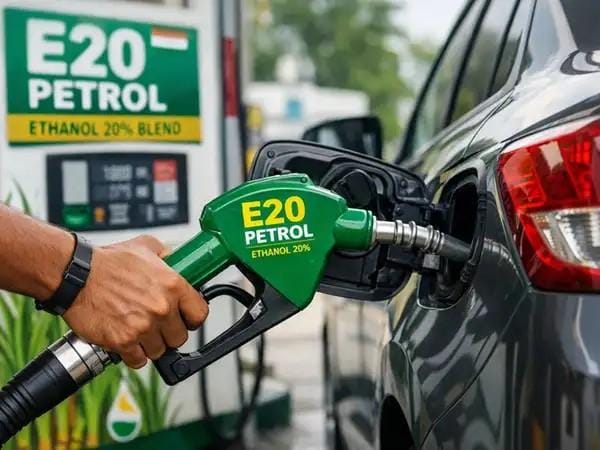
The PIL requests that oil marketing companies (OMCs) prominently display the exact percentage of ethanol blended into petrol on every dispensing nozzle and print the information on fuel purchase invoices. The petitioner contends that while the government has expanded E20 fuel (20 percent ethanol blended with petrol), vehicle owners—particularly those driving older, non-E20 compatible models—face unquantified risks of fuel system degradation and reduced mileage without adequate disclosure.
| Regulatory Area | Current Standard / Gap | Requested Directive in PIL |
| Fuel Pump Dispensing | No uniform display of exact ethanol % | Mandatory labeling on every nozzle |
| Billing & Invoices | Receipts state generic petrol rates | Ethanol percentage printed on every bill |
| Vehicle Compatibility | Consumers rely on manufacturer manuals | Public, searchable vehicle-wise database |
| Consumer Safeguards | Vehicle warranties risk voiding from E20 use | Protection against warranty or insurance denial |
Technical Assessment and Transition Framework
Beyond immediate pump disclosures, the petition asks the apex court to direct the central government to build a searchable, public compatibility database indexed by vehicle make, model, engine type, and year of manufacture. This tool would allow motor vehicle owners to verify whether their engine can safely operate on current ethanol blends without hardware modifications.
The plea also calls for the establishment of an independent expert committee comprising officials from the Ministry of Petroleum and Natural Gas, the Ministry of Road Transport and Highways, the Bureau of Indian Standards (BIS), and independent automotive engineers. The proposed panel would examine the real-world impact of E20 fuel on engine durability, fuel economy, maintenance overheads, vehicle warranties, and broader environmental parameters such as water usage in sugarcane-based ethanol production.
Official Sources Section
According to the official Supreme Court cause list published for August 31, 2026, the matter will be taken up for preliminary hearing under Article 32 of the Constitution. Official records indicate the petition was filed after administrative representations to government ministries regarding fuel transparency remained unanswered.
Quote Section
"A great and noble object, however desirable, does not grant the State a dispensation from the Constitution," the petition submitted to the Supreme Court stated. "The State may encourage, persuade and incentivise; it may not, by administrative silence and structural absence of choice, compel a person to unknowingly subject his property to a risk not of his making."
Why It Matters
India's rapid transition toward 20 percent ethanol blending has significantly reduced crude oil import bills and reduced carbon emissions, but legacy vehicles manufactured before 2023 were generally not calibrated for ethanol content exceeding 10 percent (E10). If the Supreme Court orders mandatory disclosures, millions of motorists will gain transparent access to fuel composition information, ensuring informed purchasing decisions while safeguarding insurance claims and vehicle warranty rights.
Key Facts at a Glance
Supreme Court Listing: Hearing set for August 31, 2026, before Justices M.M. Sundresh and Prasanna B. Varale.
Mandatory Disclosure Demand: Seeks uniform ethanol percentage stickers on all fuel pumps and printed receipts.
Compatibility Database: Calls for a government-hosted searchable registry of vehicle models and their ethanol tolerance.
Expert Committee: Requests a multi-agency panel to evaluate real-world fuel efficiency drops, engine wear, and warranty implications.
FAQ Section
Why is the Supreme Court hearing a plea regarding ethanol blending?
The petition seeks mandatory disclosure of ethanol percentages at fuel pumps so vehicle owners know the exact composition of the petrol they are buying and whether it is safe for their vehicle's engine.
What is E20 petrol?
E20 petrol is a fuel blend containing 20 percent ethanol and 80 percent fossil petrol, introduced as part of India's bio-fuel initiative to cut crude oil imports.
Will petrol pumps be required to display ethanol percentages?
If the Supreme Court grants the petitioner's prayers, all petrol stations will have to clearly label every dispensing nozzle with the exact ethanol content and state it on customer receipts.
How can drivers check if their vehicle is compatible with E20 fuel?
The PIL requests the government to launch an official, searchable database by make, model, and year so citizens can check fuel compatibility before refueling.
Sources: Supreme Court of India Cause List, Ministry of Petroleum and Natural Gas, Central Consumer Protection Authority (CCPA)