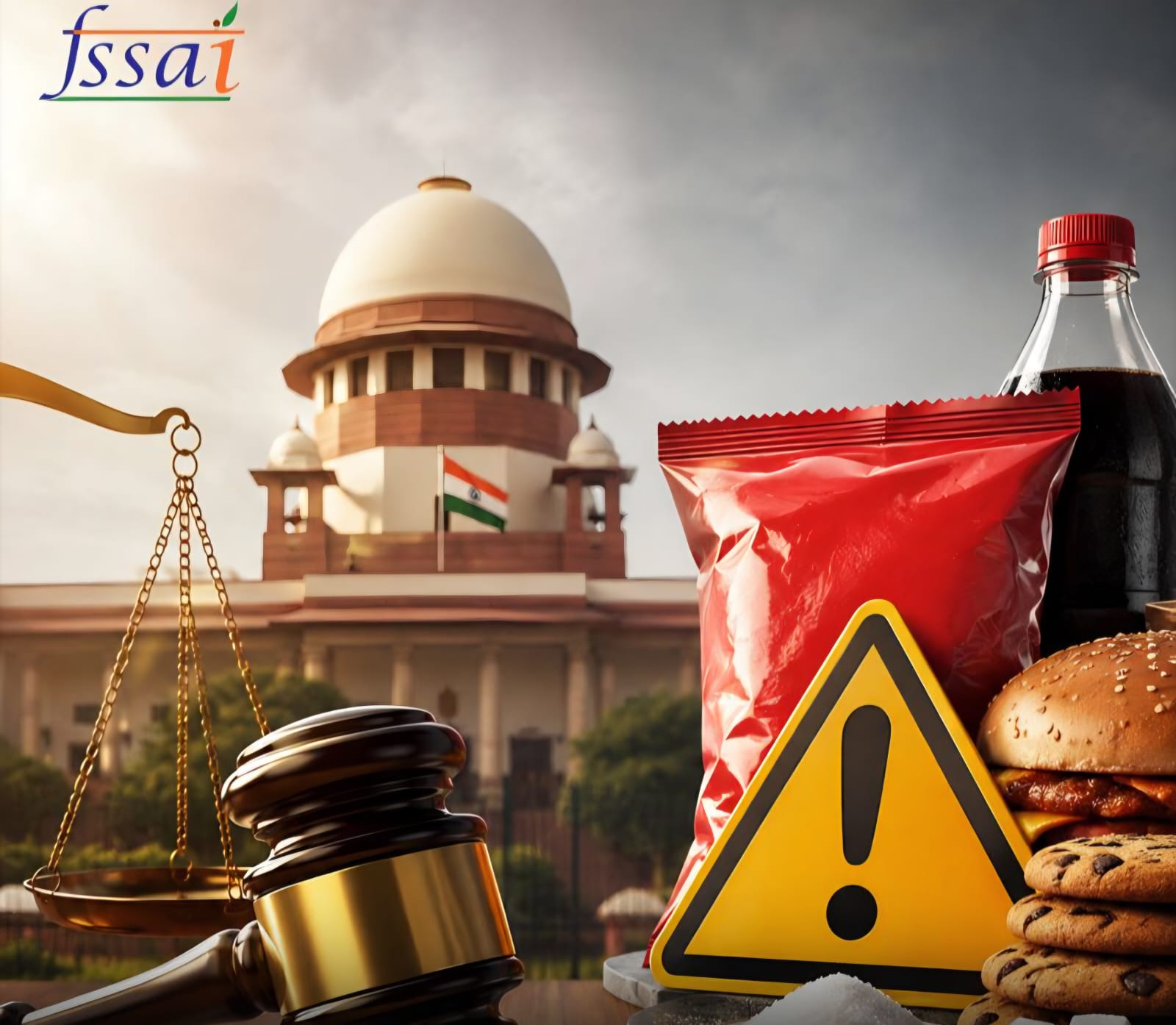
FSSAI submitted a compliance affidavit to the Supreme Court on August 28, 2026, proposing red hexagonal warning labels for packaged foods high in fat, sugar, and salt. Supported by digital FoSCoS recall tools and risk-based inspections, the reforms aim to eliminate adulteration and increase market transparency across India.
NEW DELHI — The Food Safety and Standards Authority of India (FSSAI) filed a landmark compliance affidavit before the Supreme Court of India on August 28, 2026, proposing mandatory red hexagonal warning labels for packaged foods high in fat, sugar, and salt (HFSS). The regulatory filing follows heightened judicial scrutiny and coordinated enforcement drives across multiple states aimed at curbing food adulteration, tightening supply chain traceability, and eliminating misleading health claims on consumer goods.
Supreme Court Mandate and Front-of-Pack Labeling Proposals
The regulator's proposal introduces front-of-pack warning symbols designed to alert shoppers to elevated levels of added saturated fat, added sugar, and sodium. The action comes as the apex court set a September 10, 2026 hearing date to evaluate whether the proposed warning framework effectively addresses public health concerns or leaves regulatory loopholes for processed food manufacturers.
Concurrently, public health advocates and nutrition experts have submitted recommendations calling for single-nutrient warning triggers aligned with the Indian Council of Medical Research–National Institute of Nutrition (ICMR-NIN) 2024 Dietary Guidelines. Under the latest regulatory framework, manufacturers face stricter disclosure mandates for primary allergens, mandatory 14-digit FSSAI license numbers in contrasting colors, and QR code integration for visually impaired consumers.
| Regulatory Reform | Effective Date / Status | Core Requirement |
| Front-of-Pack Hexagonal Warnings | Under Supreme Court Review (Hearing Sep 10, 2026) | Red warning symbols on packaging high in sugar, salt, or fat |
| FoSCoS Digital Food Recall System | Activated March 18, 2026 | Automated public logging of unsafe food batches and recalls |
| Perpetual License Framework | Effective April 1, 2026 | Indefinite license validity linked to annual fee compliance |
| Risk-Based Inspection Protocols | Active 2026 Rollout | High-frequency audits for non-compliant manufacturing units |
Digital Traceability and Supply Chain Compliance
To enforce compliance beyond physical labeling, the central food regulator has integrated automated recall functionalities into its Food Safety Compliance System (FoSCoS) portal. The digital module allows food business operators (FBOs) and regional enforcement authorities to instantly log, track, and execute public recalls of contaminated or mislabeled food batches.
Under parallel directives governing e-commerce and digital commerce platforms, including the Open Network for Digital Commerce (ONDC), buyer and seller applications must display verified hygiene ratings, principal display panel details, and remaining shelf-life metrics at point-of-sale. Concurrently, state food safety departments have shifted from calendar-based routines to risk-based inspection models, prioritizing high-risk commodity processors, spice manufacturers, and dairy units with past compliance violations.
Official Sources Section
According to official filings from the Food Safety and Standards Authority of India (FSSAI) and public announcements from the Ministry of Health and Family Welfare, all registered commercial food operators must align manufacturing processes with the updated Food Safety and Standards (Licensing and Registration of Food Businesses) Amendment Regulations.
Quote Section
"The court should examine whether the proposed framework will actually deliver what a warning label is meant to do—give consumers a simple, visible, and scientifically sound indication of risk," stated Dr. Arun Gupta, convenor of Nutrition Advocacy in Public Interest (NAPI), in an official submission reviewing the regulator's compliance affidavit.
Why It Matters
Standardized front-of-pack warning labels and digital recall tools directly affect consumer health outcomes across India. Clear visual markers on retail packaging allow citizens to identify high-sodium and high-sugar content instantly, while risk-based supply chain audits help prevent adulterated spices, substandard dairy products, and unverified food additives from reaching domestic market shelves.
Key Facts at a Glance
Supreme Court Filing: FSSAI submitted its proposal for red hexagonal warning labels on August 28, 2026.
Next Court Hearing: Supreme Court of India set to review the front-of-pack warning label framework on September 10, 2026.
Digital Traceability: FoSCoS portal activated direct public access to batch recall listings and enforcement status updates.
Licensing Reforms: Perpetual license validity established for compliant operators maintaining annual fee schedules.
FAQ Section
What is the new FSSAI proposal for packaged food labels?
FSSAI has proposed mandatory red hexagonal warning labels on the front of food packaging to explicitly highlight products high in fat, sugar, and salt (HFSS).
When will the Supreme Court review the food labeling guidelines?
The Supreme Court of India is scheduled to hear arguments on the proposed front-of-pack warning framework on September 10, 2026.
How does the FoSCoS digital recall system work?
The FoSCoS portal allows food business operators and inspectors to initiate automated recalls of non-compliant or adulterated products, publishing real-time recall notices for public viewing.
What changes apply to online food platforms under the new rules?
E-commerce and quick-commerce seller apps must display mandatory food disclosures, manufacturer license numbers, shelf-life details, and verified hygiene ratings prior to checkout.
Sources: Food Safety and Standards Authority of India (FSSAI), Ministry of Health and Family Welfare