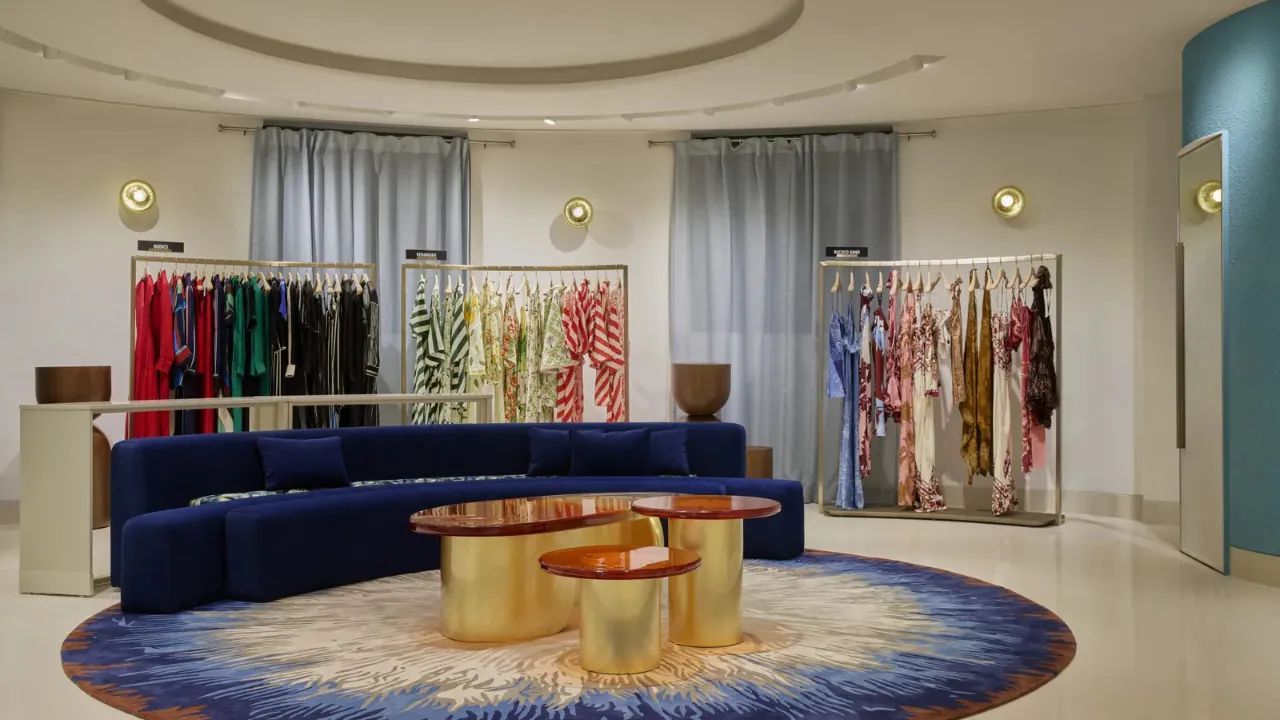
Galeries Lafayette has entered the Indian market with a 90,000-square-foot flagship store in Mumbai’s Kala Ghoda district. Partnering with Aditya Birla Fashion and Retail Limited, the five-story department store houses over 250 global brands, aiming to bridge the country’s luxury retail infrastructure gap and capture domestic premium consumer spending.
MUMBAI — The landscape of Indian high-end retail is undergoing a structural realignment as international commerce leaders attempt to anchor global fashion directly on domestic soil. In a strategic expansion targeting the country's affluent population, the iconic French department store Galeries Lafayette has officially launched its first Indian flagship in Mumbai's historic Kala Ghoda arts district.
Developed through a 20-year exclusive franchise agreement with Aditya Birla Fashion and Retail Limited (ABFRL), the 90,000-square-foot retail destination is designed to address a critical structural deficit: the "luxury gap" caused by a historical lack of premium real estate, complex supply logistics, and specialized service excellence that has traditionally driven India's wealthiest consumers to shop abroad in destinations like Paris, Dubai, and Singapore.
Restoring Heritage Real Estate for Modern Couture
The multi-level flagship occupies two of South Mumbai's architectural landmarks: the 112-year-old Turner Morrison House and the century-old Voltas House. Designed by London-based architectural firm Virgile + Partners, the space reinterprets the brand's classic Parisian aesthetic through an Indian design lens, creating a five-story environment that balances structural preservation with contemporary high-end merchandising.
Unlike conventional luxury malls that operate as collections of isolated branded storefronts, the department store utilizes themed experiences and storytelling-led merchandising:
By bringing nearly 250 international brands under one unified roof, the retail model introduces an integrated, multi-brand ecosystem previously absent from the domestic market.
Capturing the "Missing Middle" of Premium Retail
According to market projections released by the conglomerate, India’s luxury retail economy is on a trajectory to expand fourfold, shifting from approximately $20 billion to nearly $90 billion by 2030. Industry analysts note that while ultra-luxury brands maintain properties in standalone luxury developments like Jio World Plaza or DLF Emporio, a distinct gap remains for premium, contemporary labels.
To capture this "missing middle," the flagship's inventory deliberately blends top-tier couture with accessible premium fashion, featuring labels such as AMI Paris, Represent, and Jacob Cohën. Executive briefings from ABFRL indicate that approximately 70% of the featured brands made their official commercial debut in India through this launch, positioning the department store as a vital testing ground for international fashion houses looking to gauge local consumer appetite.
Macroeconomic Shifts and Regulatory Tailwinds
The long-term viability of international luxury platforms in India has historically been challenged by steep import duties and real estate scarcity. However, corporate strategists point to shifting macroeconomic variables that favor domestic expansion:
Free Trade Agreements: The signing of recent trade frameworks between India, the United Kingdom, and European nations is progressively narrowing the retail price disparities between India and external tax-free shopping hubs.
Experiential Diversification: The inclusion of premium culinary concepts, such as the in-house Julien Café, private shopping lounges, personal styling suites, and digital omnichannel integration, pivots the space from a transactional store to a cultural destination.
Demographic Inclusivity: Rather than focusing solely on traditional high-net-worth individuals, the marketing division is actively positioning its curated collections to engage a younger demographic of digitally connected consumers in their 20s and 30s.
Official Sources Section
The corporate partnerships, financial forecasts, spatial layouts, and strategic market data detailed in this report are compiled from official regulatory filings and corporate statements issued by Aditya Birla Fashion and Retail Limited and the international executive directorate of the Galeries Lafayette Group.
Quote Section
"The opening of Galeries Lafayette Mumbai feels especially fitting as the country stands at the intersection of global relevance and local renaissance. We see a generation of shoppers who are digitally connected, globally aware, and seeking experiences that go far beyond the product."
— Sathyajit Radhakrishnan, CEO of International Brands at Aditya Birla Fashion and Retail Limited
Why It Matters
For decades, Indian luxury retail has operated under a "browse locally, buy globally" paradigm. High domestic import tariffs and a lack of dedicated, ambient luxury real estate meant that Indian consumers accounted for a significant percentage of international sales at European flagships rather than contributing to domestic brick-and-mortar growth.
By delivering a fully curated, service-driven department store model in a preserved heritage precinct, this initiative tests whether international supply chains and local retail operators can successfully retain high-end consumer capital within domestic borders, fundamentally altering the geography of South Asian luxury consumption.
Key Facts at a Glance
Strategic Launch: Galeries Lafayette has opened a 90,000-square-foot Indian flagship store in the Kala Ghoda district of Mumbai.
Corporate Alliance: The expansion is executed under a 20-year exclusive franchise model with Aditya Birla Fashion and Retail Limited (ABFRL).
Historical Preservation: The retail space spans five levels across two landmark structures: Turner Morrison House and Voltas House.
Brand Inventory: The store curates over 250 global designer brands across fashion, beauty, and accessories, with 70% making their Indian market debut.
Market Trajectory: The venture aims to capitalize on an Indian luxury market projected to reach up to $90 billion by 2030.
FAQ Section
1. Where is the first Galeries Lafayette store located in India?
The flagship store is located at the historic Turner Morrison and Voltas House buildings on G Vaidya Road in the Kala Ghoda, Fort district of Mumbai.
2. How does Galeries Lafayette differ from a standard luxury shopping mall?
Unlike traditional malls that host individual, isolated brand storefronts, Galeries Lafayette operates as a true luxury department store, utilizing open, themed environments and unified open-floor curation.
3. Are there plans to open more Galeries Lafayette stores across India?
Yes. Following the initial stabilization of the anchor Mumbai flagship, the partnership has outlined subsequent expansion plans, with a second major flagship scheduled to open in New Delhi in 2027.
4. What types of consumer categories are available at the Mumbai flagship?
The store features five dedicated levels spanning haute couture, ready-to-wear apparel, contemporary streetwear, accessories, an expansive international beauty portfolio, private styling lounges, and premium culinary outlets.
Source: Aditya Birla Fashion and Retail Limited Investor Relations; Galeries Lafayette Group Global Media Directorate; Quality Council of India Retail Frameworks.