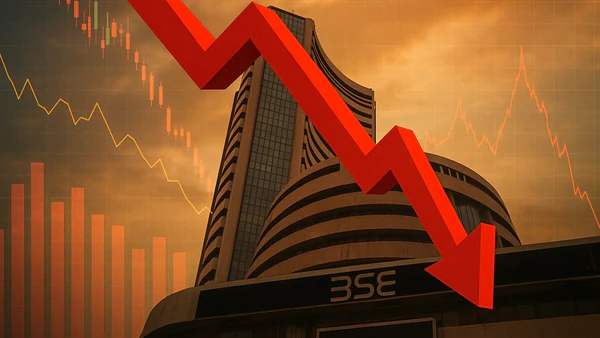
The BSE Sensex tumbled nearly 500 points on Monday, pressured by elevated crude oil prices amid Middle East tensions, rising US Treasury yields, and sharp losses in technology shares. The sell-off reflects widespread risk aversion across emerging markets as investors brace for persistent global inflation and higher-for-longer borrowing rates.
MUMBAI — Benchmark domestic equity indices tumbled during morning trade, as the 30-share BSE Sensex fell by nearly 500 points amid heightened risk aversion driven by elevated global crude oil prices, firming US Treasury yields, and broad-based declines in technology heavyweights. The broad-market drop mirrors cautious sentiment across global asset classes ahead of key central bank policy decisions, compounding inflationary concerns for net-importer economies.
Geopolitical Friction and Rising Crude Oil Pressure
A primary catalyst pulling down equity valuations is the sustained firmness in international crude benchmarks. Brent crude hovered near multi-week highs following intensified military escalations in the Middle East. Because India imports upwards of 80% of its domestic petroleum requirements, prolonged spikes in imported energy prices threaten to widen the nation's trade deficit, pressure the rupee, and stoke domestic wholesale and retail inflation.
Consequently, oil-sensitive sectors absorbed swift selling pressure during early trade. Shares of domestic oil marketing companies, aviation carriers, paint manufacturers, and tyre producers retreated as investors factored in squeezed gross profit margins caused by elevated raw material and fuel procurement overheads.
Rising US Treasury Yields and Rate Uncertainty
Renewed uncertainty surrounding the trajectory of US monetary policy continues to weigh heavily on emerging-market capital flows. With the US 10-year Treasury yield hardening near multi-month highs, institutional fund managers have scaled back risk allocations in anticipation of tighter monetary conditions.
Elevated yields on sovereign dollar debt narrow the risk-premium spread between advanced and developing equity markets. This dynamic has exerted ongoing downward pressure on Foreign Portfolio Investor (FPI) flows into Indian equities, prompting cross-border asset managers to take profits on richly valued domestic names.
Technology Sector Leads Domestic Losses
The domestic sell-off has been notably acute across information technology export counters. Tech bellwethers led the decline on the BSE and NSE, as discretionary software spending from US and European enterprise clients faces heightened postponement risks while borrowing costs remain high.
The weakness was partially buffered by defensive and non-cyclical sectors, with selective buying observed across pharmaceuticals, healthcare, and state-backed utility producers. However, the broader market breadth tilted firmly negative, pulling mid-cap and small-cap indices into the red.
Impact on Investors and Domestic Businesses
The sharp correction carries tangible implications across several investor segments:
Retail Equity Investors: Short-term volatility tests portfolios heavily weighted toward high-beta tech or cyclicals, prompting advisors to emphasize staggered systematic investment plans (SIPs) over aggressive lump-sum dip buying.
Corporate Borrowers: Hardening bond yields raise the potential benchmark for domestic debt issuances, potentially lifting corporate borrowing costs if inflation pressures push central banks into maintaining a restrictive stance.
Foreign Exchange Markets: Elevated dollar demand for crude payments puts pressure on the Indian rupee, raising landed costs for finished consumer tech, chemical intermediates, and capital equipment.
Official Sources
Trading data, sectoral index metrics, and regulatory settlement reports were confirmed directly via the exchange desks of the BSE India Market Desk and the National Stock Exchange of India. Macroeconomic tracking updates align with statements from the Ministry of Finance regarding sovereign reserve buffers and external trade metrics.
Executive and Market Statements
According to officials and market strategists monitoring institutional flows on Dalal Street: "The escalation in geopolitical tensions and the resultant uptick in global crude oil prices have created an immediate headwind for emerging markets. When coupled with sticky overseas bond yields, overseas investors are reassessing their high-multiple technology exposures, leading to broad-based de-risking across frontline indices."
Why It Matters
A 500-point intraday drop serves as a benchmark check on stretched market valuations. When macroeconomic indicators—such as oil prices and global bond rates—shift simultaneously, Indian equities face a structural repricing of earnings growth. Understanding whether Dalal Street declines are driven by domestic structural weaknesses or external geopolitical headwinds helps investors separate transient volatility from systemic risks.
Key Facts at a Glance
Index Movement: BSE Sensex plunged nearly 500 points in morning trade, with the Nifty 50 declining alongside it.
Primary Draggers: Heavy sell-off across large-cap Information Technology (IT) counters and oil-sensitive stocks.
Global Factors: Hardening US bond yields and elevated crude oil benchmarks driven by Middle East tensions.
Defensive Support: Modest gains in domestic pharmaceuticals, utilities, and select state-run power companies limited further downside.
Frequently Asked Questions
Why did the Sensex fall 500 points today?
The index fell primarily due to elevated global crude oil prices, rising US Treasury yields that stoke interest rate fears, and a steep sell-off across frontline IT stocks.
Which sectors are worst hit by today's market drop?
Technology, paints, aviation, and oil marketing companies saw notable declines due to foreign institutional selling and higher operating costs.
Does this mean the broader Indian economic outlook has worsened?
Not necessarily. Market strategists emphasize that the drop is primarily driven by external global headwinds—such as oil pricing and US yields—while India's domestic foreign exchange reserves and tax revenues remain structurally stable.
Source: Official market announcements and real-time disclosures from the BSE India Corporate Desk, National Stock Exchange of India, and the Reserve Bank of India.