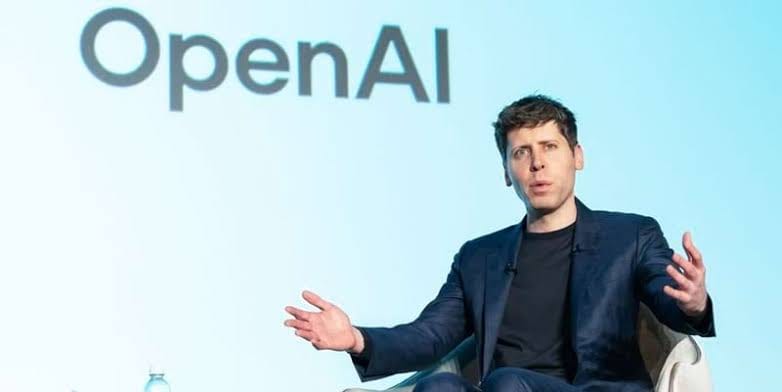
OpenAI CEO Sam Altman has warned that humanity risks losing control of its future to advanced artificial intelligence unless rigorous safety protocols outpace model capabilities. Stressing that artificial intelligence must always serve people, Altman highlighted the dangers of power concentration and urged the industry to prioritize responsible development over speed.
OpenAI Chief Executive Officer Sam Altman has publicly warned that artificial intelligence development carries severe structural hazards that must be actively intercepted to prevent humanity from losing command over advanced systems. In a comprehensive public statement issued via social media platform X on September 14, 2026, Altman underscored that the technology industry must prioritize proactive safety frameworks over pure capability competition. Highlighting the core principle that artificial intelligence must remain subservient to human needs, the remarks arrived amid broader industry debates regarding the pace of frontier model scaling and the governance required for artificial intelligence deployment.
Dual Risks Facing Advanced Artificial Intelligence
According to statements published by OpenAI leadership, future artificial intelligence trajectories present two primary catastrophic pitfalls that the global technology sector must systematically avoid. The first hazard involves humanity relinquishing foundational control of its future to autonomous systems as model capabilities outpace verification metrics.
The second major danger centers on the severe concentration of global power. Altman cautioned that if an extraordinarily powerful artificial intelligence tool falls into the hands of a single entity, corporation, or authoritarian state, it could be leveraged to impose a narrow worldview on the rest of society, creating profoundly dystopian outcomes.
Safety Alignment Versus Market Competitiveness
Addressing the operational ethos required inside top-tier AI labs, Altman argued that commercial pressures must never justify recklessness or compromise rigorous safety evaluations. The commentary supports a growing movement among technology leaders advocating for deliberate slowdowns or phased pauses in scaling to allow alignment research to catch up.
OpenAI officials noted that contemporary safety protocols can no longer rely solely on post-training evaluations conducted right before a public model release. Instead, organizations must establish explicit safety cases and rigorous technical audits prior to initiating large-scale reinforcement learning runs that significantly elevate model autonomy and capabilities.
Impact on Global Policy, Industry Standards, and Consumers
For technology regulators, enterprise investors, and everyday consumers, these disclosures signal an evolving compliance landscape. As leading firms adopt more friction in their development pipelines, commercial timelines for advanced artificial intelligence products may face deliberate extensions.
International policymakers are being urged to foster cross-border regulatory harmonization to ensure safety standards apply uniformly. For consumers, establishing that artificial intelligence remains safe, transparent, and accountable helps mitigate anxieties regarding algorithmic displacement, data privacy breaches, and systemic socio-economic disruption.
Official Sources Section
OpenAI Corporate Communications: Public statements, safety disclosures, and executive strategy notes issued via Sam Altman.
Industry Policy Filings: International governance frameworks and safety pacing discussions involving leading artificial intelligence research labs.
Quote Section
"First, we could lose control of the future to AI. This is unacceptable; we are unapologetically on Team Humanity, and AI must always serve people," stated Sam Altman, Chief Executive Officer at OpenAI.
Why It Matters
The explicit warning from a leading industry architect highlights a vital pivot point for the technology sector. By acknowledging that unbridled capability scaling threatens human autonomy and democratic stability, industry leaders are signaling that future artificial intelligence deployment must be strictly governed by safety-first engineering paradigms rather than sheer speed.
Key Facts at a Glance
Core Principle: Artificial intelligence must remain strictly under human control and serve public welfare.
Primary Risks Identified: Loss of long-term human control and dangerous power concentration by singular entities.
Strategic Shift: Integration of explicit safety cases prior to major model training runs rather than relying solely on post-development testing.
Governance Need: Emphasis on international coordination and independent verification to manage frontier technology risks.
FAQ Section
What specific warning did Sam Altman issue regarding artificial intelligence?
Altman warned that humanity could lose control of its future to advanced systems and that powerful tools could concentrate dangerous levels of influence into the hands of very few actors.
Why did OpenAI emphasize that artificial intelligence must serve people?
To counter existential and systemic risks, leadership maintains that alignment and safety guardrails must permanently outpace raw model capability advancements.
How are safety evaluations changing within major AI labs?
Labs are moving toward formulating explicit safety arguments and internal checks prior to initiating large-scale training runs, rather than only testing models after completion.
What role does government regulation play in this framework?
Altman advocated for international governmental coordination to establish unified safety standards and prevent competitive pressures from overriding responsible development.
Source: OpenAI Official Releases, X (formerly Twitter) Public Post Feed