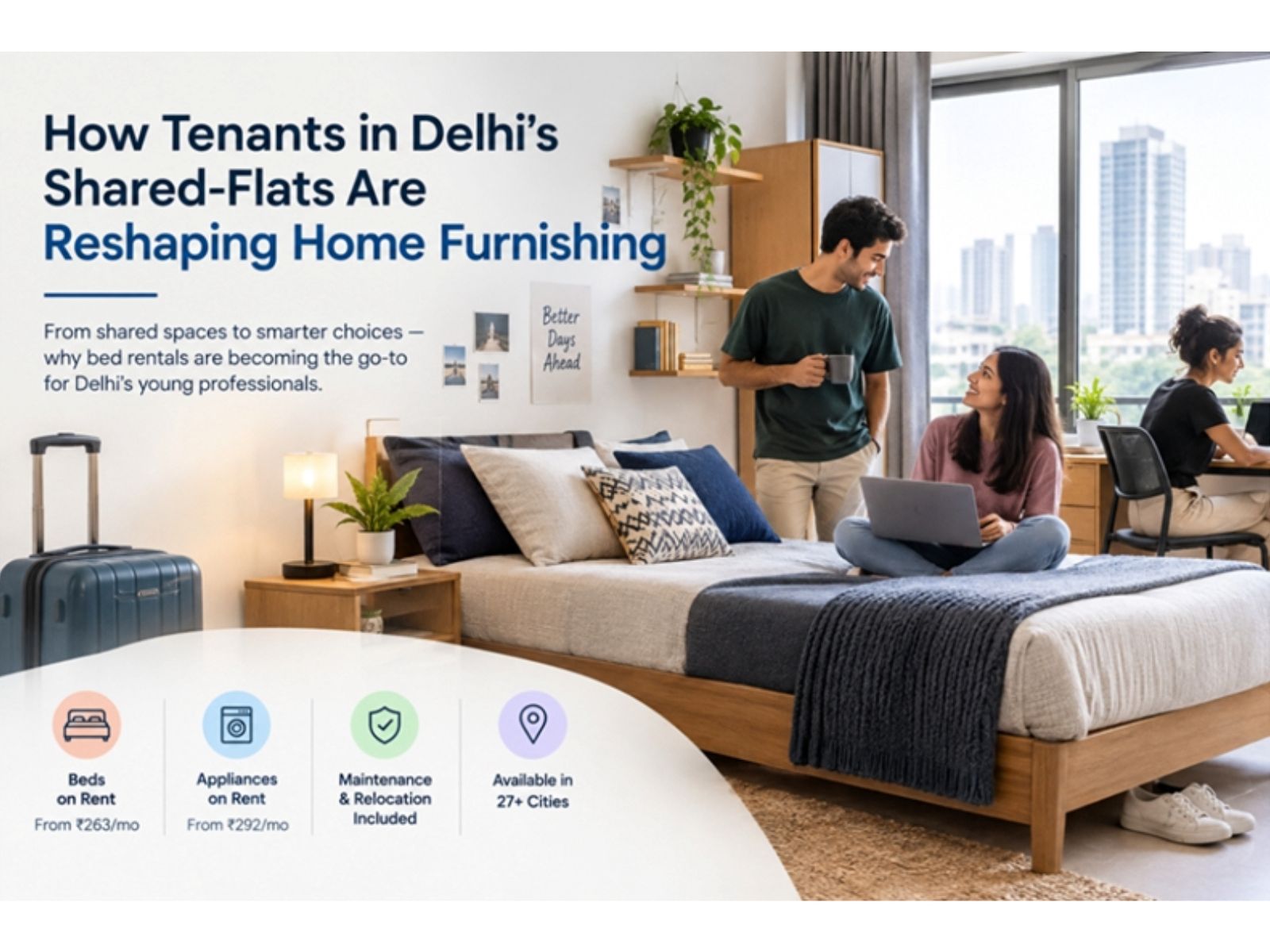
Driven by fluid lease cycles and independent roommate dynamics across New Delhi, shared-flat tenants are pivoting away from permanent furniture purchases toward subscription rentals. According to recent urban housing and market analyses, items like beds and appliances are increasingly rented rather than bought, fundamentally shifting how young professionals furnish rental properties.
Transforming traditional domestic consumption models, young professionals across New Delhi's shared-flat circuits are turning to subscription-based furniture rentals to navigate frequent relocations.
As thousands of young professionals and students relocate to India's capital for career opportunities, shared housing has become the dominant urban living model. Operating across neighborhoods such as Laxmi Nagar, Dwarka, Janakpuri, and Malviya Nagar, flatmates frequently share common utilities, living room sofas, and refrigerators, yet encounter distinct challenges when furnishing individual private quarters. According to urban lifestyle and market reports published in September 2026, the traditional practice of buying bulky, permanent furniture is rapidly giving way to flexible subscription rentals, fundamentally altering how metropolitan tenants manage home interiors.
Evaluating Shared Dynamics, Logistics, and the Rise of Rental Subscriptions
Analyzing the mechanics of shared apartments reveals that individual private spaces—most notably the bedroom—operate independently from collective lease agreements. According to housing studies and consumer trend data released in September 2026, key factors driving this transition include:
The Individual Bed Dilemma: While common appliances like refrigerators and washing machines are split communally, a bed remains a personal, non-divisible asset that individual incoming tenants must manage on their own.
High Relocation Friction: Traditional engineered-wood furniture loses structural integrity when dismantled repeatedly, making heavy purchases impractical for tenants who rotate across leases every 12 to 24 months.
Cost-Efficiency of Subscriptions: Rather than committing thousands of rupees upfront to purchasing and resale depreciation, tenants increasingly opt for modular rental plans starting at nominal monthly rates.
Seamless Move-In and Exit Cycles: Rental platforms allow occupants to synchronize furniture tenure precisely with their individual notice periods, eliminating the stress of liquidating used household goods during sudden job relocations.
Why It Matters
The practical implications of shifting toward rental subscriptions reduce financial strain and logistical friction for young urban migrants navigating volatile rental markets. For everyday consumers and working professionals, avoiding high upfront capital expenditures on heavy furniture preserves personal savings and ensures effortless apartment transitions. For local landlords and property managers, pre-furnished or flexible shared-flat environments attract higher demand from transient corporate tenants.
Key Facts at a Glance
Primary Trend: Transitioning from purchasing permanent furniture to utilizing flexible monthly rental subscriptions.
Core Catalyst: Frequent tenant turnover and independent lease timelines within multi-occupant shared flats.
Target Items: High-wear, non-divisible personal assets such as bed frames, mattresses, and individual study desks.
Geographic Spread: Highly visible across major student and employment hubs like Dwarka, Laxmi Nagar, and South Delhi.
FAQ Section
Why are shared-flat tenants in Delhi moving away from buying furniture?
Frequent relocations, short lease cycles, and the logistical difficulty of dismantling and moving bulky engineered-wood furniture make long-term purchases impractical.
How do rental subscriptions solve the 'bed dilemma' in shared flats?
Since a bed cannot be split among roommates, individual tenants rent beds and mattresses for the exact duration of their stay, returning them easily when moving out.
What types of items are most commonly rented by flatmates?
Personal sleeping arrangements, mattresses, wardrobes, study tables, and secondary appliances like personal refrigerators or micro-ovens are frequently rented.
Are rental plans cost-effective compared to buying outright?
Subscription plans lower upfront capital requirements, freeing up tenant savings while avoiding the steep depreciation losses associated with reselling used furniture.
Where can tenants access these furnishing subscription services in Delhi?
Major metropolitan rental providers operate digital platforms servicing all primary residential zones across Delhi-NCR.
Source: SEBI Regulatory Filings, National Real Estate Development Council (NAREDCO), Urban Housing Consumer Insights Desk, Mint Living Reports