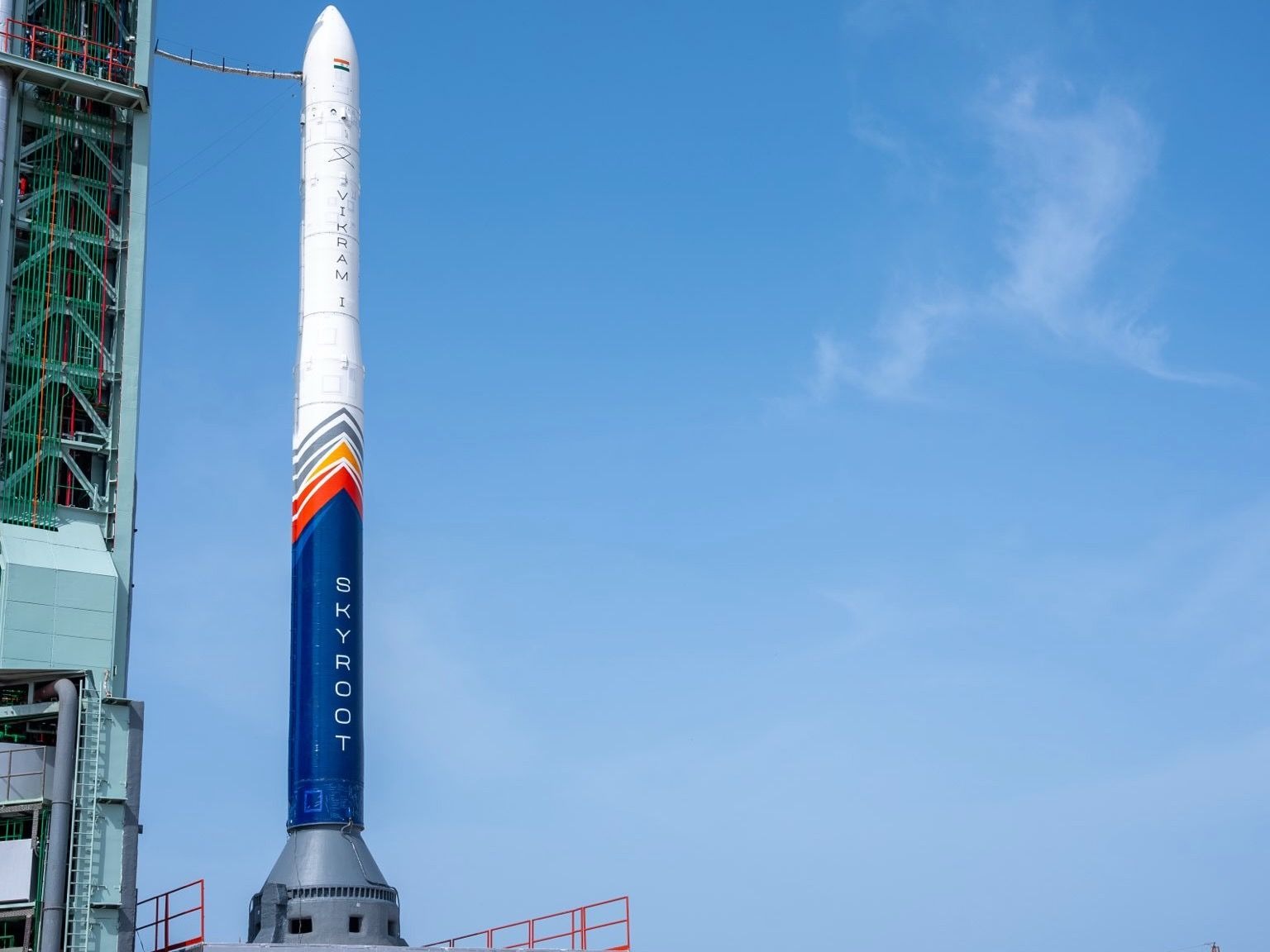
India has become the third nation globally to achieve private orbital launch capability after Skyroot Aerospace’s Vikram-1 rocket successfully reached orbit on July 18, 2026. The "Aagaman" mission validates India's space-sector reforms and opens the domestic market for commercial satellite launches using indigenous, 3D-printed, carbon-composite rocket technology.
The successful "Aagaman" mission marks the first time an Indian private firm has achieved orbital flight, positioning the nation alongside the U.S. and China in the elite private space race.
SRIHARIKOTA — India has officially entered a new era of space exploration as Hyderabad-based Skyroot Aerospace successfully launched its Vikram-1 rocket into orbit on July 18, 2026. The milestone mission, dubbed "Aagaman" (Sanskrit for "Arrival"), marks the first time an Indian private company has successfully placed payloads into orbit, effectively ending the historical state monopoly on orbital launches.
The four-stage launch vehicle lifted off from the Satish Dhawan Space Centre in Sriharikota at 12:05 p.m. IST. After a flight duration of approximately 17 minutes, the rocket successfully deployed its customer payloads at an altitude of 450 kilometers. This achievement officially establishes India as the third country in the world, following the United States and China, to possess domestic private orbital launch capability.
A Historic Milestone for India’s Space Sector
The success of the Vikram-1 mission is seen as a direct validation of the Indian government's Space Policy 2023, which was designed to open the space value chain to private participation. By allowing startups to design, build, and operate their own launch vehicles, the policy has fostered a competitive ecosystem managed under the oversight of the Indian National Space Promotion and Authorisation Centre (IN-SPACe).
The rocket, which stands seven stories tall and features an all-carbon composite structure, was built using in-house propulsion technologies, including 3D-printed engines. During its debut flight, it carried multiple payloads, including a technology demonstration from German firm DCUBED, the Solaras S3 nanosatellite from Indian startup Grahaa Space, and a robotic debris-capture arm developed by Cosmoserve Space.
Strategic Impact and Future Outlook
For the global space industry, the arrival of a new, cost-effective launch provider from India is significant. The small-satellite launch market is currently supply-constrained, with a growing backlog of demand for LEO (Low Earth Orbit) deployment. Vikram-1 is specifically engineered to address this, offering rapid, on-demand launch services for payloads up to 350 kg.
Industry experts believe this launch will catalyze further investment in the domestic space-tech ecosystem, which has grown from a single startup in 2014 to over 400 companies by mid-2026.
"This mission is a grand success," the mission director declared from Mission Control shortly after the payloads were confirmed in orbit, drawing cheers from engineers and observers. Prime Minister Narendra Modi hailed the achievement on X (formerly Twitter), describing the launch as a "historic new frontier for India’s space journey" that reflects the "talent, determination, and entrepreneurial spirit of our youth."
Why It Matters
The success of Vikram-1 provides Indian companies a domestic alternative to international launch providers, potentially lowering costs for domestic satellite operators and research institutions. By securing the ability to launch on-demand, India significantly strengthens its position as a global hub for space technology and innovation.
Key Facts at a Glance
Third Global Power: India joins the U.S. and China as one of only three nations with private orbital launch capability.
Mission Success: The "Aagaman" mission successfully placed multiple payloads into a 450-km orbit on its very first attempt.
Indigenous Tech: The rocket features a 3D-printed engine and an all-carbon composite airframe.
Payload Capacity: Vikram-1 is designed to carry up to 350 kg to Low Earth Orbit (LEO).
FAQ Section
1. What is the significance of the "Aagaman" mission?
It is the first time an Indian private company has successfully launched a rocket into orbit, marking a transition from state-led missions to a commercial, private-sector-inclusive space economy.
2. Is this the first time Skyroot has launched a rocket?
No. Skyroot previously launched the suborbital Vikram-S rocket in November 2022, which was the first private rocket to reach space from India.
3. Who regulates these private launches in India?
The IN-SPACe acts as the primary agency for promoting and authorizing private space activities in India.
4. Where was the rocket launched from?
The vehicle launched from the first launch pad at the Satish Dhawan Space Centre in Sriharikota.
Official Sources