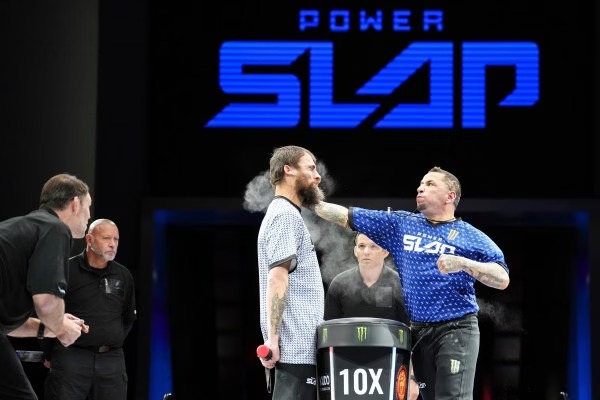
Dana White's Power Slap organisation keeps growing its events, fanbase, and viral reach — but so does the backlash. From neuroscientists and champion boxers to U.S. Congress members, the debate around slap fighting as a legitimate sport versus organised harm has never been louder or more consequential than in 2026.
Extreme sports have always pushed boundaries, but Power Slap may be pushing against the wrong ones. VeChain Power Slap 18, the latest instalment in Dana White's growing slap-fighting series, took place on March 6, 2026, live from the Fontainebleau in Las Vegas, streaming free on YouTube to a global audience. Yet as the organisation approaches its 20th event, the question that has followed it since day one refuses to go away: is this sport, spectacle, or something far more dangerous than either?
Sport Or Spectacle? The Line Keeps Blurring
Power Slap is an open-handed striking contest where two competitors stand inches apart, taking turns slapping each other in the face — the recipient must stand completely still with no flinching, no blocking, and no defence whatsoever, with 60 seconds to recover between strikes before returning to position.
The organisation has rules, regulations, weight classes, and judging criteria, and requires all athletes to undergo medical testing and be monitored by health officials during and after competition — yet it simultaneously thrives on shock value, viral knockouts, and slow-motion replays of skin rippling across jawlines.
The Medical Community Sounds The Alarm
The most consistent and loudest opposition to Power Slap has come not from rival promoters but from neuroscientists and medical professionals. Greek neurologist Nikolas Evangelou called the sport a recipe for disaster, explaining that impact to the head from an angle causes rotational forces on the brain leading to disruption of brain function that can sometimes be permanent.
Dr. Bennet Omalu, the neuropathologist who discovered chronic traumatic encephalopathy, called for slap fighting shows to be removed from television entirely, stating it is possible that a participant could die or suffer catastrophic brain damage.
Fighters, Fans, And A Congress Divided
Even elite combat sports athletes have drawn a firm line. UFC fighter Sean O'Malley stated he refused to watch Power Slap due to its clear association with brain injuries, while WBC boxing champion Ryan Garcia publicly called for the sport to be stopped.
In February 2023, U.S. Congressmen Bill Pascrell and Don Bacon launched a formal Congressional inquiry into the ethicality of Power Slap — a level of legislative scrutiny that few sports formats have ever attracted.
Hits And Misses: The Power Slap Reality Check
Power Slap 18 streamed free on YouTube on March 6, 2026, from Las Vegas's Fontainebleau hotel
Power Slap's Instagram account has grown to 7 million followers, reflecting significant global reach
Power Slap is licensed and sanctioned by the Nevada State Athletic Commission
TBS cancelled its original Power Slap series after Season 1 due to low ratings and health controversy; it now airs on Rumble with Season 3 running through 2024
Legal experts note that athletes accepting assumed risk in sports may not extend to extreme acts that blur the line between fair competition and criminal behaviour
Supporters argue Power Slap is one of the most accessible entry points into combat sports, requiring minimal athletic background
The Bigger Question For Extreme Sports
Power Slap occupies a strange space between regulated competition and entertainment product — a reflection of an era where attention is currency and pain can be monetised. As the format continues expanding globally, the industry faces an increasingly urgent reckoning: at what point does extreme become unconscionable, and who is responsible for drawing that line?
Sources: Wikipedia, Power Slap Official, Colgate Maroon News, Tapology, Ugo Lord Legal, U.S. Congressional Record