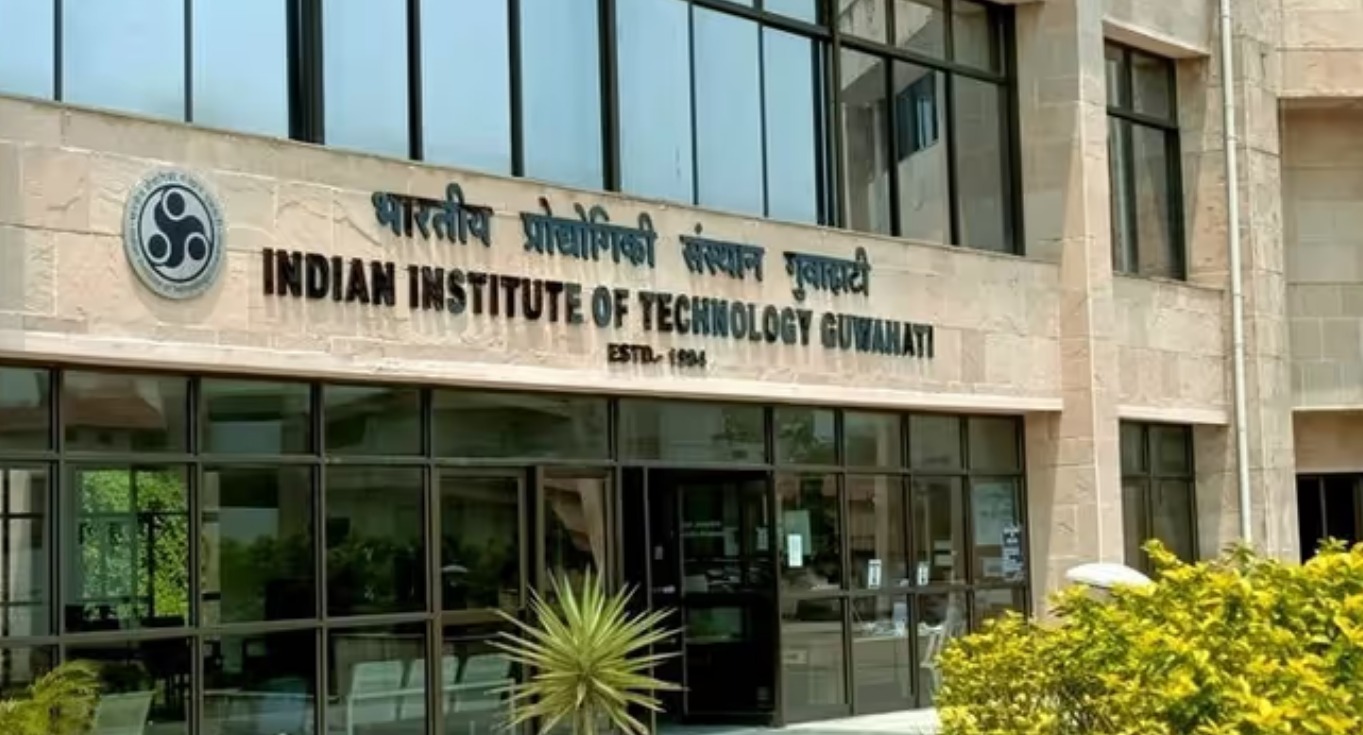
IIT Guwahati researchers have developed a new light-emitting nanomaterial that could make it dramatically harder to forge currency notes, government IDs, legal documents and branded products. The team has engineered perovskite nanocrystals that create microscopic, light based security patterns which ordinary printers and scanners cannot copy. Because these patterns also react in specific ways to heat and chemicals, counterfeiters would have to mimic not just how they look, but how they behave, raising the bar on forgery.
Breakthrough From IIT Guwahati’s Physics Lab
In a study published in Advanced Optical Materials, a team led by Prof Saikat Bhaumik and Prof P K Giri, along with researchers Latika Juneja and Garima Choudhary from IIT Guwahati’s Department of Physics, reports an “advanced light-emitting perovskite nanomaterial” tailored for anti counterfeiting. The nanocrystals emit highly pure, bright colours and can be patterned into tiny security features that are invisible or hard to detect under normal viewing conditions. IIT Guwahati says the innovation is designed specifically to tackle fake currency, forged documents and counterfeit goods, where existing holograms and labels are increasingly being reverse engineered.
How The 4D Anti Counterfeiting Concept Works
The researchers use a direct laser writing technique to “draw” microscopic patterns with these nanomaterials at ultra high resolutions of about 10 to 40 micrometres. Thanks to a special double layer protective coating, the nanocrystals retain their light emission even after exposure to heat and chemicals, while also changing in controlled ways under specific treatments. This allows creation of security features that do not just encode information in space, but also in how they respond over time and under different conditions, a concept the team has branded as “4D anti counterfeiting.”
Potential Uses From Cash To Luxury Goods
According to the institute, the technology can be integrated into banknotes, passports, identity cards, tax stamps, legal documents and branded product labels as an additional layer of authentication. Because the patterns can store binary codes and other hidden data, they can double up as secure information tags for product tracking or verification at checkpoints and retail counters. Beyond security, the same nanomaterial platform and laser patterning method could feed into next generation micro LED displays for smartphones, wearables and augmented reality devices, where fine, bright pixel patterns are crucial.
From Lab Prototype To Real World Deployment
For now, IIT Guwahati emphasises that the work is at the laboratory stage and will need further testing, scaling and industry partnerships before it lands on actual currency notes or ID cards. Questions of durability in everyday circulation, cost at scale and integration with existing printing processes will be central to commercialisation. Even so, the research offers a promising Indian answer to a global counterfeiting problem that costs governments and companies billions of rupees every year, while eroding trust in products and documents.
Key Highlights
- IIT Guwahati develops light emitting perovskite nanomaterial for advanced security features
- Nanocrystals produce microscopic light based patterns that are hard to copy with normal printers and scanners
- Double layer protection makes patterns resistant to heat and chemicals, enabling 4D anti counterfeiting behaviour
- Potential applications include currency, passports, ID cards, legal documents and branded product labels
- Technology is still at lab stage but could also power future micro LED and AR display components
Sources: IIT Guwahati official press release; India Today NE and NorthEast Now