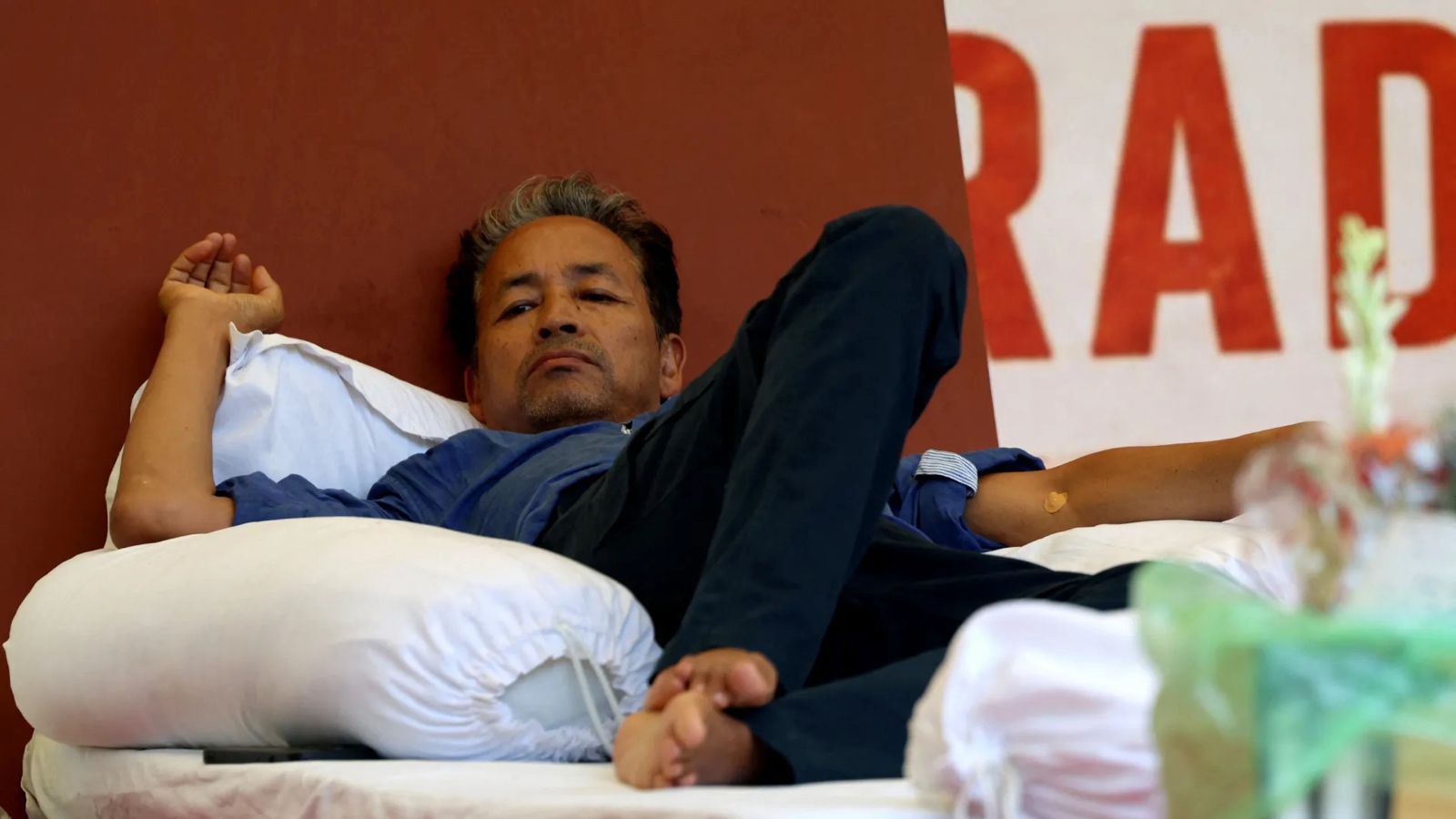
Activist Sonam Wangchuk has reached his 18th day of an indefinite hunger strike in Delhi, protesting educational failures and demanding the Education Minister’s resignation. Amidst his deteriorating health, the Delhi High Court has intervened, ordering the Centre to respond regarding potential urgent medical intervention to ensure his survival and safety.
As activist Sonam Wangchuk completes 18 days of an indefinite hunger strike, the Delhi High Court has intervened, seeking urgent responses from the government regarding his deteriorating health.
NEW DELHI — Environmentalist and education reformer Sonam Wangchuk remains under 24-hour medical supervision at Jantar Mantar, where he has been fasting since June 28, 2026. The activist, known for his work in Ladakh, is part of a broader protest led by the Cockroach Janta Party (CJP), which is demanding the resignation of Union Education Minister Dharmendra Pradhan over alleged irregularities in the NEET-UG examination and other educational reforms.
As of July 15, 2026, Wangchuk’s health has reached a precarious stage. According to medical bulletins released by the CJP, he has lost nearly 9 kg since the beginning of his fast and is experiencing significant weakness, dizziness, and muscle mass loss. Despite his condition, Wangchuk has consistently refused pleas from political leaders, celebrities, and activists to end his hunger strike, insisting that the government must initiate a dialogue to address the protesters' demands.
Legal Intervention and Government Response
On July 15, 2026, the Delhi High Court took cognizance of a Public Interest Litigation (PIL) filed by advocate Rakesh Kumar Saini, which sought urgent medical intervention to protect Wangchuk’s life. The petition expressed concern that the activist’s condition had become "life-threatening" and requested that the court direct authorities to provide essential liquid nutrition, proteins, and vitamins—if necessary, through force-feeding—to ensure his survival.
A Bench led by Chief Justice Devendra Kumar Upadhyaya and Justice Tejas Karia issued notices to the Centre and the Delhi government, seeking their response by July 16, 2026. While the court has moved to address the medical emergency, the central government has maintained silence on the demands of the protesters, leading CJP founder Abhijeet Dipke to characterize the administration’s refusal to engage in dialogue as "cruel."
Core Demands of the CJP Protest
The hunger strike is part of a larger, ongoing movement by the Cockroach Janta Party that began on June 20, 2026. The key demands of the protest include:
Ministerial Resignation: The immediate resignation of Union Education Minister Dharmendra Pradhan.
Examination Integrity: A transparent and accountable examination system in response to repeated paper leaks.
Compensation: Financial support of ₹1 crore for families of students who died by suicide allegedly due to the stress and failures of the examination system.
The protesters have also organized a "Chalo Sansad" (March to Parliament) scheduled for July 20, 2026—the opening day of the Monsoon Session—to escalate their campaign for educational reform.
Why It Matters
The hunger strike has garnered significant national attention, drawing solidarity from various opposition leaders, including Arvind Kejriwal, Uddhav Thackeray, and Shashi Tharoor, as well as several figures from the Indian film industry. For many, Wangchuk’s fast represents a broader outcry against governmental apathy regarding systemic issues in education and unemployment. Supporters maintain that the movement is not merely about one minister, but about demanding accountability and empathy from the state in addressing the frustrations of the country's youth.
Key Facts at a Glance
Duration: 18 days of indefinite hunger strike as of July 15, 2026.
Health Status: Weight loss of 8.9 kg (as of July 15); remains mentally alert but "very weak" under constant medical vigilance.
Protest Origin: Part of an umbrella movement by the Cockroach Janta Party (CJP) at Jantar Mantar.
Next Milestone: A "Chalo Sansad" (March to Parliament) is planned for July 20, 2026.
Frequently Asked Questions
Why is Sonam Wangchuk on hunger strike?
Wangchuk is protesting to demand the resignation of Education Minister Dharmendra Pradhan and calling for greater accountability following alleged irregularities in the NEET-UG 2026 examination and broader issues in the education system.
What is the status of the legal case regarding his health?
The Delhi High Court is hearing a PIL requesting urgent medical intervention, including possible force-feeding if required to preserve his life, and has asked the Centre and Delhi government to respond by July 16, 2026.
Who is supporting the protest?
The movement has seen support from a diverse array of political figures, academics, student organizations like AISA, and members of the film industry, many of whom have appealed to the government to initiate a dialogue.
Source: The Hindu, India Today, Business Standard, LawBeat