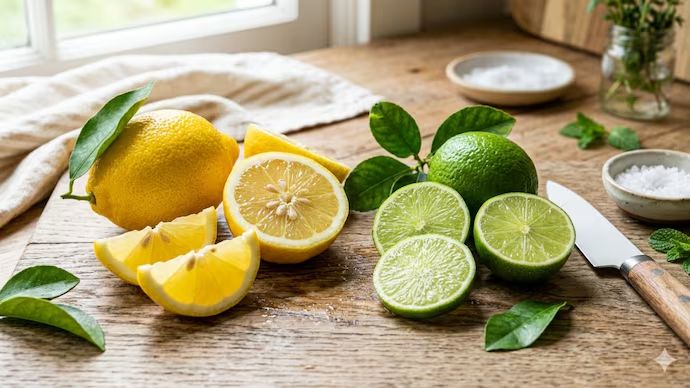
A data-backed review of lemons and limes confirms that despite similar acid levels, the fruits possess distinct sugar balances and aromatic oils. Lemons offer a sweeter, brighter flavor suited for Mediterranean cooking, while limes deliver a sharper, earthy bitterness that balances tropical cuisines and complex beverage recipes.
WASHINGTON — According to data published on Tuesday, June 16, 2026, food scientists and international agricultural monitors have released an updated consumer classification mapping the exact culinary, chemical, and physical parameters that differentiate lemons from limes. While retail shoppers frequently treat the two fruits as interchangeable acidic substitutes in everyday recipes, data from global agricultural research centers indicate that their distinct moisture levels, pH profiles, and flavor properties fundamentally alter their performance in baking, beverage preparation, and long-term preservation. Understanding these underlying variations helps home cooks, institutional kitchens, and commercial food processors avoid unexpected changes in texture or flavor during recipe formulation.
The Botanical Origins and Visual Profiles of Citrus Siblings
Despite sharing a close evolutionary lineage within the broader Citrus genus, the two fruits display distinct genetic backgrounds and growing preferences. Agronomists at the U.S. Department of Agriculture document that the standard commercial lemon (Citrus limon) thrives primarily in temperate, semi-arid Mediterranean environments. The tree yields large, oval fruits characterized by thick, textured skins that shift to a bright yellow hue upon reaching full maturity.
In contrast, the classic commercial lime—specifically the Persian lime (Citrus latifolia) and the smaller Key lime (Citrus aurantiifolia)—prefers tropical and subtropical climates with high relative humidity. Limes typically develop a smaller, spherical shape protected by a thin, smooth, dark green rind. If left unharvested on the branch past their commercial prime, limes will eventually ripen to a pale yellow color, though they are uniformly picked and sold while green to preserve their signature biting acidity.
Dissecting the Acidic Balance and Flavor Chemistry
The primary practical distinction between a lemon vs lime centers on how their organic acids balance with natural sugars. Chemical analyses performed by laboratory technicians at the Food and Drug Administration show that both fruits contain similar baseline concentrations of citric acid, which usually hovers between 5% and 7% by volume in fresh juice extracts.
Because lemons possess a slightly higher concentration of natural sugars, human taste buds perceive their juice as a bright, crisp, and clean sour flavor. Limes, conversely, maintain a lower sugar content paired with subtle bitter components. This combination produces a deeper, sharper, and more herbal taste experience on the palate.
Optimizing Culinary Applications Across Global Traditions
These distinct chemical and physical traits explain why different culinary cultures lean heavily toward one fruit over the other. Professional chefs tracking recipe compliance note that the bright, aromatic properties of lemons make them ideal for delicate Mediterranean dishes, roasted poultry, and classic European pastry techniques like curds and tarts.
Conversely, the sharp, slightly bitter profile of limes provides the structural balance needed for spicy, intensely seasoned cuisines. Chefs across Latin America, South Asia, and Southeast Asia rely on fresh lime juice to cut through fiery chili oils, balance complex fish sauces, and preserve raw proteins in traditional ceviche preparations.
Official Sources Section
The botanical measurements, chemical breakdowns, and nutritional data used in this report were compiled from official crop reports issued by the U.S. Department of Agriculture, dietary reference tables verified by the Food and Drug Administration, and agricultural trade updates tracked by the Ministry of Consumer Affairs.
Quote Section
"Substituting a lemon for a lime in a precise baking formula can completely alter your final product due to differences in sugar content and skin thickness," stated culinary science instructors reviewing the agricultural data. "According to officials, while both fruits offer excellent acidity, their unique essential oil profiles mean that exchanging their rinds or zests will noticeably change the aroma and flavor of the dish."
"Organizers stated that from a pure storage perspective, the thinner skin of the lime makes it much more vulnerable to moisture loss and cold damage, meaning it dries out and spoils faster than a thick-skinned lemon when kept in commercial refrigeration."
Why It Matters
For everyday consumers, retail shoppers, and restaurant operators, knowing the real differences between a lemon vs lime helps improve meal preparation and extends the shelf life of fresh produce. Using the correct citrus profile ensures home-cooked meals achieve their intended flavor balance, keeps cocktails and beverages crisp, and prevents sensitive baking emulsions from separating or turning overly bitter. This structural knowledge helps shoppers buy groceries more efficiently and minimizes food waste in households and commercial kitchens alike.
Key Facts at a Glance
Distinct Terpene Focus: Lemons contain high levels of limonene for a bright, floral aroma, whereas limes are rich in pinenes, creating an earthy flavor profile.
Climatic Division: Lemon trees are physically adapted to temperate, semi-arid regions, while lime varieties require warm, humid tropical ecosystems to thrive.
Ripening Realities: Limes are harvested early while green to capture their signature biting flavor; if left on the tree, they naturally mature to a pale yellow color.
Storage Variations: The thick, sturdy rind of the lemon acts as a natural protective shield, giving it a longer shelf life than the thin-skinned, delicate lime.
FAQ Section
1. Can I use lemon juice instead of lime juice in a recipe?
Yes, in most casual cooking scenarios, you can use a 1:1 substitution because both fruits share a similar acidic strength. However, the swap will alter the flavor profile: lemons will add a brighter, slightly sweeter taste, while limes contribute a sharper, more herbal edge.
2. Is there a significant nutritional difference between lemons and limes?
Nutritiously, both fruits are remarkably similar, providing low calories and zero fat. However, laboratory data shows that standard lemons contain a slightly higher concentration of Vitamin C per serving compared to Persian or Key limes.
3. Why do green limes sometimes turn yellow on the kitchen counter?
Limes naturally turn yellow as they overripen and lose chlorophyll over time. While a yellowing lime is perfectly safe to consume, its juice will taste less acidic and lose some of the sharp, punchy bitterness characteristic of fresh green limes.
Source: Crop Data from the U.S. Department of Agriculture, Nutritional Indices from the Food and Drug Administration, and consumer guidelines from the Ministry of Consumer Affairs.