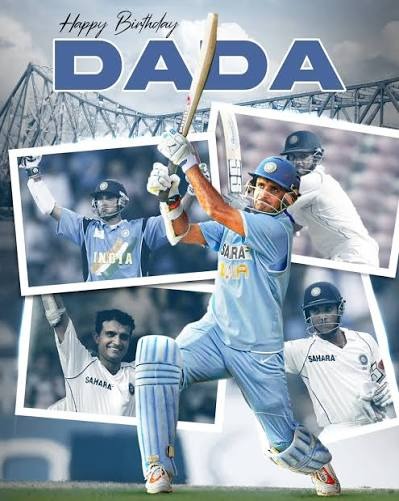
Sourav Ganguly, India’s "Prince of Kolkata," turns 54, marking a career that revolutionized Indian cricket. Known for his fierce leadership and iconic 2002 Lord's celebration, he transformed the national team’s culture, mentored future legends, and left an indelible mark as both a prolific batsman and a visionary administrator.
As the 'Prince of Kolkata' celebrates his 54th birthday, his legacy as a transformative leader and the architect of a fearless Indian side remains central to the nation's sporting narrative.
KOLKATA — Sourav Ganguly, widely celebrated as "Dada" and the "Prince of Kolkata," marked his 54th birthday on July 8, 2026. A name that resonates across every corner of India, Ganguly’s influence on the sport transcends his impressive statistical record of over 18,000 international runs. Today, as he turns 54, he is recognized not merely as a former player, but as the captain who fundamentally altered the psyche of Indian cricket.
When Ganguly assumed the captaincy in 2000, Indian cricket was at a crossroads, reeling from internal challenges and a lack of belief in overseas conditions. His tenure is credited with cultivating a new, aggressive identity—a shift that moved the team away from cautious play toward a culture of grit and self-assurance.
From Lord's Balcony to a Lasting Legacy
For many, the defining image of his career remains the 2002 NatWest Series final at Lord's Cricket Ground. After a historic chase spearheaded by young talents Yuvraj Singh and Mohammad Kaif, Ganguly famously removed his shirt and waved it from the balcony. While the gesture drew polarized reactions at the time, it became a symbol of a captain who was not afraid to express raw passion and defend his teammates—an act that cemented his reputation as a leader who stood for his players.
"It was not planned," Ganguly later shared in an interview. "We were losing halfway, then Yuvraj and Kaif recovered and finished the game for us. It was all in good humour, with the proper mindset of happiness after winning a match from nowhere."
Transforming the Culture of the Team
Ganguly’s leadership was characterized by his willingness to back talent. Under his guidance, the team witnessed the rise of players who would go on to become global icons, including MS Dhoni, Virender Sehwag, Harbhajan Singh, and Zaheer Khan. He championed a policy of trusting youth and providing them the stability to perform, which helped India secure significant series wins in challenging environments like Australia and Pakistan.
Beyond the field, his transition into cricket administration—serving as the President of the Board of Control for Cricket in India (BCCI) and the Cricket Association of Bengal (CAB)—has allowed him to remain a central figure in the sport’s evolution. His journey from a naturally right-handed child who learned to bat left-handed to accommodate his brother’s gear, to becoming one of the most prolific left-handed openers in history, remains a testament to his adaptability and dedication.
Quote Section
"According to officials," Ganguly’s enduring impact lies in his ability to demand resilience from his team and his steadfast commitment to fostering talent, ensuring that India’s identity on the international stage shifted from that of an underdog to a dominant force.
Why It Matters
Ganguly’s legacy is a masterclass in leadership, demonstrating that sport is as much about mental fortitude and cultural identity as it is about physical technique. His influence is still visible in the current structure of Indian cricket, which continues to benefit from the aggressive, fearless mindset he instilled two decades ago.
Key Facts at a Glance
Birth Date: July 8, 1972.
International Career: 1992–2008.
Captaincy Legacy: Led India to the 2002 ICC Champions Trophy title and the 2003 Cricket World Cup final.
Batting Milestone: One of the highest run-scorers in ODI history and part of the legendary "Fab Four" of Indian cricket.
FAQ
What made Sourav Ganguly’s captaincy unique?
Ganguly introduced an aggressive style of play and prioritized backing young players, which helped build a resilient and fearless team capable of winning in foreign conditions.
What was the significance of the shirt-waving incident?
The act at Lord's in 2002 was a spontaneous expression of joy and a retort to a similar gesture previously made by an England player, symbolizing the team's grit in a high-stakes comeback win.
Is Sourav Ganguly still involved in cricket?
Yes, Ganguly remains active in cricket administration, serving in roles such as the President of the Cricket Association of Bengal and as an advisor and mentor.
Source: Wikipedia, Britannica, PTI News