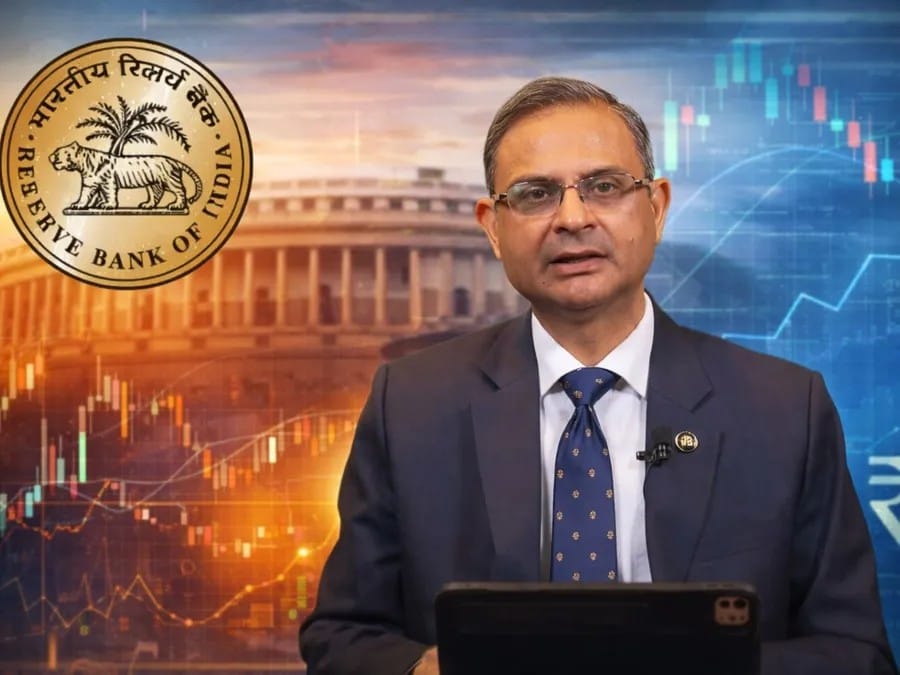
The Reserve Bank of India’s Monetary Policy Committee kept the policy repo rate unchanged at 5.25% on August 5, 2026. Citing resilient domestic GDP growth alongside potential global inflation risks from crude oil, Governor Sanjay Malhotra confirmed the central bank will maintain its neutral policy stance.
MUMBAI — The Reserve Bank of India (RBI) announced on Wednesday, August 5, 2026, that its Monetary Policy Committee (MPC) voted unanimously to keep the benchmark repo rate unchanged at 5.25% for the fourth consecutive meeting. Concluding a three-day bi-monthly review meeting chaired by RBI Governor Sanjay Malhotra in Mumbai, the central bank maintained its neutral monetary policy stance to preserve financial stability. The decision comes as domestic economic growth remains resilient while international energy markets and geopolitical friction present ongoing upside risks to retail inflation.
Monetary Policy Committee Retains Neutral Policy Stance
The central bank's six-member Monetary Policy Committee decided to maintain existing monetary benchmarks across all policy windows. Under the updated RBI monetary policy framework, the policy repo rate remains fixed at 5.25%, while the Standing Deposit Facility (SDF) rate is retained at 5.00% and the Marginal Standing Facility (MSF) rate stands at 5.50%.
The decision to retain a neutral stance allows monetary authorities flexibility to calibrate future liquidity actions based on macroeconomic developments. Officials indicated that while domestic growth indicators remain strong, persistent uncertainty in global commodity markets necessitates a cautious approach to monetary easing.
Key operational details of the latest policy review include:
Benchmark Repo Rate: Maintained at 5.25%.
Policy Stance: Retained as Neutral across all committee members.
Standing Deposit Facility (SDF): Unchanged at 5.00%.
Marginal Standing Facility (MSF): Unchanged at 5.50%.
Meeting Dates: Conducted from August 3 to August 5, 2026, in Mumbai.
Macroeconomic Outlook and Inflation Projections
During the post-meeting address, the central bank outlined updated macroeconomic projections for the current fiscal year. India's domestic economic expansion continues to show momentum, supported by strong urban consumption, expanding private capital expenditures, and healthy corporate balance sheets. First-quarter gross domestic product (GDP) growth for FY27 is projected to remain near 7.0%, outperforming earlier baseline estimates.
However, the outlook for retail inflation remains closely tied to external commodity movements. While domestic Consumer Price Index (CPI) inflation has stayed within the central bank’s target band of 2% to 6%, volatile Brent crude oil prices—which have fluctuated due to ongoing West Asia tensions—continue to pose upside risk. Monetary authorities noted that maintaining the status quo under the RBI monetary policy protects against secondary inflationary spillover while maintaining price stability.
Impact on Retail Borrowers, Businesses, and Investors
The continuation of the current RBI monetary policy framework delivers stability for retail borrowers and commercial enterprises across India. Floating-rate loans, including home loans and vehicle financing linked to the External Benchmark Lending Rate (EBLR), will see no immediate change in equated monthly installments (EMIs).
For commercial borrowers, unchanged interest rates provide a predictable borrowing environment to plan long-term capital investments. Fixed-deposit investors across commercial banks will also experience stable yields, as financial institutions maintain existing interest rate schedules.
Equity markets reacted predictably to the announcement, with sectoral indices in real estate, public sector banking, and automobiles sustaining morning gains on the National Stock Exchange of India (NSE) and BSE Limited.
Official Sources Section
The RBI monetary policy decisions and economic evaluations were released directly by the Reserve Bank of India (RBI) following the conclusion of the August 3–5 MPC review. Statutory notices, detailed resolution reports, and Governor address transcripts are archived on the central bank's official portal and filed with domestic stock exchanges.
Quote Section
Addressing media representatives and financial analysts in Mumbai following the policy announcement on August 5, 2026:
RBI Governor Sanjay Malhotra stated:
"Global economic growth is projected to soften, while inflation risks remain elevated internationally. The Monetary Policy Committee decided to keep the repo rate unchanged at 5.25% and maintain a neutral stance. Domestic economic activity remains resilient, supported by steady private consumption and favorable monsoon conditions, allowing us to focus on durably aligning inflation with our target."
Why It Matters
The decision under the August RBI monetary policy preserves financial stability by preventing unexpected shifts in domestic credit costs. Holding rates steady provides relief for prospective home buyers and corporate borrowers seeking rate clarity. Furthermore, maintaining adequate foreign exchange reserves and a steady policy environment supports foreign portfolio inflows while buffering the Indian rupee against global market volatility.
Key Facts at a Glance
Policy Repo Rate: Retained at 5.25% by unanimous MPC vote.
Stance: Maintained as Neutral to ensure data-dependent policy adjustments.
Loan EMI Impact: Floating-rate home loan EMIs remain unchanged for retail borrowers.
GDP Growth: First-quarter FY27 growth projected near 7.0%.
Inflation Risk: External crude oil price volatility remains the primary risk factor.
Frequently Asked Questions (FAQ)
Q1: What is the main outcome of the RBI monetary policy meeting on August 5, 2026?
The RBI Monetary Policy Committee voted to keep the policy repo rate unchanged at 5.25% and retained its neutral stance.
Q2: Will home loan EMIs decrease following this RBI monetary policy decision?
No, because the repo rate was held steady at 5.25%, floating-rate home loan EMIs will remain unchanged.
Q3: What reasons did the RBI Governor give for holding interest rates?
Governor Sanjay Malhotra cited resilient domestic growth offset by global uncertainty, international crude oil price risks, and the need to durably align inflation with targets.
Q4: Where can official RBI monetary policy documents be accessed?
Official policy resolutions, transcripts, and press statements are available on the official Reserve Bank of India (RBI) website.
Source: Reserve Bank of India (RBI), National Stock Exchange of India (NSE), BSE Limited