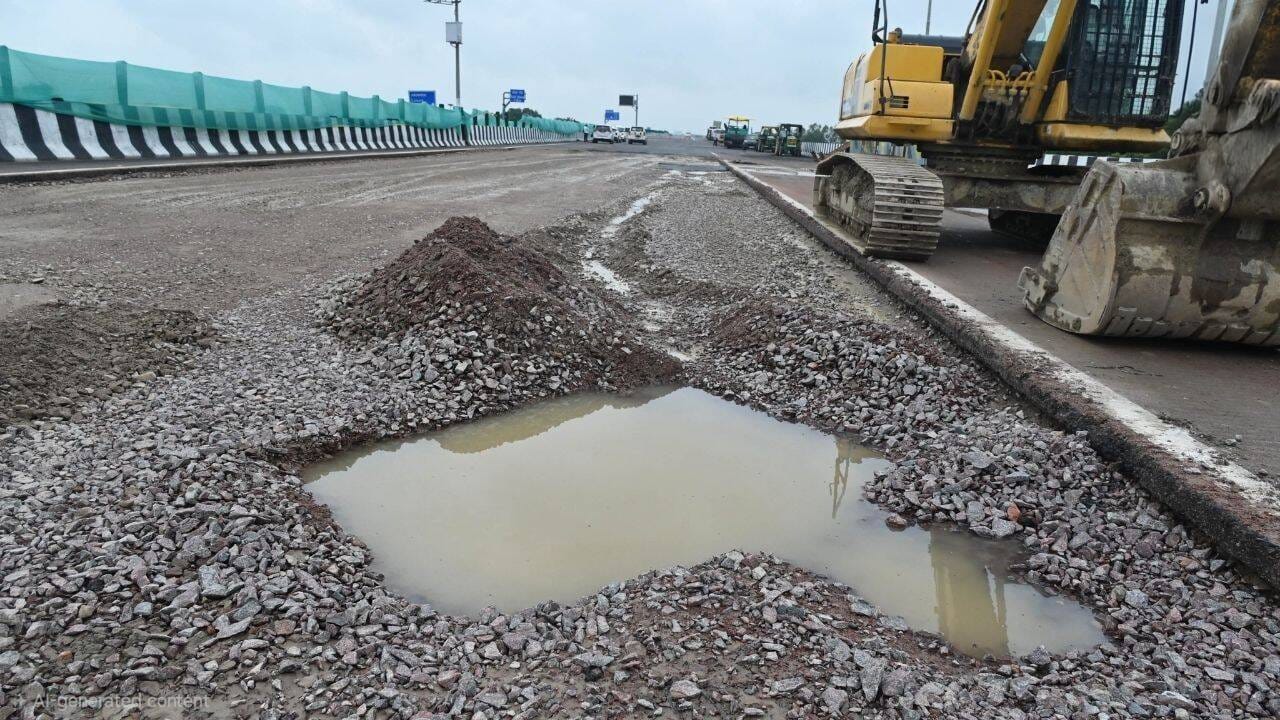
Preliminary reports confirm that structural defects on the newly opened Lucknow-Kanpur Expressway stem from foundational design flaws and weak subgrade soil. Government officials confirmed that superficial patchwork repairs will not solve the issue, requiring full bottom-up reconstruction while toll collection remains suspended.
LUCKNOW — Structural failures along the newly inaugurated ₹4,200-crore Lucknow-Kanpur Expressway stem from underlying foundational design flaws rather than simple surface execution defects, senior government officials confirmed on August 30, 2026. Preliminary technical investigations led by civil engineering experts from IIT Kharagpur revealed that temporary surface patchwork will fail to stabilize the 63-kilometer corridor, necessitating a full bottom-up reconstruction of damaged sections.
The structural slippages, which were observed near kilometer 64 near Unnao within weeks of the expressway's July 13 opening, prompted the National Highways Authority of India (NHAI) to suspend toll collection and penalize the project concessionaire. Technical assessments demonstrate that foundational soil instability and inadequate drainage design caused structural settlement under heavy traffic loads, forcing authorities to divert vehicles while long-term engineering remedies are prepared.
Technical Findings and Structural Engineering Deficiencies
According to preliminary findings by a specialized investigation team from IIT Kharagpur, the primary cause of the pavement slippage is the usage of highly plastic, weak subgrade soil directly beneath the roadbed. When subjected to water infiltration due to sub-optimal drainage design, plastic subgrade soils experience loss of shear strength and deform rapidly under heavy commercial vehicular loads.
Engineers confirmed that the overall thickness of the asphalt surface and underlying pavement layers met construction specifications, indicating that the failure occurred at the subgrade design phase. Because the structural integrity of the soil base is compromised, surface-level bitumastic patchwork cannot sustain traffic pressure. Consequently, engineering crews will be required to excavate affected stretches down to the subgrade level, replace the unstable foundation material, and re-engineer sub-surface drainage systems before repaving.
Official Sources Section
According to official releases from the Ministry of Road Transport and Highways and the National Highways Authority of India (NHAI), strict enforcement measures have been executed against project stakeholders. NHAI issued a "non-performer" notice to the project concessionaire, PNC Infratech Ltd., proposing to bar the company from future government project bids and seeking a 2% performance security penalty.
Additionally, NHAI debarred Key Project Personnel and initiated proceedings against independent consulting firm Theme Engineering Services for supervision failures. Detailed updates on regional transit corridors are accessible via the Government of Uttar Pradesh portal.
Quotes Section
"According to officials, the affected stretches will have to be rebuilt bottom up, as there was no deficiency in the pavement layer thickness but rather in the foundational design and subgrade soil selection."
"Organizers stated that toll collections remain fully suspended across the corridor to ensure commuters are not charged while structural rectification and expert technical evaluations continue."
Why It Matters
For Commuters: Toll collection remains suspended, but traffic diversions and lane closures near damaged sections increase travel times between Lucknow and Kanpur.
For Private Developers: Under the Hybrid Annuity Model (HAM), the concessionaire must bear all financial costs for structural rectification, estimated at several crores, without state reimbursement.
For Infrastructure Safety: The incident highlights critical gaps in pre-construction soil analysis and oversight, forcing NHAI to mandate Laser Profilometer testing across all high-speed highway projects.
Key Facts at a Glance
Project Value: ₹4,200 crore 63-km express corridor connecting Lucknow and Kanpur.
Failure Cause: Substandard design incorporating weak, highly plastic subgrade soil and inadequate drainage.
Rectification Requirement: Full bottom-up reconstruction of damaged segments; surface patchwork ruled ineffective.
Regulatory Action: Toll suspended, non-performer notices issued to concessionaire, and engineering supervisors debarred.
Frequently Asked Questions
What caused the damage on the Lucknow-Kanpur Expressway?
Preliminary reports attribute the damage to design flaws, specifically the use of weak, highly plastic soil in the foundation base combined with poor drainage, causing roadbed deformation when wet.
Will surface patchwork fix the damaged stretches?
No, government engineering experts stated that surface patchwork is ineffective because the defect lies in the subgrade foundation soil. Stretches must undergo complete bottom-up excavation and reconstruction.
Are commuters currently being charged toll on the expressway?
No, NHAI has suspended toll collection for all vehicles until complete rectification work is executed by the concessionaire.
Source: Official announcements from the Ministry of Road Transport and Highways, public press releases by the National Highways Authority of India, and technical reports from IIT Kharagpur.