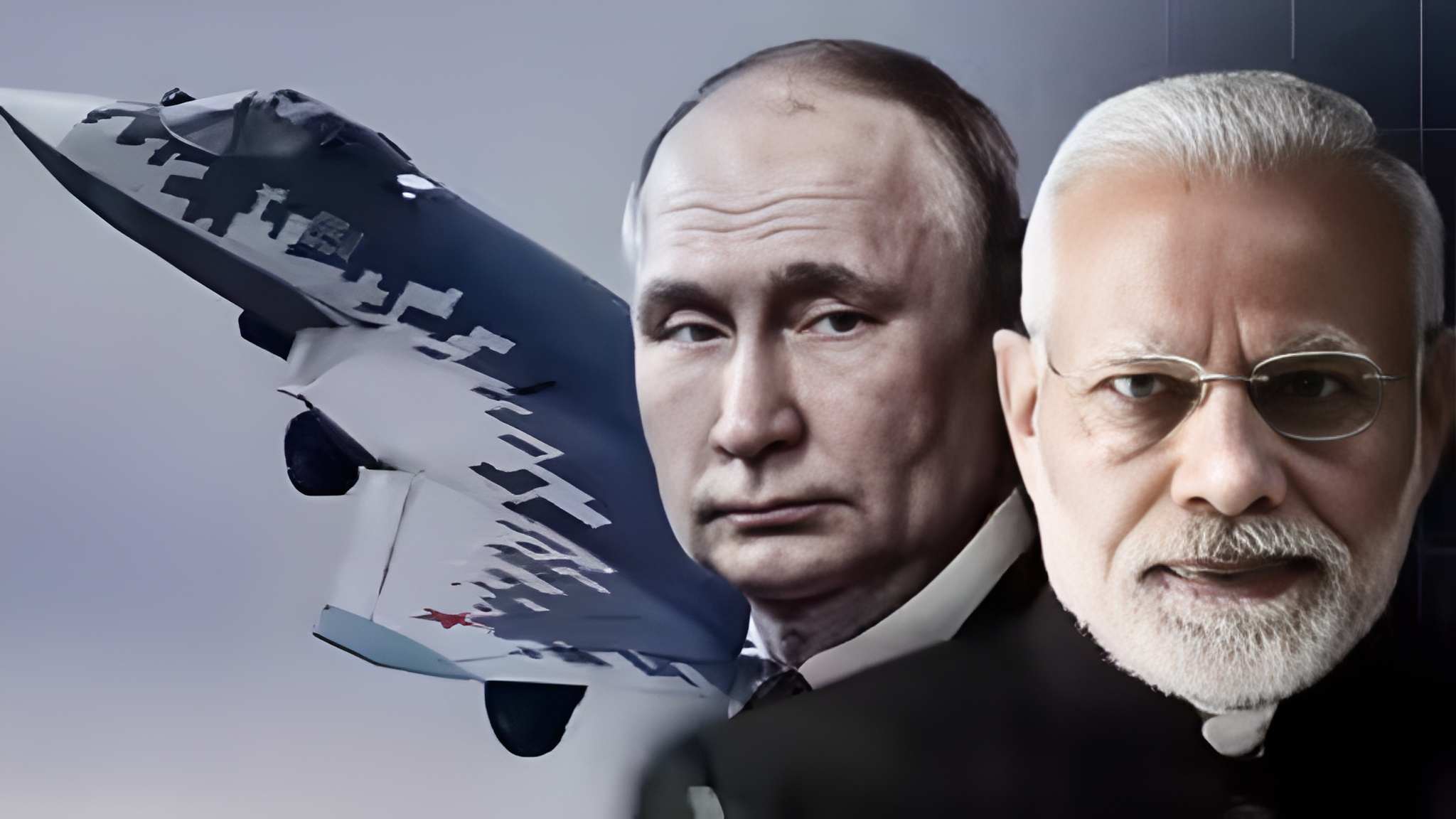
Russian President Vladimir Putin stated that the Sukhoi Su-57 stealth fighter could have been a joint India-Russia project. Moscow has made a fresh pitch offering joint production and unrestricted technology sharing to help India address its front-line fighter squadron deficit while its domestic fifth-generation aircraft remains in development.
ST. PETERSBURG — Russian President Vladimir Putin announced that the Sukhoi Su-57 fifth-generation stealth fighter jet could have been a fully realized joint project between Russia and India. Speaking late Thursday night, June 4, 2026, during an interaction with the heads of leading global news agencies at the St. Petersburg International Economic Forum, Putin extended a fresh offer to New Delhi for joint production and comprehensive technology transfers with "no restrictions whatsoever." This strategic development comes at a critical time as India balances long-term indigenous aircraft development against immediate front-line squadron deficits.
Moscow Makes Unrestricted Stealth Fighter Offer to New Delhi
The diplomatic outreach from the Kremlin aims to revitalize deep-tier military aviation cooperation between the two historic defense partners. Russia has officially pitched the co-production of the Sukhoi Su-57 platform inside India, presenting an architecture that aligns directly with New Delhi's local manufacturing mandates.
According to military data, India and Russia previously spent nearly 15 years negotiating a joint Fifth Generation Fighter Aircraft (FGFA) framework based on the Su-57 prototype. However, New Delhi formally withdrew from that initial collaborative framework in 2021 due to steep projected development costs—estimated near $30 billion—alongside differences regarding technology transfers and specific structural performance requirements. President Putin's latest public statement positions the current, fully operational Su-57 as a ready-made platform that can be manufactured jointly without the initial research and development financial risks.
Bridging the Front-Line Air Superiority Deficit
The timing of the Russian proposal is highly relevant to India's defense planning. The Indian Air Force (IAF) is currently operating approximately 31 active fighter squadrons against a long-standing statutory national security requirement of 42 squadrons. Because India's domestic fifth-generation program, the Advanced Multirole Combat Aircraft (AMCA), is not projected to see active squadron service until at least 2035, defense planners are weighing the procurement of interim foreign stealth assets to maintain regional balance.
Technical Integration and Broader Air Defense Cooperation
The potential integration of the export-ready Sukhoi Su-57 variant into the Indian defense matrix could leverage existing industrial pipelines. State-run aerospace conglomerate Hindustan Aeronautics Limited (HAL) maintains active technical communication channels with the Sukhoi Design Bureau, which could streamline local assembly and part-sourcing operations.
Beyond combat aircraft, President Putin confirmed Russia's parallel readiness to deepen co-development on integrated air defense infrastructure. This defense cooperation links directly with India's ongoing deployment of its "Sudarshan Chakra" national air defense web, an integrated network where Russian-supplied S-400 Triumf long-range missile squadrons serve as a primary foundational shield.
Official Sources Section
Statements regarding defense procurement, high-level diplomatic briefings, and bilateral agreements are processed officially via the Ministry of Defence and the Ministry of External Affairs (MEA). Data regarding international arms transfers, trade dependencies, and multi-year defense spending shifts are cataloged independently by the Stockholm International Peace Research Institute (SIPRI).
Quote Section
During the media interaction in St. Petersburg, leadership highlighted the historic background and future possibilities of the engineering alliance.
"As for the Su-57, we offered our friends from India to jointly develop this machine, a fifth-generation aircraft. I think it's the best to date," Russian President Vladimir Putin stated. "In principle, this could have been our joint product. We made it independently, and we are ready to work with India to supply and keep developing it. We don't have any limitations."
Why It Matters
The practical implications of the Russian aerospace offer directly impact India's long-term defense spending and strategic autonomy. Accepting a co-production deal for the Su-57 would give the IAF a highly advanced stealth fighter jet much sooner than waiting for domestic designs to mature, helping counter rapid modernization programs in neighboring air fleets. However, committing to a multi-billion dollar Russian program could complicate India's growing defense partnerships with Western nations and run into international sanctions monitoring.
Key Facts at a Glance
Stealth Proposal: Russia has offered India joint production rights and full technology sharing for its premier Sukhoi Su-57 stealth fighter.
Historical Context: President Putin noted that the fifth-generation platform could have been a joint product if India had not stepped back from the FGFA program in 2021.
Squadron Void: The proposal aims to fill a capability gap in the IAF, which currently operates 31 fighter squadrons against a target of 42.
Air Defense Alignment: The defense offer extends to shared hardware development supporting India's S-400 missile networks and local air defense systems.
FAQ Section
Why did India originally withdraw from the joint fighter program with Russia?
India stepped away from the initial Fifth Generation Fighter Aircraft (FGFA) project in 2021 due to rising development costs, limited access to core technical codes, and delays in engine development.
How many Sukhoi Su-57 jets is the Indian government considering?
Defense tracking reports indicate that India is evaluating the potential acquisition of at least two squadrons—amounting to approximately 36 aircraft—contingent upon the jets meeting specific technical and localized operational needs.
Will this proposal delay India's domestic stealth fighter program?
The indigenous Advanced Multirole Combat Aircraft (AMCA) remains India's primary long-term aviation project. Any potential acquisition of the Su-57 would serve strictly as an interim bridge asset to prevent capability gaps before the AMCA enters full service after 2035.
Source: St. Petersburg International Economic Forum Official Briefings, Ministry of External Affairs India, Stockholm International Peace Research Institute (SIPRI) Records.