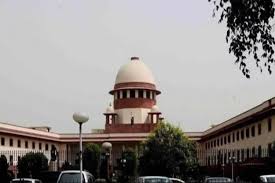
NEW DELHI - The Supreme Court of India on Friday refused to entertain a Public Interest Litigation (PIL) seeking an expedited timeline for filling vacant posts of chairpersons and members across multiple State Human Rights Commissions (SHRCs). The division bench emphasized that constitutional g...
NEW DELHI - The Supreme Court of India on Friday refused to entertain a Public Interest Litigation (PIL) seeking an expedited timeline for filling vacant posts of chairpersons and members across multiple State Human Rights Commissions (SHRCs). The division bench emphasized that constitutional governance dictates such local administrative grievances must first be raised before the respective state judiciaries rather than overwhelming the apex court.
This legal development underscores the ongoing operational challenges faced by regional human rights panels, which act as primary investigative bodies for civil liberties violations. Investors, public policy analysts, and citizens tracking administrative reforms note that the decision reaffirms the functional boundaries between the Supreme Court and individual State High Courts regarding governance oversight.
Judicial Reluctance to Bypass High Courts
A division bench comprising Justice Vikram Nath and Justice V. Mohana presiding over the matter questioned the petitioner's rationale for approaching the highest court directly. The bench observed that structural or administrative backlogs within individual states should be systematically addressed by the local High Courts, which possess equal authority under Article 226 of the Constitution to issue directives to state governments.
Legal experts tracking the case point out that the decision aligns with the apex court’s ongoing stance to deter litigants from bypassing localized legal remedies. By directing petitioners to their respective state judiciaries, the court aims to manage its expanding caseload while maintaining the principle of federal structure in the administration of justice.
Impact on Institutional Infrastructure and Civil Society
The persistent vacancies within the State Human Rights Commissions have drawn sharp scrutiny from human rights advocates and legal scholars. These commissions are tasked with inquiring into structural violations, handling complaints regarding police misconduct, and monitoring conditions in state custodial facilities.
When leadership roles like the chairperson-traditionally a retired Chief Justice of a High Court remain unfilled, the panels lack the necessary statutory power to pass final orders or enforce recommendations.
For Citizens: The absence of working tribunals translates into lengthy delays for resolving standard grievances and human rights appeals, limiting immediate localized remedy.
For Public Administrations: State governments face prolonged vacuums in administrative accountability, which occasionally results in increased litigation moving directly to formal court dockets.
Official Sources Section
According to official court repository logs and institutional statements issued during the public session on June 5, 2026, the case was dismissed with the liberty reserved for the petitioner to move to relevant state legal forums. Documentation from the National Human Rights Commission confirms that while the central national panel functions under structural guidelines, localized state-level statutory bodies remain subject to appointment cycles initiated by their independent state legislative committees.
Quote Section
"According to officials present during the proceedings, the bench explicitly questioned the petitioner on why the respective High Courts had not been moved first, highlighting that state judiciaries are well-equipped to direct state administrations on public vacancy timelines."
Why It Matters
The absolute refusal of the apex court to act as a primary clearinghouse for state regulatory vacancies signals a strict adherence to judicial hierarchy. It means civil society organizations and public interest litigants must redistribute their resources to battle vacancy backlogs at the provincial level. This shift could delay uniform nationwide tracking of human rights enforcement but strengthens regional judicial oversight.
Key Facts at a Glance
Direct Dismissal: The Supreme Court declined to pass any centralized orders regarding structural vacancies in various State Human Rights Commissions (SHRCs).
Judicial Bench: The ruling was delivered by a division bench consisting of Justice Vikram Nath and Justice V. Mohana on June 5, 2026.
Alternative Remedy: The petitioners were granted the liberty to approach individual State High Courts under Article 226 of the Constitution.
Operational Gridlock: Multiple human rights commissions across various states continue to operate with severely depleted staff or without a designated chairperson.
FAQ Section
Q1: Why did the Supreme Court refuse to step in directly?
The Supreme Court stated that the petitioner should approach the respective State High Courts first, as regional judiciaries hold parallel constitutional powers to handle domestic state appointments and administrative backlogs.
Q2: What happens to pending human rights cases if posts are vacant?
Vacant posts, particularly those of the chairperson and statutory members, often lead to an operational standstill or severe delays in passing final rulings, causing a significant backlog in pending civil cases.
Q3: Who is responsible for filling vacant posts in State Human Rights Commissions?
The appointments are handled by state governments via a high-level statutory selection committee typically comprising the Chief Minister, the Speaker of the Legislative Assembly, and the state Home Minister.
Q4: Can the petitioner still pursue this case?
Yes. The Supreme Court did not dismiss the core issue on its merits but rather on forum convenience, allowing the petitioner full freedom to file separate PILs in individual State High Courts.
Source: Supreme Court of India Official Portal, National Human Rights Commission (NHRC) Directory