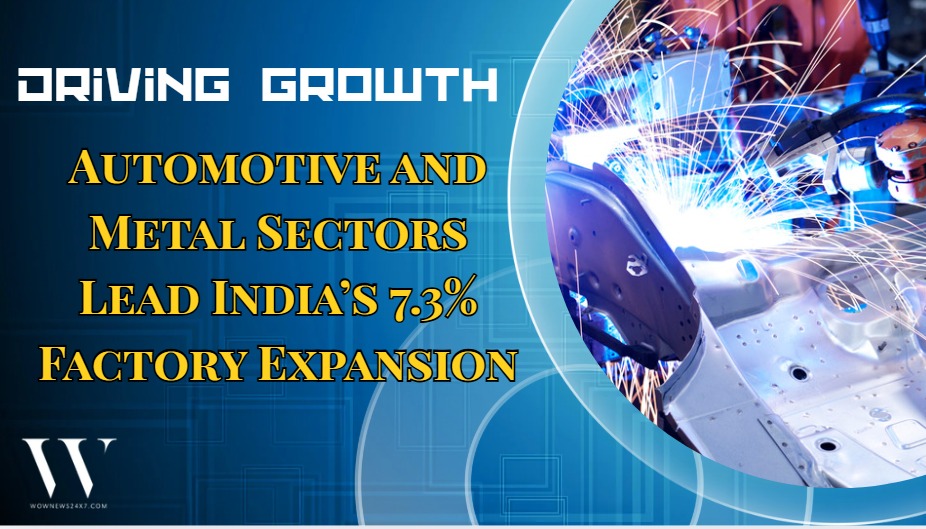
India’s manufacturing sector grew by 7.3 percent year-on-year in the final quarter of the 2025–26 fiscal year, according to official government data. This steady performance reflects the sector's ability to maintain upward momentum despite broader geopolitical uncertainties and fluctuations in global trade corridors. The expansion in the January-March 2026 quarter—closely tracked as a barometer for India’s industrial health—confirms that factory output remains a primary driver of the nation's economic progress. As India seeks to solidify its status as a global manufacturing hub, this quarterly performance provides a firm foundation for the new fiscal year, supported by sustained capital expenditure and policy-led reforms.
Manufacturing Sector Resilience Amid Global Volatility
While global manufacturing hubs faced headwinds earlier this year due to the ongoing West Asia crisis and rising energy costs, India’s domestic manufacturing sector demonstrated notable stability. According to the Ministry of Statistics and Programme Implementation, the growth was characterized by broad-based activity across 23 industry groups, with 14 categories recording positive growth during the period.
Key drivers of this expansion included:
Capital Goods: Strong investment in machinery and equipment, reflecting capacity expansion by private industries.
Basic Metals: Sustained demand from the construction and infrastructure sectors fueled an 8.6 percent rise in metal production.
Automotive: The motor vehicles segment saw a significant 18.1 percent increase, highlighting robust domestic demand for consumer and commercial transport.
The resilience of these sectors has allowed the manufacturing pillar to anchor overall industrial production, keeping the broader economy on track to remain the fastest-growing major nation globally.
Strategic Policy Support and Industrial Ecosystems
The consistent performance throughout FY26 is widely attributed to the government's targeted initiatives, including the Production Linked Incentive (PLI) schemes and enhanced infrastructure spending. Official reports indicate that these measures have effectively insulated domestic manufacturing from some of the supply chain shocks that have impacted other markets.
"The manufacturing sector is emerging as a key pillar of India’s growing industrial momentum," stated government representatives in recent fiscal briefings. By streamlining the business environment and focusing on high-value production, the government aims to increase manufacturing's share of the total GDP to 25 percent by 2035.
Impact on Business and Investors
For domestic businesses, this sustained growth rate translates into improved capacity utilization and higher business confidence. Economists note that the focus on high-tech manufacturing—specifically electronics and machinery—has allowed firms to transition toward global value chains. For investors, the steady output levels validate the long-term potential of "Make in India" initiatives, encouraging sustained capital allocation into Indian industrial corridors.
However, analysts also urge caution regarding external risks. As reported in recent data, rising input costs and shipping disruptions remain "wrinkles in the ointment" that require close monitoring by both the central bank and private manufacturers in the coming months.
Official Sources Section
Data regarding industrial performance and GDP-linked manufacturing growth is sourced from the Ministry of Statistics and Programme Implementation (MOSPI) and the Ministry of Finance. Additional sectoral analysis and macroeconomic trends are monitored via reports from India Ratings and Research and the Reserve Bank of India (RBI).
Quote Section
"According to officials, the manufacturing sector’s 7.3 percent growth reflects a maturing industrial environment where targeted infrastructure investment and improved local value addition have buffered domestic producers against global market shocks."
Why It Matters
The 7.3 percent growth rate serves as a critical indicator for the economy's ability to create jobs and sustain domestic consumption. For citizens, this indicates a healthier labor market, particularly within the manufacturing-heavy regions. For businesses, the ability to maintain growth amidst higher energy and logistics costs signals operational efficiency. This data reinforces India’s trajectory as it aims to bridge the gap between regional manufacturing and global export leadership.
Key Facts at a Glance
Quarterly Performance: Manufacturing sector GVA grew by 7.3 percent year-on-year in the March 2026 quarter.
Core Drivers: Strong output in motor vehicles (18.1%) and basic metals (8.6%) supported the overall growth trajectory.
Annual Outlook: The performance helped India maintain its standing as one of the world's fastest-growing major economies in FY26.
Strategic Focus: Government PLI schemes and infrastructure capex were identified as primary catalysts for industrial stability.
FAQ Section
What does the 7.3% manufacturing growth figure indicate?
It indicates that the manufacturing sector—a major component of India’s GDP—is expanding at a healthy pace, driven by domestic demand and infrastructure spending, despite a difficult global environment.
Why is the manufacturing sector so important to the Indian economy?
Manufacturing is essential for long-term job creation and wealth generation. It allows the country to reduce its import dependency and integrate more deeply into global supply chains.
Will this growth trend continue in the next fiscal year?
While economists are cautious due to global geopolitical risks, the government’s continued focus on capital expenditure and the expansion of high-tech manufacturing suggest a positive outlook for the coming quarters.
Source: Ministry of Statistics and Programme Implementation, Ministry of Finance Economic Survey, IBEF Manufacturing Sector Report.