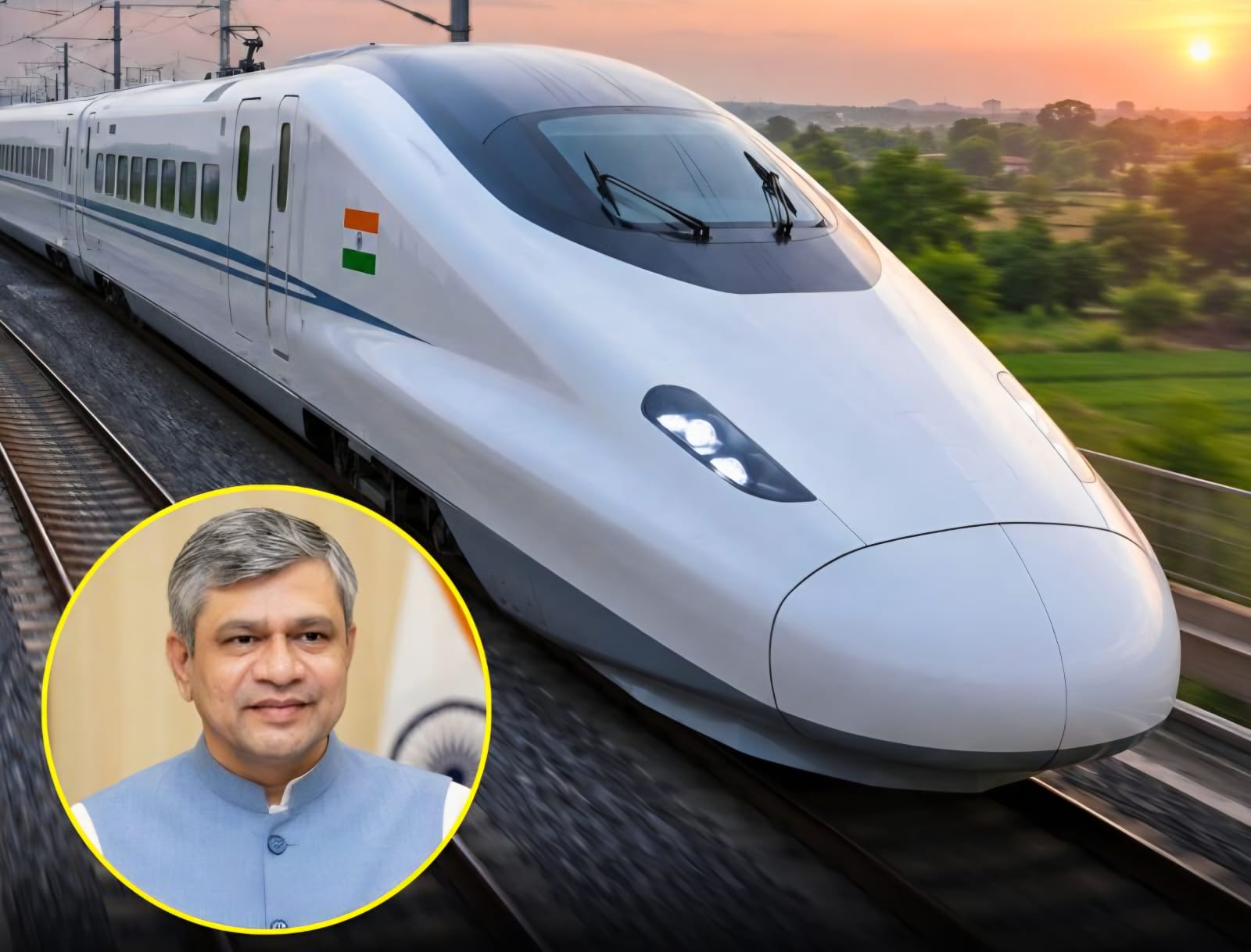
India’s first bullet train will begin phased operations on August 15, 2027, launching on the Surat–Bilimora segment. The 508-km Mumbai–Ahmedabad corridor is 80% complete. Built with Japanese Shinkansen technology, the network will progressively scale across five strategic phases to cut transit times to under three hours.
NEW DELHI — India’s first bullet train service will officially begin commercial operations in structured phases starting August 15, 2027, with the Surat–Bilimora section designated as the country’s inaugural high-speed rail route. Union Railway Minister Ashwini Vaishnaw confirmed that the under-construction 508-kilometer Mumbai–Ahmedabad High-Speed Rail (MAHSR) corridor is moving into its next operational chapter, deploying targeted infrastructure completions to allow parts of the track to open ahead of the full line. This phased rollout aims to rapidly scale up transport technology, radically cutting transit times for regional commuters and local commerce.
Infrastructure Targets and Completion Milestones
The Ministry of Railways confirmed that approximately 80% of the core structural work on the overall high-speed corridor has been completed. Construction syndicates have prioritized the Surat–Bilimora section due to advanced civil work, completed viaducts, and bridge engineering across regional rivers along this specific stretch.
According to updates from the National High-Speed Rail Corporation Limited (NHSRCL), recent engineering milestones include the successful installation of all 13 heavy portal beams spanning active railway lines in the Ahmedabad section. The heaviest beam, positioned at Sabarmati, weighs an estimated 1,640 metric tonnes and stands as a key component of the multimodal hubs designed to link bullet train infrastructure with existing metropolitan metro lines, buses, and regional taxis.
Phased Commissioning and National Expansion Plans
The multi-billion-dollar bullet train transit system relies entirely on Japan’s Shinkansen high-speed rail technology. Following the initial debut of the Surat–Bilimora leg in mid-2027, subsequent expansion stages will open progressively:
Phase 2: Vapi to Surat
Phase 3: Vapi to Ahmedabad
Phase 4: Thane to Ahmedabad
Phase 5: Full Mumbai to Ahmedabad link
Once the full 508-kilometer alignment becomes fully operational, total travel time between the financial capitals of Mumbai and Ahmedabad will drop to less than three hours.
Alongside the western corridor development, the central government has outlined long-term plans to establish high-speed connectivity across southern regions. The Railway Ministry has mapped out three new proposed high-speed corridors centered around Hyderabad, which include the Pune–Hyderabad, Hyderabad–Chennai, and Hyderabad–Bengaluru lines, alongside an independent link tying Hyderabad directly to Mumbai.
Official Sources Section
Data and project updates were sourced from official press briefings hosted by the Ministry of Railways and project status reports from the National High-Speed Rail Corporation Limited (NHSRCL). Civil engineering metrics are verified through construction data registries maintained by the Indian Railways infrastructure division.
Quote Section
"India's first bullet train service will begin operations in phases from August 15, 2027, with the Surat-Bilimora section of the Mumbai-Ahmedabad High Speed Rail corridor set to become the country's inaugural high-speed rail route," stated Union Railway Minister Ashwini Vaishnaw during an industry roundtable. "Nearly 80 percent of the ambitious project has already been completed and construction is progressing rapidly to meet the target timeline."
Why It Matters
The shift to high-speed rail fundamentally alters domestic economic geography. For businesses and daily commuters, a sub-three-hour transit between major manufacturing hubs means faster logistical turnarounds, lower regional reliance on carbon-heavy domestic air travel, and integrated real estate economies along the corridor. It sets the technological baseline for future mega-infrastructure projects across the subcontinent.
Key Facts at a Glance
Launch Date: Commercial operations for the priority segment begin officially on August 15, 2027.
Inaugural Track: The first operational phase spans exclusively between Surat and Bilimora in Gujarat.
Project Status: Approximately 80% of the comprehensive Mumbai–Ahmedabad corridor construction stands finished.
Core Technology: The rail network utilizes Japan's specialized Shinkansen infrastructure to guarantee safety and high-velocity transit.
Future Hubs: Plans have been introduced to create a southern high-speed hub connecting Hyderabad to Pune, Chennai, and Bengaluru.
FAQ Section
When will the first bullet train run in India?
The first bullet train service is scheduled to launch operational passenger runs on August 15, 2027, starting along the Surat–Bilimora section.
What is the total length and final travel time of the completed route?
The total length of the Mumbai–Ahmedabad High-Speed Rail (MAHSR) corridor is 508 kilometers. Once the entire line opens, it will reduce travel times between the two cities to under three hours.
Which technology is being utilized for the project?
The project is built using Japan's Shinkansen high-speed rail technology, known internationally for its high safety standards, speed, and automated control systems.
What are the next sections scheduled to open after Bilimora?
Following the Surat–Bilimora debut, the track will open section by section, progressing from Vapi to Surat, followed by Vapi to Ahmedabad, Ahmedabad to Thane, and concluding with the final connection into Mumbai.
Source: Ministry of Railways Press Bureau, National High-Speed Rail Corporation Limited (NHSRCL) Engineering Logs, and statement transcripts from the HYSEA GCCS & IT Roundtable.