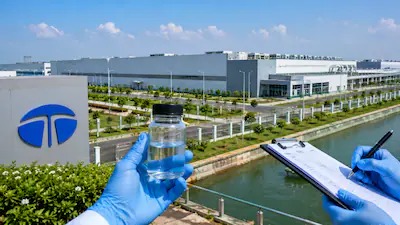
Following complaints from farmers regarding groundwater contamination and skin issues, Indian health authorities are investigating a Tata Electronics iPhone components plant in Hosur. While state environmental regulators recently cleared the facility of pollution charges, the separate health probe continues, highlighting the challenges of balancing industrial growth with local welfare.
HOSUR, TAMIL NADU — An Indian state health authority is conducting an investigation into potential health risks for farmers living near a Tata Electronics factory that manufactures iPhone components. The probe follows persistent complaints from local residents regarding skin issues and deteriorating water quality, which they attribute to liquid discharge from the sprawling facility.
This investigation marks a new phase in an environmental dispute that has placed the Tata plant—a critical component of Apple’s global supply chain—under intense scrutiny. While the Tamil Nadu Pollution Control Board (TNPCB) recently closed its regulatory proceedings against the company after finding no evidence of contamination, the separate health inquiry highlights the ongoing concerns of the local community.
Context of the Environmental Scrutiny
The facility in Hosur, southern Tamil Nadu, has been a focal point of regulatory attention for months. Between December 2025 and May 2026, the TNPCB conducted five inspections following recurring complaints that wastewater from the factory was contaminating adjacent agricultural land and open wells.
A warning notice dated May 25, 2026, reviewed by Reuters, alleged that wastewater discharged into an internal rainwater harvesting pond had overflowed, leading to contamination in nearby farms. The notice warned of a potential shutdown if Tata could not provide a satisfactory explanation. However, in June 2026, Tata Electronics announced that the TNPCB had dropped its scrutiny, stating that its own water sample analyses "did not indicate any contamination" and that key environmental indicators were within permissible limits.
Ongoing Health Concerns
Despite the regulatory clean chit, local farmers and government documents suggest that the human impact of the facility's operations remains a subject of official inquiry. According to officials and documents, health authorities in the district have been investigating the situation since at least late May, specifically looking into reports from farmers who claim they have developed skin conditions linked to the water quality in their fields.
The investigation serves as a critical test for India’s manufacturing ambitions. As the country seeks to position itself as a global alternative for iPhone production, the friction between industrial expansion and the needs of agrarian communities has become increasingly visible.
Official Sources
Tata Electronics: Stated in a June 2026 press release that it has "satisfactorily addressed all queries" from the TNPCB and remains committed to responsible business practices.
Tamil Nadu Pollution Control Board (TNPCB): Initially issued a warning notice regarding wastewater management but later closed the proceedings after reviewing the company’s response and independent water quality test results.
Government Documents: Records reviewed by Reuters confirm that district health officials have been running a separate investigation into the health impacts on the local population.
Quote Section
"According to officials," the health investigation is being conducted independently to determine if there is a direct link between the industrial facility’s discharge and the dermatological issues reported by farmers. Organizers stated that the company remains in "full compliance with all regulatory norms" following the recent closure of the pollution control board’s proceedings.
Why It Matters
For local residents, the investigation is a matter of basic public health and livelihood, as their agricultural output depends heavily on groundwater safety. For investors and Apple, the situation underscores the operational risks of rapid industrialization. As India scales its electronics manufacturing sector, the ability of companies to manage local community relations and environmental compliance has become as critical as production efficiency.
Key Facts at a Glance
Facility: Tata Electronics iPhone components plant in Hosur, Tamil Nadu.
Allegation: Local farmers reported skin issues and contaminated well water near the factory.
Regulatory Outcome: TNPCB dropped its pollution scrutiny after recent tests showed water quality within limits.
Health Inquiry: Local health authorities continue to investigate the potential medical impacts on nearby farming communities.
Frequently Asked Questions (FAQ)
Is the Tata iPhone factory currently under a shutdown order?
No. Although the Tamil Nadu Pollution Control Board issued a warning notice in May, they have since dropped their scrutiny and closed proceedings after Tata Electronics addressed their concerns.
What did the company say about the contamination claims?
Tata Electronics maintains that it is in full compliance with all environmental regulations. They commissioned an independent study from an accredited laboratory which concluded that all tested parameters were within permissible limits.
Why is the health authority still investigating?
The health probe is a separate investigation focusing on reports of skin issues among local farmers. It is intended to assess whether there is any verifiable connection between the facility’s operations and the health concerns raised by the nearby population.
Source: Reuters Exclusive Report, Tamil Nadu Pollution Control Board (TNPCB) Regulatory Notices, The Economic Times