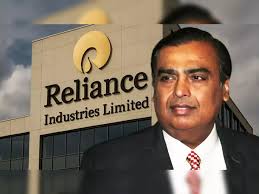
At its annual general meeting, Reliance Industries Chairman Mukesh Ambani announced a definitive strategy to build a profitable AI infrastructure platform and services business. Driven by its new subsidiary, Reliance Intelligence, the company will deploy green-powered data centers and collaborate with Meta and Google to deliver affordable enterprise and consumer AI services.
MUMBAI, INDIA - Reliance Industries Limited (RIL) Chairman and Managing Director Mukesh Ambani announced on Friday during the company's Annual General Meeting (AGM) a definitive strategy to build a profitable AI infrastructure platform and services business. Speaking via video conference to millions of shareholders, Ambani underscored that the conglomerate's massive digital investments are shifting from gestation to a high-yield monetization phase. The announcement establishes a formalized timeline for India's largest corporate entity to integrate sovereign artificial intelligence infrastructure with consumer-facing applications, positioning the group to capture a dominant share of the country’s expanding digital economy.
Monetizing Sovereign Digital and Intelligent Infrastructure
The core objective of Reliance’s new digital mandate is the establishment of a robust, revenue-generating technology ecosystem. Central to this strategy is Reliance Intelligence, a wholly-owned subsidiary tasked with housing the group’s large-scale computational infrastructure. RIL plans to establish gigawatt-scale, AI-ready data centers powered entirely by green energy from its facilities in Gujarat, solving the massive power-consumption challenges traditionally associated with deep-tech operations.
According to regulatory filings and corporate presentations shared during the meeting, the infrastructure platform will focus heavily on lowering inference costs for domestic enterprises. By localized hosting within India, the platform ensures strict sovereign data compliance while offering local businesses access to computational power at a fraction of current global rates. This structural cost advantage forms the foundation of Reliance’s B2B profitability model.
Strategic Alliances and Consumer AI Deployments
To accelerate market penetration, Reliance has consolidated deep technology partnerships with global tech giants Meta and Google. The $100 million joint venture with Meta, in which Reliance holds a dominant 70% stake, is engineered to bring open-source AI frameworks to small and medium businesses (SMBs) across India. Concurrently, the collaboration with Google integrates Jio’s connectivity matrix with Google Cloud's advanced generative tools.
On the consumer side, the profitable AI infrastructure platform and services business will immediately support a new suite of proprietary applications integrated into Jio Platforms, which now serves over 524 million subscribers. These deployments include:
RIYA: A multilingual, voice-enabled AI search assistant integrated into the group's digital media platforms.
JioFrames: Smart glasses equipped with conversational AI capabilities calibrated for twelve major Indian languages.
JioPC: A virtual cloud-computing platform designed to eliminate upfront hardware costs for consumers by running computation entirely on cloud infrastructure.
Economic Outlook and Impact on Investors
The strategic pivot toward a profitable AI infrastructure platform and services business directly supports Reliance's broader fiscal target to double its consolidated EBITDA by 2027 compared to FY22 baselines. For institutional investors and market analysts, the monetization of AI infrastructure provides a clear narrative for non-energy revenue expansion, offsetting cyclical margins in the traditional oil-to-chemicals (O2C) segments.
The planned rollout coincides with preparatory regulatory arrangements for the initial public offering (IPO) of Jio Platforms. Market analysts note that embedding proprietary, revenue-generating AI capabilities within Jio's telecom framework significantly enhances its valuation model ahead of its listing on domestic stock exchanges.
Official Sources Section
The corporate mandates and financial targets outlined in this report are based on official documentation, including:
Quote Section
"According to officials at Reliance Industries, the corporate goal is no longer just technological adoption, but structural profitability in deep tech. The company stated that by leveraging its existing telecom footprint and pairing it with localized gigawatt-scale computing, it expects to create the most affordable and financially viable enterprise AI framework globally."
Why It Matters
For enterprise clients and Indian small businesses, this development provides affordable, localized access to machine learning tools without relying on expensive, foreign-hosted cloud environments. For the consumer market, it transitions AI from an abstract concept into practical utilities like cloud-based virtual computing and real-time translation services. Financially, it offers investors a high-margin software-and-infrastructure revenue stream that maximizes the returns on Reliance's extensive digital capital expenditure.
Key Facts at a Glance
Profit Objective: Clear corporate mandate to shift AI infrastructure from a cost center to a profitable standalone services business.
Subsidiary Launch: Creation of Reliance Intelligence to manage sovereign, gigawatt-scale, green-energy-powered data centers.
Global Partnerships: Joint ventures and technical integrations finalized with Meta ($100 million venture, 70% RIL ownership) and Google.
Scale of Reach: AI services will immediately scale across Jio’s ecosystem, targeting over 524 million active subscribers.
FAQ Section
What is the main goal of Reliance's new AI strategy? The primary goal is to build a highly profitable AI infrastructure platform and services business that provides affordable computational power and customized AI tools to enterprises and consumers across India.
How will Reliance power its massive AI data centers? The gigawatt-scale data centers will be integrated with Reliance's clean energy complexes in Gujarat, utilizing renewable power to lower operational and computational costs.
What consumer products will run on this new AI platform? The infrastructure will power several next-generation consumer tools, including the RIYA multilingual voice assistant, JioPC cloud computers, and JioFrames smart eyewear.
How does this strategy affect external businesses? Indian enterprises and small businesses will gain access to sovereign, locally hosted open-source AI models, drastically lowering data storage costs and inference expenses.
Source: Reliance Industries Limited, National Stock Exchange of India.