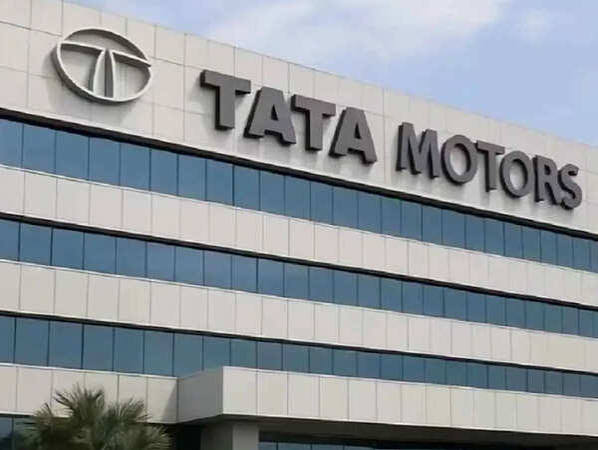
Tata Motors Passenger Vehicles executives confirmed on August 13, 2026, that capital expenditure plans remain unchanged following top-level leadership transitions at Tata Sons. The automaker reassured stakeholders that robust governance frameworks, structured long-term strategic plans, and an experienced management team will maintain operational momentum and drive domestic growth.
MUMBAI, India — Senior leadership at Tata Motors Passenger Vehicles confirmed on August 13, 2026, that the company’s capital expenditure (capex) plans remain fully intact despite executive leadership transitions at the parent entity, Tata Group. The automobile manufacturer stated that operational execution and strategic investments will proceed as planned, guided by established governance protocols and long-term business objectives.
The executive clarification offers critical guidance to institutional investors, automotive component suppliers, and capital market analysts during a period of leadership restructuring within the broader Tata Sons conglomerate, reassuring market participants of operational continuity across India's domestic electric and internal combustion vehicle markets.
Strategic Capex Commitment and Investment Stability
Addressing market concerns regarding capital deployment, executives at Tata Motors Passenger Vehicles emphasized that multi-year investment commitments will continue without interruption. The company’s ongoing capital expenditure program funds new vehicle architecture development, EV battery integration, facility expansion, and digital manufacturing upgrades.
"Our capex plans are not going to change," a senior executive from Tata Motors Passenger Vehicles stated during corporate communications.
The statement underscores management's determination to execute product rollout timelines across the Tata Motors Passenger Vehicles portfolio, including both internal combustion engine (ICE) models and electric vehicles (EVs) managed under its subsidiary, Tata Passenger Electric Mobility Limited.
Corporate Governance and Management Execution
Highlighting the structural independence of its operating divisions, the leadership team noted that Tata Motors operates under an institutionalized corporate governance framework designed to insulate day-to-day manufacturing and commercial operations from parent-level leadership shifts.
According to official executive statements, the organization relies on a multi-tiered management structure focused on long-term strategy execution:
Institutional Governance: Board-approved strategic roadmaps govern capital deployment, corporate compliance, and risk management independent of individual executive transitions.
Operational Leadership: A dedicated management team oversees vehicle manufacturing, supply chain optimization, and dealership network expansion across domestic and regional markets.
Growth Focus: Sustained commercial push in high-growth segments, including sports utility vehicles (SUVs), compressed natural gas (CNG) models, and battery-electric powertrains.
Automotive sector analysts note that Tata Motors' strong market share in the Indian passenger vehicle market provides steady operational cash flow, supporting internal capital generation for ongoing research and development programs.
Market Positioning and Industrial Impact
Tata Motors has established itself as a leading player in India's passenger vehicle market, driven by modular platforms like ALFA and OMEGA, alongside dominant market share in domestic passenger electric vehicles. Maintaining stable capital allocations ensures that key assembly lines, supplier procurement schedules, and technological integration roadmaps remain on track.
By confirming that long-term strategic plans remain unaffected, the company signals stability to auto-component manufacturers, technology partners, and retail dealerships reliant on predictable vehicle assembly schedules and regular model refreshes.
Official Sources Section
Statements regarding capital expenditure commitments, management continuity, and governance processes were formally communicated by executive representatives of Tata Motors Passenger Vehicles during official media briefings and investor interaction sessions. Financial performance metrics and corporate structure disclosures are filed under standard market regulations with Indian stock exchanges.
Official Quote Section
"The company operates through a robust governance process and long-term strategic plans," stated a senior Tata Motors Passenger Vehicles executive during corporate disclosures. "We have a strong management team focused on execution and remain focused on driving growth across all passenger vehicle segments."
Impact on Investors and Business Stakeholders
For financial market participants, the executive reassurance removes uncertainty surrounding capital allocation schedules and debt management programs. Institutional investors closely track capital expenditure levels as a key indicator of long-term revenue visibility, particularly in capital-intensive sectors like automotive manufacturing.
For consumers and automotive dealers, the continuation of planned investments ensures that upcoming product launches, electric vehicle infrastructure rollouts, and customer service expansion programs will proceed according to previously announced schedules.
Why It Matters
In large industrial conglomerates, leadership changes at the holding company level can create operational speculation among investors and industry partners. By publicly affirming that capital expenditure plans, management execution, and governance processes remain fully operational, Tata Motors Passenger Vehicles reinforces institutional stability and protects its strategic position in the competitive domestic automotive sector.
Key Facts at a Glance
Investment Commitment: Capital expenditure (capex) plans remain unchanged following Tata Group leadership transition.
Governance Framework: Operations continue under structured long-term strategic plans and board-approved processes.
Leadership Focus: Senior management team remains focused on execution and driving growth across passenger vehicle segments.
Entity: Tata Motors Passenger Vehicles (division of Tata Motors Limited).
Market Scope: Domestic passenger vehicles, electric vehicles (EVs), and alternative fuel powertrains.
Frequently Asked Questions (FAQs)
Did Tata Motors change its capital expenditure plans after the Tata Group leadership exit?
No. Senior executives at Tata Motors Passenger Vehicles confirmed that all capital expenditure (capex) plans remain unchanged and will proceed according to schedule.
How does Tata Motors maintain operational stability during group-level leadership changes?
The company operates through an institutionalized governance structure, board-approved long-term strategic plans, and an independent management team focused directly on execution and commercial growth.
Where can investors verify official announcements from Tata Motors Limited?
Official corporate disclosures, financial reports, and regulatory filings from Tata Motors Limited are accessible via BSE Limited and the National Stock Exchange of India (NSE).
What are the main growth drivers for Tata Motors Passenger Vehicles?
Tata Motors focuses on expanding its market share through popular SUV models, expanding its electric vehicle (EV) lineup, and scaling its dual-cylinder iCNG vehicle technology across India.
Source: Official corporate communications from Tata Motors Passenger Vehicles, regulatory announcements filed by Tata Motors Limited with BSE Limited and the National Stock Exchange of India (NSE), governance filings maintained under the Ministry of Corporate Affairs, and regulatory oversight disclosures from the Securities and Exchange Board of India (SEBI).