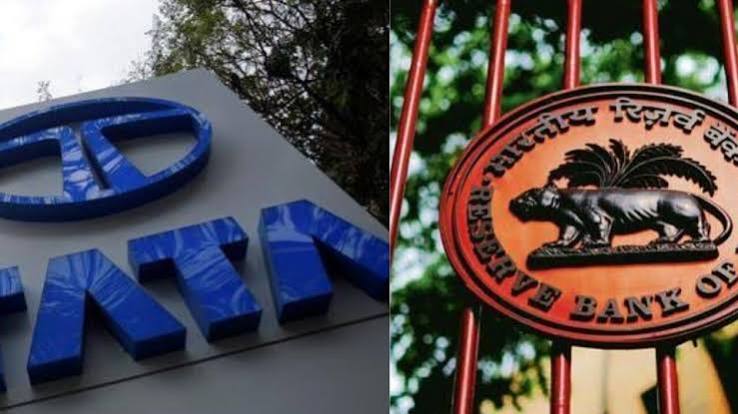
The RBI has rejected Tata Sons' bid to surrender its registration and remain private, directing the ₹2.01 lakh crore holding company to comply with Upper Layer NBFC rules. The decision effectively paves the way for a landmark public listing, impacting governance and stakeholder value across the conglomerate.
MUMBAI — The Reserve Bank of India (RBI) has formally dismissed an application by Tata Sons Private Limited to surrender its Certificate of Registration as a Core Investment Company (CIC), effectively ending the holding entity's efforts to remain a private corporation. In an official communication issued over the weekend, the central bank directed Tata Sons to ensure full compliance with regulatory guidelines governing Non-Banking Financial Companies in the Upper Layer (NBFC-UL).
The regulatory decision closes a key legal route that the multi-billion-dollar conglomerate had pursued to bypass mandatory public market listing requirements. Having been classified under the RBI's Upper Layer framework since 2022, Tata Sons reported standalone assets exceeding ₹2.01 lakh crore as of March 31, 2026—more than double the central bank's updated ₹1 lakh crore asset threshold.
Scale-Based Regulations and Compliance Deadlines
Under the revised scale-based regulatory guidelines finalized by the RBI, non-banking financial entities categorized in the Upper Layer are subject to stringent oversight and are required to list their shares on public stock exchanges. Although Tata Sons cleared its direct borrowings in 2024 to operate debt-free, the central bank maintained its classification, noting that indirect public funding exposure via listed group entities and its massive balance-sheet scale precluded deregistration.
Financial analysts observe that the regulatory mandate will fundamentally alter corporate governance protocols across the salt-to-software conglomerate. Once listed, Tata Sons will face regular public disclosure requirements, heightened scrutiny of capital allocation, and increased market accountability for unlisted subsidiaries spanning aviation, electronics, and digital infrastructure.
According to regulatory filings, central bank disclosures, and corporate reports:
Regulatory Verdict: RBI officially rejected Tata Sons' application for voluntary surrender of its Core Investment Company registration.
Asset Evaluation: Standalone asset valuation crossed ₹2.01 lakh crore, surpassing the ₹1 lakh crore Upper Layer threshold.
Mandatory Requirement: Directs the holding company to comply with NBFC-UL guidelines, including public stock market listing.
Stakeholder Implications: Opens potential liquidity avenues for minority investors, including the Shapoorji Pallonji Group, to monetize holdings.
Official Sources Section
Reserve Bank of India (RBI) Regulatory Disclosures: Official supervisory circulars, scale-based regulation frameworks, and NBFC-UL classification guidelines.
Tata Sons Corporate Communications: Corporate disclosures, capital structure reports, and statutory financial statements.
Quote Section
"According to regulatory communications from the central bank, Tata Sons has been advised to take immediate action to ensure full compliance with all guidelines and instructions applicable to NBFC–Upper Layer entities."
Why It Matters
For capital markets and institutional investors, a potential public offering by Tata Sons represents one of the most significant anticipated listings in Indian corporate history, providing direct equity access to the parent entity of iconic global brands. For minority shareholders like the Shapoorji Pallonji Group, a public listing establishes a clear mechanism to unlock asset value and service financial obligations.
Key Facts at a Glance
Target Entity: Tata Sons Private Limited (Principal holding company of the Tata Group).
Regulatory Authority: Reserve Bank of India (RBI).
Core Mandate: Compliance with Upper Layer NBFC rules, enforcing a public listing.
Asset Baseline: Standalone asset base exceeding ₹2.01 lakh crore.
FAQ Session
Why did the RBI reject Tata Sons' application to stay private?
The RBI rejected the request to surrender its Core Investment Company registration because Tata Sons' asset size far exceeded the ₹1 lakh crore threshold, keeping it strictly bound to Upper Layer NBFC rules.
What does the RBI's directive mean for Tata Sons?
Tata Sons must now comply with enhanced regulatory frameworks, which include a mandatory public stock market listing.
How does this decision affect minority shareholders?
The mandatory listing requirement provides minority stakeholders, such as the Shapoorji Pallonji Group, a viable mechanism to monetize their equity stakes.
Where can stakeholders review official RBI regulations regarding upper-layer NBFCs?
Comprehensive policy frameworks and classification lists are published via the Reserve Bank of India Portal.
Source: Reserve Bank of India, Tata Sons Corporate Portal, The Economic Times Corporate Bureau, The Indian Express Business Desk