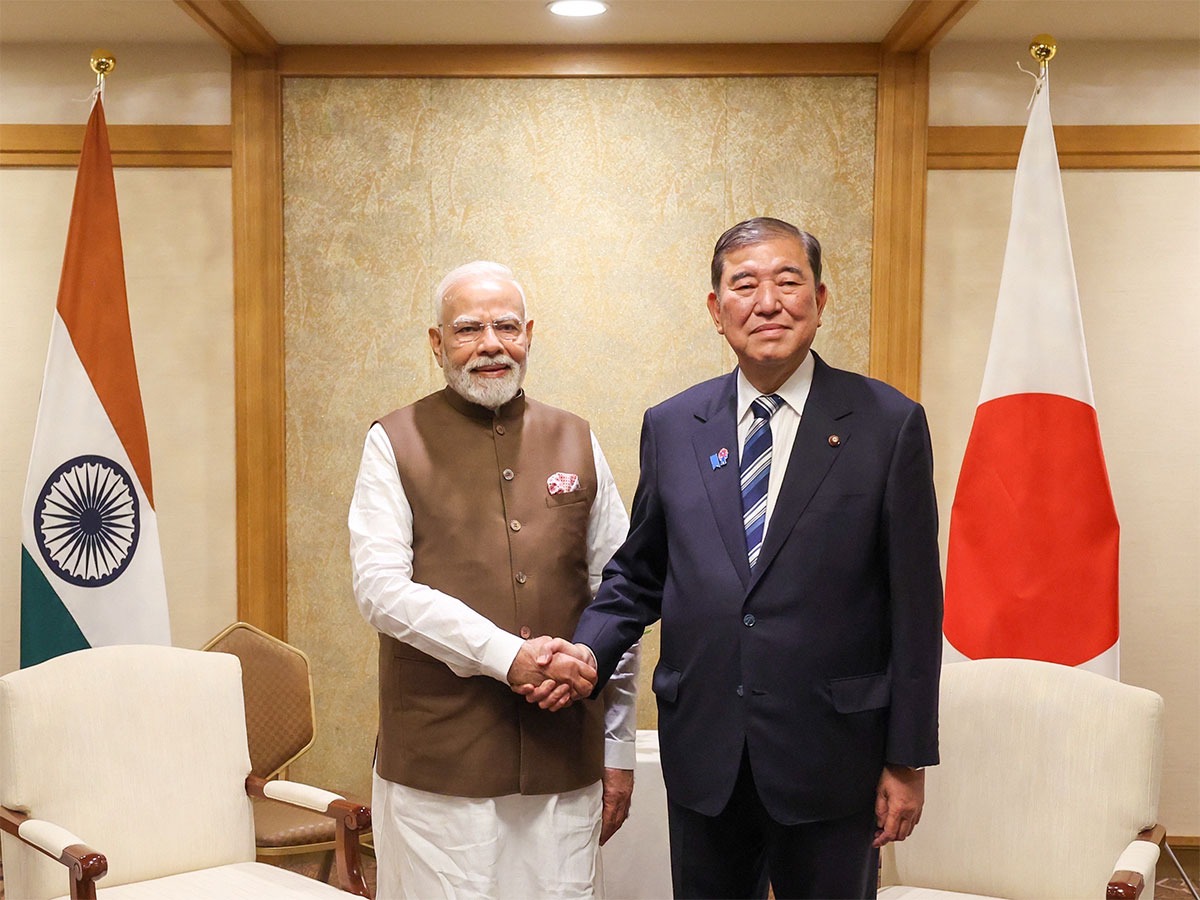
Prime Minister Narendra Modi’s visit to Tokyo has reignited the strategic and economic partnership between India and Japan, with a powerful message delivered at the India-Japan Economic Forum: Japan’s excellence and India’s scale can together build Viksit Bharat. The statement,...
Prime Minister Narendra Modi’s visit to Tokyo has reignited the strategic and economic partnership between India and Japan, with a powerful message delivered at the India-Japan Economic Forum: Japan’s excellence and India’s scale can together build Viksit Bharat. The statement, made during the 15th Annual Summit between the two nations, reflects a shared ambition to shape the Asian century through innovation, infrastructure, and inclusive growth.
The summit marks two decades of annual bilateral engagement and comes at a time when both countries are recalibrating their roles in a rapidly evolving global order. With Japan’s Prime Minister Shigeru Ishiba joining Modi at the forum, the leaders unveiled a joint roadmap for cooperation in manufacturing, clean energy, semiconductors, and skill development.
Key Highlights From The Tokyo Summit
- India and Japan released a 2035 Vision Statement to upgrade the 2025 framework
- Japan pledged USD 68 billion in new investments over the next decade
- A Joint Credit Mechanism was signed to support clean energy and green hydrogen projects
- PM Modi emphasized India’s goal of 100 GW nuclear power by 2047 and 500 GW renewable energy by 2030
- Both leaders committed to deepening ties in AI, robotics, shipbuilding, and quantum computing
Strategic Synergy: Excellence Meets Scale
Prime Minister Modi’s address focused on the complementary strengths of both nations. Japan, a global leader in precision engineering and advanced manufacturing, brings technological excellence. India, with its vast market, skilled workforce, and digital infrastructure, offers unmatched scale and implementation capacity.
Modi highlighted the success of India-Japan collaboration in the automotive sector and called for replicating that model in emerging areas such as semiconductors, batteries, and nuclear energy. He described India as a springboard for Japanese businesses to access the Global South, especially in Africa and Southeast Asia.
Economic Security And Infrastructure Push
1. The Mumbai-Ahmedabad bullet train project, powered by Japanese Shinkansen technology, remains a flagship symbol of bilateral cooperation
2. India’s port capacities have doubled in the last decade, with Japanese support in logistics and mobility infrastructure
3. The Economic Security initiative will focus on building resilient supply chains for critical minerals and strategic technologies
4. Defence and space sectors have been opened to private investment, with Japan expected to play a key role in hardware and satellite systems
5. The summit also explored joint ventures in smart cities, digital governance, and fintech innovation
Talent And Technology: A Shared Future
Modi underscored the importance of human resource exchange, proposing the creation of a Japan-ready Indian workforce trained in language and technical skills. He called for deeper collaboration in education, research, and skill development to meet global demand.
India’s bold initiatives in AI, biotech, and quantum computing were spotlighted as areas where Japanese precision and Indian ingenuity could lead the next wave of global innovation. The leaders agreed to establish joint innovation hubs and promote startup ecosystems across both countries.
Global Relevance And Diplomatic Balance
The summit comes amid shifting geopolitical dynamics, including trade tensions with the United States and growing interest in Indo-Pacific stability. Modi’s message was clear: India is not just being watched, it is being counted on. With political stability, economic resilience, and policy transparency, India is poised to become the third-largest economy in the world.
Japan’s strategic alignment with India reflects a broader pivot toward trusted partnerships in Asia. The two nations reaffirmed their commitment to shaping a peaceful, prosperous, and inclusive regional order.
Conclusion: A Partnership With Purpose
Prime Minister Modi’s declaration that Japan’s excellence and India’s scale can create Viksit Bharat is more than a diplomatic soundbite—it is a blueprint for transformative collaboration. As both countries invest in shared goals and mutual strengths, the India-Japan partnership stands as a model for how technology, talent, and trust can build a future of stability and prosperity.
Sources: The Hindu, WebIndia123, The Hans India, The Tribune, New Indian Express