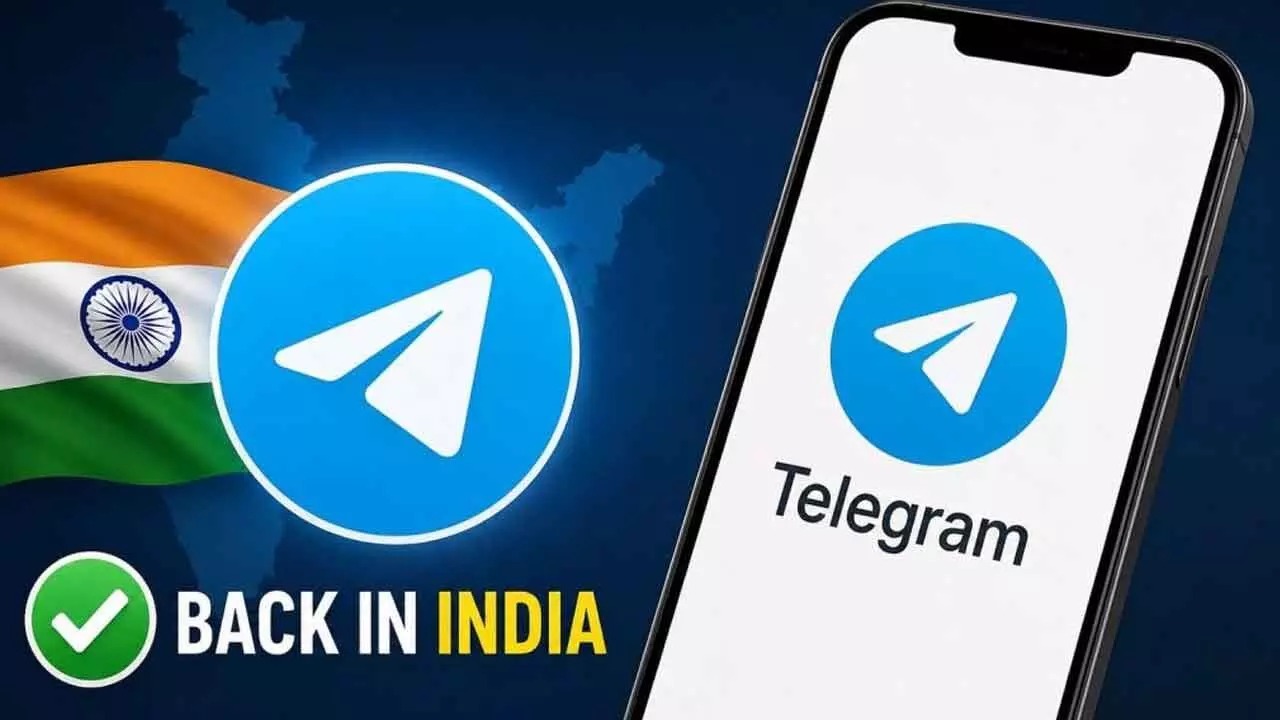
Telegram has been fully restored on major mobile application stores in India after a temporary one-week government block under Section 69A of the IT Act expired. The preventative measure successfully checked coordinated cheating syndicates from disrupting the nationwide NEET-UG 2026 re-examination held on June 21.
MUMBAI — The instant messaging platform Telegram became fully operational and available for download across India on Tuesday after a week-long emergency government restriction officially expired. The Ministry of Electronics and Information Technology (MeitY) had implemented a temporary nationwide block on the service under Section 69A of the Information Technology Act, 2000. The preventative measure was executed following formal recommendations from the National Testing Agency (NTA) to prevent organized cheating syndicates from disrupting the critical NEET-UG 2026 medical entrance re-examination scheduled for June 21. Following the expiration of the government directive on June 22, the app successfully reappeared on the Google Play Store and Apple App Store.
Direct Reinstatement of Mobile App Stores and Server Infrastructure
Market tracking data on Tuesday morning confirmed the phased restoration of the app's digital infrastructure throughout India. Retail cellular subscribers on networks including Reliance Jio, Bharti Airtel, and Vodafone Idea reported that local server access was being systematically reinstated without the requirement of a Virtual Private Network (VPN).
The platform's accessibility progressed through distinct technological stages:
Google Play Store: The application was fully restored and available for direct download by Android device owners early Tuesday morning.
Apple App Store: The platform remained temporarily delisted on Apple's regional storefront for several additional hours due to separate operational reviews before standard consumer distribution resumed.
Active Deployments: Existing device installations remained operational for a significant portion of the user base as internal Internet Service Provider (ISP) blocks were removed.
National Testing Integrity Prompts Section 69A Emergency Enforcement
The enforcement action initiated on June 16, 2026, was catalyzed by an extensive, multi-state investigation into a prior leak of the NEET-UG examination paper, which directly disrupted over 2.27 million student aspirants. Law enforcement files from investigators in Bihar indicated that highly coordinated networks utilized Telegram’s large-capacity document distribution features to sell compromised educational materials.
According to official filings presented by central government counsel to the Delhi High Court, cybercriminals exploited the platform's advanced message-editing capabilities to alter old timestamps. This functionality allowed malicious entities to insert fabricated examination papers after the test concluded, simulating an active leak to trigger mass panic and structural volatility within the national examination system. Consequently, MeitY invoked emergency powers under Rule 9 of the Information Technology Rules, 2009, bypassing standard pre-decisional intermediary hearings due to the severe time constraints surrounding the re-examination timeline.
Platforms and Judiciary Clash Over Regulatory Proportionality
The temporary blockade caused significant friction between sovereign digital regulators and corporate executives. Telegram founder and CEO Pavel Durov publicly criticized the broad parameters of the enforcement. Durov argued that the illegal actions of a isolated minority of users should not validate the immediate suspension of an ecosystem utilized by over 150 million legitimate Indian citizens, including thousands of independent educators, coaching academies, and students.
Telegram contested the blocking order in the Delhi High Court, citing systemic constitutional protections regarding freedom of speech and public access to information under Article 19(1)(a). However, the bench explicitly upheld the emergency intervention, confirming that the state maintained a clear right to protect the operational framework of national educational testing infrastructure while investigations remained active. Corporate representatives confirmed that the platform proactively mitigated the disruption by removing more than 900 individual links verified to host or advertise illicit examination contents.
Official Sources Section
The statutory mechanisms, enforcement parameters, and technical descriptions cited in this report correspond to official public listings and legal filings issued by the Ministry of Electronics and Information Technology (MeitY) and the National Testing Agency (NTA). Judicial affirmations are recorded under the certified daily orders archives managed by the Delhi High Court.
Quote Section
"According to officials from the Ministry of Electronics and Information Technology, the restriction was strictly bound to a designated operational timeline and was intentionally structured not to extend past the completion of the national re-examination framework."
A senior representative from the NTA stated, "The temporary digital buffer was critical to neutralizing automated bot networks and coordinated channels that actively targeted candidates with deceptive and fraudulent leaks."
Why It Matters
The temporary restriction highlights a growing friction point between global software deployment models and sovereign regulatory bodies focused on national security and public order. For the millions of students, independent digital teachers, and small commercial entities that utilize Telegram as their primary repository for files, student chat forums, and course delivery, the sudden disruption underscores the immediate risks of relying entirely on third-party communication tools. The incident sets a distinct precedent for how India may utilize structural app-store blocks to manage high-stakes domestic crises moving forward.
Key Facts at a Glance
Ban Lifted: Telegram has returned to standard operation following a week-long emergency suspension.
Legal Grounding: The temporary ban was enacted under Section 69A of the IT Act, 2000, to safeguard the NEET-UG 2026 re-exam.
App Store Return: Download listings have successfully reappeared on both the Google Play Store and the Apple App Store.
Security Action: Tech teams removed over 900 malicious channels distributing fraudulent educational content.
FAQ Section
Q1: Why was Telegram blocked in India?
The platform was temporarily restricted under Section 69A of the IT Act following evidence that cheating rackets were using the platform's large-file distribution features and message-editing tools to distribute leaked materials and spread misinformation surrounding the NEET-UG 2026 examination.
Q2: Is Telegram completely safe to download and use now?
Yes. The app has been restored to official mobile application marketplaces after the specific emergency order expired on June 22, 2026.
Q3: Did the Delhi High Court support the government's decision?
Yes. The Delhi High Court rejected legal challenges against the block, ruling that the government had the legal authority to execute temporary emergency measures to preserve public order and protect national examination systems.
Q4: Was any data or user chat information lost during the block?
No. The restriction only limited access to the application via domestic internet networks and app stores; it did not alter or erase data stored on Telegram's secure cloud servers.
Sources: