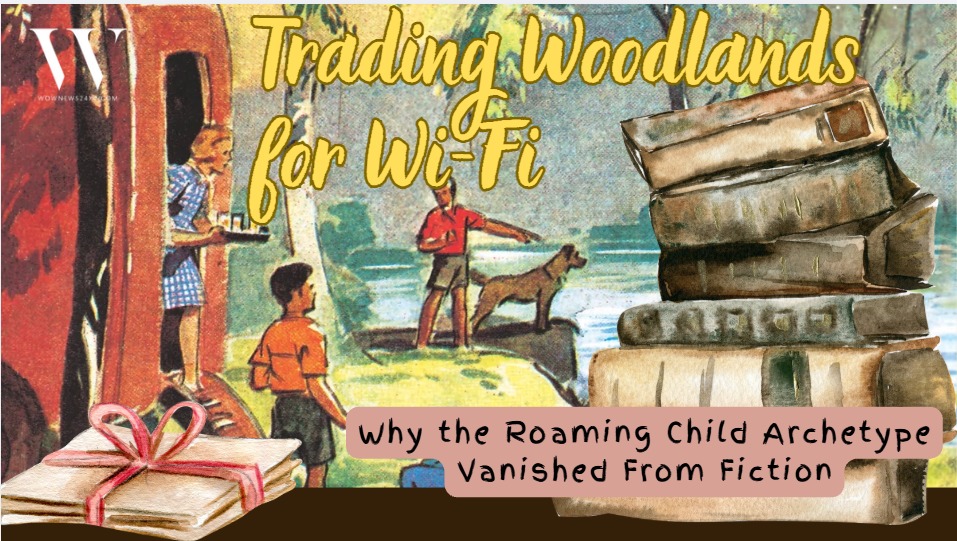
The archetype of the free-roaming child, immortalized in the works of Enid Blyton and Ruskin Bond, has largely vanished from contemporary literature and modern life. Driven by urban safety concerns, digital distractions, and structured parenting, the shift reflects a profound cultural transformation in how society views childhood independence and exploration.
Changing societal landscapes and urban safety concerns have fundamentally altered the classic literary motif of the free-roaming child.
The Shift From Open-Air Exploration to Indoor Isolation
For generations, classic children's literature by authors such as Enid Blyton and Ruskin Bond celebrated the unbridled freedom of youth—depicting young protagonists wandering across English moors, coastal islands, or Himalayan foothills without adult supervision. Today, however, that archetype of the roaming child has largely vanished from both contemporary storytelling and everyday urban reality. According to cultural historians and literary analysts, this transformation mirrors a profound structural shift in modern society, where safety concerns, digital immersion, and structured schedules have replaced unstructured outdoor independence.
Where Enid Blyton’s Famous Five once spent entire summers camping, cycling, and exploring remote countryside terrain entirely on their own, contemporary children face heavily monitored environments. Similarly, Ruskin Bond’s timeless tales of growing up in the Indian hills captured a deep, symbiotic connection with nature that modern urbanization and hyper-vigilant parenting have systematically curtailed.
Cultural Shifts and Modern Parenting Realities
The erosion of independent childhood wandering is driven by a convergence of technological, architectural, and sociological pressures. Urban centers have evolved to prioritize vehicular traffic over pedestrian-friendly community spaces, while digital screens offer virtual stimulation that competes directly with outdoor play.
Childhood development specialists note that while contemporary safety standards protect minors from physical hazards, they inadvertently diminish resilience, spatial problem-solving, and self-directed imagination. The nostalgic literary landscape of endless horizons has given way to indoor caution, transforming the once-common experience of roaming freely into a historical artifact preserved only in classic fiction.
Impact on Young Readers, Families, and Cultural Literacy
The fading presence of the independent child archetype carries distinct implications across multiple societal and educational domains:
Young Readers: Children growing up in hyper-supervised environments rely increasingly on literature to vicariously experience independence, spatial exploration, and self-reliance.
Parents and Educators: Families navigate a constant tug-of-war between fostering independent resilience and managing modern safety anxieties in urban neighborhoods.
Publishing and Literature: Contemporary children's authors increasingly set adventures in dystopian or highly controlled fantasy worlds, reflecting modern anxieties about safety and freedom.
Cultural Memory: Classic works by Enid Blyton and Ruskin Bond serve as vital literary archives of an era when childhood was defined by unrestricted outdoor discovery.
Official Insights and Cultural Commentary
According to literary archives, sociological research updates, and cultural commentaries published by educational and publishing institutions, the nostalgic appeal of unstructured childhood remains powerful among adult readers.
"According to officials and literary commentators, the gradual disappearance of the free-roaming child in modern narratives reflects our collective anxiety over safety, changing urban infrastructure, and the pervasive shift toward digital indoor lifestyles."
Why It Matters
Literature often acts as a mirror to society's deepest transformations. The transition from the daring, independent adventurers of mid-century fiction to the more sheltered protagonists of modern books underscores how society has redefined safety, risk, and childhood. Recognizing this shift allows educators and parents to understand what modern children surrender when open-air exploration is traded for digital and physical containment.
Key Facts at a Glance
Literary Tradition: Works by Enid Blyton and Ruskin Bond epitomize the independent, nature-immersed roaming child archetype.
Societal Shift: Unstructured outdoor exploration has been largely replaced by supervised schedules and indoor digital engagement.
Developmental Impact: Modern children experience restricted spatial autonomy compared to previous generations.
Cultural Reflection: Contemporary children's literature mirrors modern anxieties surrounding urban safety and risk aversion.
Frequently Asked Questions (FAQ)
What characterizes the "roaming child" motif in classic literature?
The roaming child motif features young protagonists who independently explore nature, solve mysteries, and navigate the countryside without constant adult supervision, as seen in the works of Enid Blyton and Ruskin Bond.
Why have free-roaming child characters disappeared from modern stories?
Contemporary stories reflect real-world shifts, including urbanization, safety concerns, parental risk aversion, and the dominance of digital entertainment.
How do Ruskin Bond’s hill stories capture this theme?
Ruskin Bond’s stories use the natural landscapes of the Indian Himalayas to illustrate a deep, organic relationship between children and their surrounding environment, emphasizing quiet observation and freedom.
What is the impact of restricted outdoor play on children?
While modern safety measures protect children from physical dangers, researchers note that reduced independence can impact spatial awareness, problem-solving skills, and self-reliance.
Source: Sahitya Akademi Literary Archives, National Centre for Children's Literature Reports, and Sociological Cultural Studies Journals.