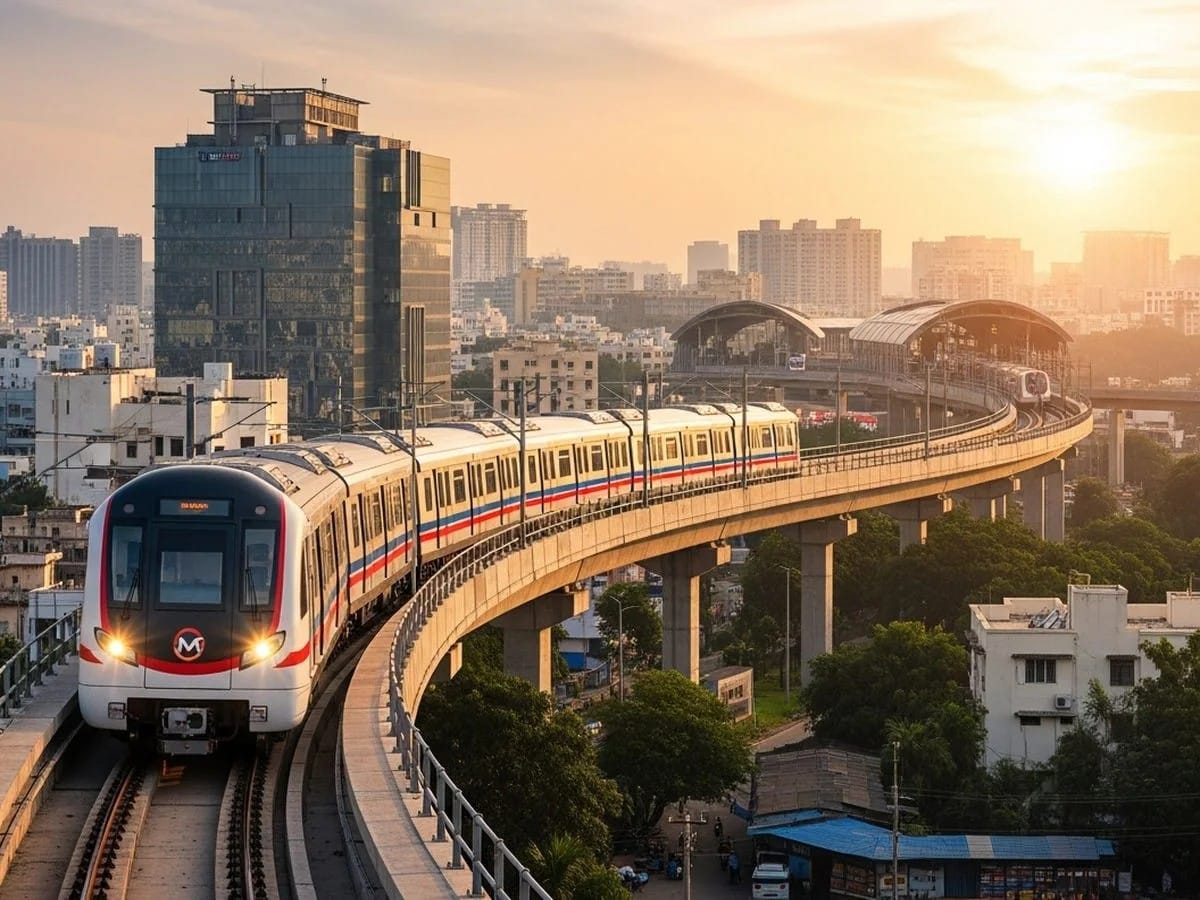
The proposed 9.6-kilometer metro corridor connecting Thane, Kalwa, Mumbra, and Dombivli aims to relieve severe suburban railway congestion in the Mumbai Metropolitan Region. Estimated at ₹4,500 crore, the project integrates high-speed rail, suburban transit, and Metro Line 12, creating a critical multi-modal transit hub for thousands of daily commuters.
MUMBAI — The Maharashtra state government and transit authorities have advanced plans for a new 9.6-kilometer rapid transit corridor designed to bridge four rapidly expanding commuter hubs between Thane and Dombivli. The proposed route—spanning Thane Junction, Kalwa, Mumbra, Diva, and Kopar (Dombivli)—is intended to reduce operational pressure on Central Railway’s heavily congested suburban tracks while integrating three distinct transit networks across the Mumbai Metropolitan Region (MMR).
The multi-agency initiative gained administrative momentum following executive directives led by Deputy Chief Minister Eknath Shinde, who instructed transport agencies to expedite feasibility studies and finalize alignment parameters. The planned line addresses longstanding transit bottlenecks in eastern suburban belts while establishing direct connectivity to the upcoming Mumbai–Ahmedabad High-Speed Rail (HSR) bullet train depot at Diva.
Strategic Alignment and Engineering Route Details
According to preliminary technical specifications prepared by transit planners, the 9.6-kilometer corridor will feature a hybrid structural design combining underground and elevated segments. The transit route will run underground through the densely populated terrain from Thane Junction to Mumbra to minimize land acquisition constraints and surface traffic disruption. Beyond Mumbra, the alignment transitions to an elevated viaduct extending through Diva toward Kopar in Dombivli.
The proposed route incorporates seven to eight strategically located stations designed as high-capacity interchange hubs:
Thane Junction: Connects directly with Central Railway suburban lines and the planned Thane Integral Ring Metro.
Mhatardi / Diva: Establishes a multi-modal interchange node with the Mumbai–Ahmedabad High-Speed Rail station.
Sonarpada: Interfaces with Metro Line 12 (Kalyan–Dombivli–Taloja corridor), enabling seamless suburban travel toward Navi Mumbai.
Kopar / Dombivli East: Serves as the eastern terminus, linking residential clusters to the broader regional transit framework.
Project consultancy firm RITES has been tasked with compiling the Detailed Project Report (DPR), expected to be finalized in late 2026 or early 2027. Preliminary financial estimates place the project expenditure at approximately ₹4,500 crore, with Maharashtra Metro Rail Corporation Limited (MAHA-Metro) designated as the primary executing authority.
Decongesting Central Railway’s Busiest Commuter Belt
The suburban corridor between Thane, Mumbra, and Dombivli ranks among the highest-density travel routes in western India. Daily passenger volumes on Central Railway’s main line frequently exceed rated capacity during morning and evening rush hours, leading to severe crowding on suburban local trains and surrounding roadway arterial networks.
By shifting localized commuter traffic from suburban rail tracks to an independent mass rapid transit system, state officials anticipate a substantial reduction in suburban train crowding. Furthermore, direct connections to Metro Line 12 and the High-Speed Rail terminal will allow commuters traveling from Dombivli and Mumbra to access industrial and commercial centers in Taloja, Navi Mumbai, and South Mumbai without transferring through overloaded mainline rail stations.
Official Sources Section
Development updates and technical frameworks for the proposed corridor are coordinated through multiple official agencies:
Government of Maharashtra: Administrative decisions and inter-agency coordination are overseen by executive orders from the Chief Minister's and Deputy Chief Minister's offices.
Maharashtra Metro Rail Corporation Limited (MAHA-Metro): Designated lead execution agency tasked with oversight of DPR formulation, feasibility assessments, and construction management.
Mumbai Metropolitan Region Development Authority (MMRDA): Regional planning body managing master-plan integration with existing projects, including Metro Line 5 and Metro Line 12.
RITES Limited: Public sector engineering consultancy conducting topographical surveys, traffic projections, and financial viability assessments.
Official Statements and Leadership Quotes
According to official project disclosures, transit authorities emphasize the necessity of creating multi-modal integration points rather than standalone transit corridors.
"The Thane-Diva-Kopar stretch is one of the most congested sections along the suburban rail network, making dedicated rapid transit essential for regional mobility," stated a senior official representing MAHA-Metro. "Because Diva is designated as a key station on the High-Speed Rail line, our primary objective is to transform the location into an integrated multi-modal hub connecting local rail, metro lines, and bullet train services seamlessly."
State legislative representatives highlighted the suburban coverage expansion: "Rapid urban growth in Mumbra, Kalwa, and Diva required a long-term transit solution. Extending dedicated metro infrastructure to these areas provides safer, faster commute alternatives for hundreds of thousands of daily riders who currently rely on overcrowded local trains."
Why It Matters
The implementation of the Thane to Dombivli metro corridor carries broad socio-economic implications for residents, businesses, and urban planning in the MMR:
Commuter Safety & Efficiency: Provides a high-capacity, climate-controlled alternative to overcrowded suburban trains, reducing travel times and easing daily commuting risks.
Multi-Modal Interoperability: Synchronizes local rail, high-speed rail, and regional metro lines at single interchange points, dramatically simplifying cross-suburban transit.
Economic & Real Estate Expansion: Enhances commercial accessibility across Kalwa, Mumbra, Diva, and Dombivli, driving infrastructure investments and residential developments in emerging urban pockets.
Traffic Reduction: Diverts vehicular traffic away from congested road links, including the Thane-Belapur Road and Kalyan-Shilphata Road networks.
Key Facts at a Glance
Project Length: 9.6 kilometers (combining underground and elevated sections).
Estimated Cost: Approximately ₹4,500 crore.
Key Hubs Connected: Thane Junction, Kalwa, Mumbra, Diva, and Kopar (Dombivli).
Executing Agency: Maharashtra Metro Rail Corporation Limited (MAHA-Metro) with DPR preparation by RITES.
Major Interchanges: Central Railway Local Trains, Thane Integral Ring Metro, Mumbai–Ahmedabad High-Speed Rail (Diva), and Metro Line 12 (Sonarpada).
Frequently Asked Questions (FAQs)
Q1: What is the primary route of the proposed Thane to Dombivli metro corridor?
A: The 9.6-km route connects Thane Junction to Kopar in Dombivli, passing through Kalwa, Mumbra, and Diva, with strategic station stops planned along the alignment.
Q2: Will the entire 9.6-km metro line be elevated?
A: No. Current plans specify an underground alignment from Thane to Mumbra to navigate urban density, transitioning to an elevated structure from Mumbra through Diva to Kopar.
Q3: How does this line connect to the High-Speed Rail (Bullet Train)?
A: The line features an interchange station at Mhatardi/Diva, directly linking local commuters to the upcoming Mumbai–Ahmedabad High-Speed Rail station.
Q4: When is construction expected to begin?
A: Topographical surveys are currently underway, with the Detailed Project Report (DPR) scheduled for completion by late 2026 or early 2027, after which formal government approvals and tendering will follow.
Source: Official updates sourced from the Mumbai Metropolitan Region Development Authority (MMRDA), MAHA-Metro, and the Ministry of Finance infrastructure release portals.