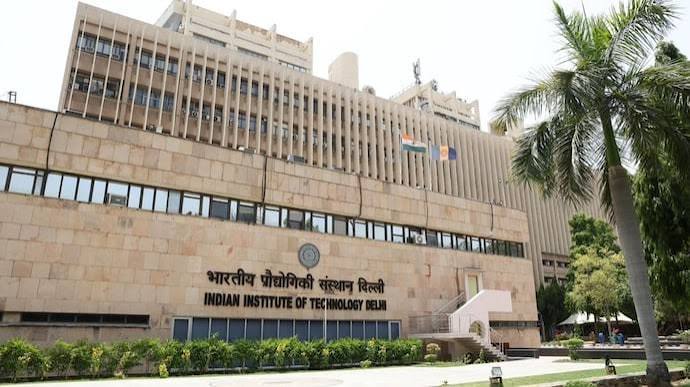
Prime Minister Narendra Modi addressed the IIT Delhi 57th Convocation on August 8, 2026, where 3,036 students received their degrees. During the event, PM Modi inaugurated "Param Pragya," a state-of-the-art AI supercomputer at the Sonipat campus aimed at boosting domestic scientific research, artificial intelligence training, and advanced compute capacity.
NEW DELHI — Prime Minister Narendra Modi addressed the IIT Delhi 57th Convocation on Saturday, August 8, 2026, marking a significant milestone in India’s higher education and advanced computing sectors. Speaking before a gathering of graduating students, faculty, and research scholars, the Prime Minister highlighted the role of youth-led innovation in driving national development and announced major additions to the institute's research infrastructure. The annual graduation ceremony served as a national platform to detail strategic initiatives aimed at strengthening domestic research capabilities in emerging technologies.
During the event, a total of 3,036 students received their academic degrees across undergraduate, postgraduate, and doctoral disciplines. The graduating cohort featured a diverse demographic spectrum, ranging from young Gen Z engineers to a 74-year-old doctoral researcher who completed advanced scholar work in engineering.
Inauguration of Param Pragya Supercomputing Facility
A key highlight of the IIT Delhi 57th Convocation was the formal inauguration of "Param Pragya," an artificial-intelligence-powered high-performance supercomputing facility established at IIT Delhi’s Sonipat campus. Designed to process complex datasets and accelerate research in deep learning, computational biology, climate modeling, and quantum mechanics, the new infrastructure is funded through national technology initiatives.
According to technical specifications released by the institute, Param Pragya integrates high-density GPU clusters engineered specifically for large-scale AI applications. The system is expected to serve researchers across academic institutions, government laboratories, and public sector enterprises, expanding access to high-performance computing resources across northern India.
Institutional Background and Academic Expansion
The IIT Delhi 57th Convocation comes at a time when Indian Institute of Technology campuses are expanding their interdisciplinary academic frameworks. Over the past decade, IIT Delhi has established dedicated centers for atmospheric sciences, biological sciences, public policy, and artificial intelligence, transforming its traditional engineering focus into a broader multi-disciplinary ecosystem.
The institute's Sonipat extension campus in Haryana has increasingly become a hub for high-end experimental facilities and industry-partnered research initiatives. The placement of the Param Pragya system at Sonipat reflects a strategic effort to decentralize core computing infrastructure while linking physical space with suburban educational corridors.
Impact on Students, Industry, and Research Ecosystem
The operationalization of the new supercomputing center directly impacts students and academics by reducing computational turnaround times for scientific simulations. Research scholars who previously relied on external supercomputing networks or limited cloud credits can now run high-throughput algorithms locally.
For industry partners and startup incubators affiliated with IIT Delhi, the facility provides an affordable testing ground for emerging artificial intelligence applications, hardware prototyping, and algorithmic safety validation. Business leaders in the technology sector noted that domestic computing infrastructure helps prevent data localization challenges while encouraging local talent retention.
Official Sources
Information regarding the event, academic statistics, and infrastructure projects was provided through official releases and announcements:
Official Statements
"According to officials from the Prime Minister's Office, the integration of advanced computing tools into educational frameworks remains a cornerstone of the national technology mission."
"Organizers stated that the graduating class of 2026 represents one of the most interdisciplinary cohorts in the history of the institute, with research publications spanning sustainable energy, robotics, and biomedical devices."
Why It Matters
The unveiling of Param Pragya during the IIT Delhi 57th Convocation carries practical implications for India's broader technology policy and computational sovereignty. As demand for artificial intelligence infrastructure grows globally, access to sovereign supercomputing facilities ensures that Indian researchers can train complex models without relying exclusively on overseas cloud infrastructure.
Furthermore, equipping young engineers with hands-on exposure to high-performance compute clusters prepares the domestic workforce for advanced roles in chip design, algorithmic research, and industrial automation.
Key Facts at a Glance
Event: IIT Delhi 57th Convocation held on Saturday, August 8, 2026.
Chief Guest: Prime Minister Narendra Modi.
Graduates Awarded: 3,036 students across undergraduate, master's, and doctoral programs.
Infrastructure Unveiled: "Param Pragya" AI-powered supercomputer at the Sonipat campus.
Demographic Range: Awardees included Gen Z graduates as well as a 74-year-old doctoral scholar.
FAQ Section
Q1: What is the significance of the Param Pragya supercomputer?
Param Pragya is an AI-powered high-performance computing system designed to accelerate scientific research, artificial intelligence training, and data analytics across academic and industrial domains.
Q2: Where is the Param Pragya facility located?
The supercomputer is housed at the extension campus of IIT Delhi located in Sonipat, Haryana.
Q3: How many students graduated during the IIT Delhi 57th Convocation?
A total of 3,036 students completed their degrees and were formally awarded diplomas during the ceremony on August 8, 2026.
Q4: Who can access the computing resources of Param Pragya?
The facility is accessible to IIT Delhi researchers, academic partners, government institutions, and affiliated startup entities requiring high-throughput computational power.
Source: Prime Minister's Office, Indian Institute of Technology Delhi, Ministry of Education