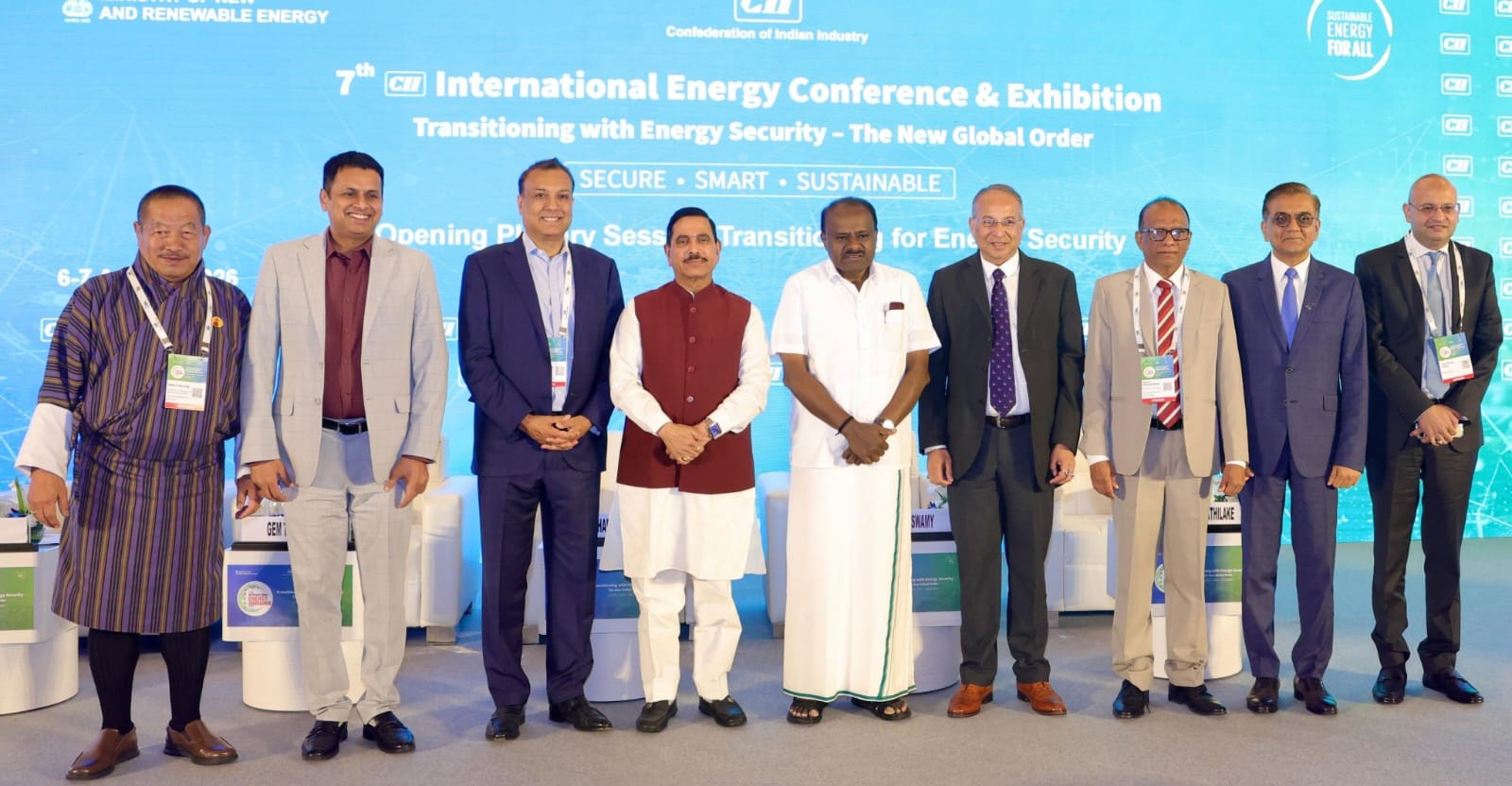
Union Minister H.D. Kumaraswamy announced at the 7th CII International Energy Conference in New Delhi that India must build a robust clean energy manufacturing ecosystem. Supported by ₹36,280 crore in central schemes for batteries, electric vehicles, and magnets, India aims to become a global clean-tech exporter while strengthening national energy security.
NEW DELHI — India must transform into a global manufacturing hub for clean energy technologies rather than remaining a major consumer of imported equipment, Union Minister for Steel and Heavy Industries H.D. Kumaraswamy stated on August 6, 2026. Speaking at the 7th CII International Energy Conference & Exhibition in New Delhi, the minister emphasized that national energy security is no longer determined solely by access to oil and gas resources, but increasingly by a nation's capacity to manufacture, innovate, and secure supply chains for green technology components.
Redefining Energy Security Through Industrial Resilience
Delivering a keynote address at the plenary session on "Energy Security & Supply Chains," Kumaraswamy outlined how global geopolitical shifts, critical mineral competition, and supply chain disruptions have altered the definition of national security. The minister noted that under the Aatmanirbhar Bharat initiative, the government is prioritizing domestic production across key industrial sectors—including steel, battery storage, electric mobility, and power equipment—to reduce external vulnerabilities.
The policy focus comes as expanding renewable power deployment increases national demand for specialized industrial inputs. According to government projections, India’s clean energy transition relies heavily on establishing end-to-end manufacturing capabilities that cover critical mineral processing, equipment assembly, and advanced material production.
Steel as the Backbone of Renewable Infrastructure
Highlighting the fundamental role of heavy industry, Kumaraswamy described steel as a central pillar for the global energy transition. Clean energy infrastructure—including solar mounting structures, wind turbine towers, power transmission lines, battery gigafactories, and green hydrogen plants—requires high-grade, sustainable steel.
As the world’s second-largest steel producer, India is targeting an expansion of its total steelmaking capacity to 300 million tonnes per annum by 2030. The ministry is driving decarbonization efforts within the sector through the adoption of energy-efficient technologies, scrap-based steelmaking, and green hydrogen integration to produce low-carbon steel for domestic and export markets.
Key Central Schemes Driving Clean Tech Manufacturing
To accelerate industrial capacity, the central government is implementing targeted financial incentives totaling over ₹36,280 crore across strategic manufacturing sectors:
PM E-DRIVE Scheme: Allocated ₹10,900 crore to strengthen the domestic electric vehicle manufacturing ecosystem, component supply chains, and public charging infrastructure.
Advanced Chemistry Cell (ACC) PLI Scheme: Outlaid ₹18,100 crore under the Production Linked Incentive framework to establish 50 GWh of local battery cell manufacturing capacity.
Rare Earth Permanent Magnets Scheme: Committed ₹7,280 crore to manufacture sintered rare earth magnets locally, securing supply chains for electric vehicle motors and wind generator turbines.
Official Sources and Policy Disclosures
According to official releases from the Ministry of Heavy Industries and the Confederation of Indian Industry (CII), the central strategy aims to integrate Indian manufacturers into global clean-tech value chains while meeting domestic infrastructure targets.
Public filings and conference disclosures indicate that government agencies are actively partnering with research institutions, financial bodies, and private industrial firms to establish integrated manufacturing parks equipped with dedicated power, logistics, and testing facilities.
Leadership Statement
In his keynote address at the CII International Energy Conference, Union Minister H.D. Kumaraswamy detailed the government's strategic mandate for industrial growth:
"Today, under the visionary leadership of Hon'ble Prime Minister Narendra Modi, India's energy security is no longer defined solely by access to energy resources. It is increasingly determined by our ability to manufacture, innovate and build resilient supply chains for the technologies that will power the future," Kumaraswamy stated. "India should not merely become one of the world's largest consumers of clean energy technologies. India must become one of the world's leading producers of the equipment, materials and technologies that will drive the global energy transition."
Why It Matters to Businesses, Investors, and Consumers
The expansion of domestic clean energy manufacturing creates broader economic and market impacts across multiple sectors:
For Investors and Manufacturers: Multi-billion-dollar incentive structures provide revenue visibility and capital support for establishing large-scale gigafactories and component processing plants in India.
For Domestic Industry: Reduces reliance on imported capital equipment and critical components, insulating local firms from foreign trade barriers and supply disruptions.
For Consumers and Labor: Spurs skilled job creation across engineering, metallurgy, and advanced manufacturing sectors while enabling lower long-term costs for renewable power and electric mobility.
Key Facts at a Glance
Policy Pivot: National energy security policy is shifting focus from fossil fuel import management to domestic clean-tech manufacturing.
Steel Capacity Target: Aiming for 300 million tonnes of national steel production capacity by 2030 with enhanced green steel technologies.
Major Capital Injections: Central schemes allocate ₹10,900 crore for PM E-DRIVE, ₹18,100 crore for ACC batteries, and ₹7,280 crore for rare earth magnets.
Global Hub Goal: Objective is to transform India into an exporter of clean energy capital goods under Aatmanirbhar Bharat.
Frequently Asked Questions (FAQ)
Why is clean energy manufacturing linked to national energy security?
As countries shift away from fossil fuels, economic dependencies shift from crude oil imports to the equipment, hardware, and critical minerals needed to generate, store, and distribute renewable electricity. Domestic manufacturing prevents new import dependencies.
What role does the steel sector play in renewable energy?
Steel provides the primary structural material for solar panel frames, wind turbine towers, electrical transmission grids, battery gigafactories, and electric vehicles. Sustainable steelmaking is necessary to reduce the lifecycle emissions of green infrastructure.
Which central schemes support clean tech manufacturing in India?
Key initiatives include the ₹18,100 crore PLI Scheme for Advanced Chemistry Cell (ACC) Batteries, the ₹10,900 crore PM E-DRIVE Scheme, and targeted capital support for rare earth permanent magnets.
Sources: Ministry of Heavy Industries, Press Information Bureau (PIB)