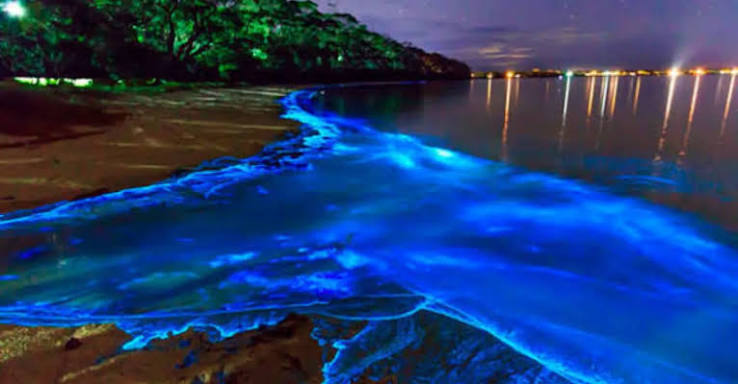
Indian environmental authorities have documented bioluminescent occurrences across seven coastal and forest locations, including Lakshadweep, Goa, Karnataka, and Meghalaya. Driven by marine phytoplankton and specialized forest fungi, these sensitive natural phenomena are now subject to regulated eco-tourism guidelines to protect fragile local ecosystems.
NEW DELHI — Marine biology research institutes and environmental authorities confirmed on August 6, 2026, the seasonal identification of bioluminescence across seven distinct coastal and forest ecosystems in India. According to scientific studies released by marine ecology departments, the naturally occurring phenomenon—driven by dinoflagellates such as Noctiluca scintillans along shorelines and luminescent fungi including Mycena species in humid forest canopies—has drawn increased scientific monitoring. State tourism departments and forest officials across Karnataka, Goa, Lakshadweep, Meghalaya, Odisha, and the Andaman and Nicobar Islands are implementing regulated night-tourism protocols to manage visitor footfall while protecting delicate marine micro-organisms and woodland habitats.
Coastal Phytoplankton and Forest Fungal Sites
According to field assessments published by regional forest departments and marine research centers, seven locations across India regularly exhibit natural glowing conditions after dark under specific environmental parameters:
Bangaram Island, Lakshadweep: High concentrations of bioluminescent phytoplankton in shallow lagoon waters produce blue luminescent displays when disturbed by wave movement or foot traffic.
Mhadei Wildlife Sanctuary, Goa: Humid monsoon conditions trigger bioluminescent Mycena fungi to decompose organic wood along the Western Ghats canopy, generating a soft green glow across the forest floor.
Havelock Island (Swaraj Dweep), Andaman Islands: Estuarine mangrove channels and coastal bays display blue luminescent wakes during nighttime kayaking tours operated under island administration permits.
Mattu Beach, Udupi, Karnataka: Coastal blooms of single-celled dinoflagellates periodically illuminate the shoreline during post-monsoon months.
West Garo Hills, Meghalaya: Research teams documented electric-green glowing bamboo mushrooms (Roridomyces phyllostachydis) growing on decaying bamboo stalks in high-humidity forest reserves.
Betalbatim Beach, South Goa: Lower ambient light levels along South Goa’s coast permit the observation of blue sea sparkles generated by breaking ocean waves.
Bhitarkanika National Park, Odisha: Brackish mangrove estuarine creeks host dinoflagellate activity alongside firefly colonies within protected sanctuary zones.
| Location Category | Primary Region | Causal Microorganism | Optimal Ecological Season |
| Ocean Lagoon | Bangaram Island, Lakshadweep | Noctiluca scintillans (Phytoplankton) | September to February |
| Monsoon Forest | Mhadei Sanctuary, Goa | Mycena species (Bioluminescent Fungi) | July to September |
| Mangrove Estuary | Havelock Island, Andaman | Dinoflagellates | November to February |
| Coastal Shoreline | Mattu Beach, Udupi, Karnataka | Noctiluca scintillans | October to January |
| Bamboo Forest | West Garo Hills, Meghalaya | Roridomyces phyllostachydis | June to September |
Environmental Impact and Visitor Regulations
The rise in public awareness regarding bioluminescent ecosystems has prompted state forest departments and coastal zone management authorities to impose strict operational rules. Environmental impact studies highlight that unchecked beach crowds, artificial flashlights, and plastic waste disrupt micro-organism concentrations and destabilize nocturnal wildlife patterns.
In response, local administrative bodies in Karnataka, Odisha, and the Andaman Islands have introduced regulated group sizing for night tours, banned heavy artificial lighting near shorelines, and required mandatory local eco-guides for forest treks to prevent habitat degradation.
Economic and Ecotourism Significance for Local Communities
Controlled night-tourism around bioluminescent sites provides supplementary seasonal income for coastal communities, boat operators, and certified nature guides. State tourism corporations are partnering with local panchayats to develop sustainable ecotourism models that ensure financial gains directly support community-led conservation funds.
For travelers, researchers, and regional businesses, establishing clear regulatory frameworks balances ecological protection with sustainable scientific tourism.
Official Sources Section
Site documentations, species classifications, and administrative guidelines cited in this report were verified through official publications from the Ministry of Environment, Forest and Climate Change (MoEFCC), scientific notices from the National Institute of Oceanography (NIO), and tourism updates from the Karnataka Tourism Development Corporation.
Official Quote Section
According to official updates from environmental authorities and regional forest offices, strict adherence to site guidelines is mandatory to preserve these sensitive habitats.
According to officials, "Bioluminescence is a biological indicator of healthy marine and forest micro-environments. Managing footfall through guided tours, minimizing light pollution, and enforcing zero-litter policies are necessary steps to protect these delicate ecological sites across Indian shorelines and sanctuaries."
Why It Matters
Regulating access to bioluminescent coastal and forest habitats ensures the long-term preservation of rare ecological processes. Implementing standardized safety protocols and local guide mandates allows eco-tourism to grow sustainably without threatening delicate marine phytoplankton and forest fungal species.
Key Facts at a Glance
Documented Sites: Seven coastal and forest locations in India show recurring bioluminescent activity under specific seasonal conditions.
Biological Drivers: Caused by dinoflagellates in marine waters and specialized luminescent fungi in humid rainforests.
Key Regions: Includes Lakshadweep, Goa, Andaman Islands, Karnataka, Meghalaya, and Odisha.
Regulatory Measures: Forest departments mandate local guides, restricted group sizes, and lighting bans to safeguard habitats.
Frequently Asked Questions (FAQ)
What causes marine and forest bioluminescence in India?
Coastal bioluminescence is caused by single-celled marine phytoplankton (Noctiluca scintillans), while forest glowing is driven by luminescent fungi (Mycena species) decomposing wet timber.
When is the best time to observe bioluminescence on Indian beaches?
Coastal bioluminescence is best observed on moonless nights (new moon phase) between September and March, when wave agitation triggers the blue chemical reaction in marine organisms.
Are visitors allowed to visit these locations freely at night?
Many protected areas, such as Bhitarkanika National Park and Mhadei Wildlife Sanctuary, require official permits and certified forest guides for nighttime entry to protect wildlife habitats.
Where can citizens check environmental guidelines for protected sanctuaries?
Official guidelines and entry rules are published on the portal of the Ministry of Environment, Forest and Climate Change (MoEFCC).
Source: Official publications from the Ministry of Environment, Forest and Climate Change (MoEFCC), research papers from the National Institute of Oceanography (NIO), and tour management notifications from the Karnataka Tourism Development Corporation.