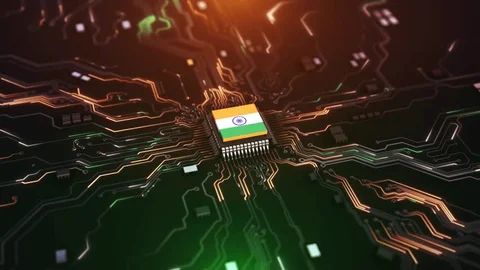
As India observes its 79th Independence Day, the framework of national sovereignty has expanded to encompass artificial intelligence. Driven by the IndiaAI Mission, policymakers and technologists emphasize that control over compute capacity, localized datasets, and indigenous foundation models will ultimately determine the country's long-term technological independence.
As the definition of national independence evolves in the digital age, experts stress that domestic control over compute, data, and models will dictate India's technological sovereignty.
As India celebrated its 79th Independence Day in August 2026, policy analysts and technology leaders noted a profound shift in how national sovereignty is defined. Beyond physical borders and traditional economic institutions, the future of the nation is increasingly tied to the digital architecture of artificial intelligence. According to strategic technology reports released during national briefings, mastering the three pillars of compute, data, and models—collectively framed as the AI tricolour—will determine whether India shapes its own digital destiny or relies entirely on foreign technological infrastructure.
Compute: The Hardware Foundation of National Intelligence
Every major advancement in artificial intelligence ultimately depends on a critical physical constraint: raw computing power. Training sophisticated neural networks requires massive clusters of graphics processing units (GPUs), transforming specialized hardware into vital strategic infrastructure. To prevent domestic researchers and startups from being priced out of advanced development, the Indian government has aggressively scaled up capacity through the IndiaAI Mission.
Key milestones and metrics regarding compute infrastructure include:
Subsidized Access: Under the IndiaAI Compute Capacity framework, 38,231 GPUs have been successfully onboarded from 14 empanelled service providers.
Affordable Pricing: Computational power is made available to eligible domestic users at heavily subsidized rates, averaging roughly ₹65 per GPU per hour.
Data Center Expansion: Total domestic data-centre capacity surged from approximately 375 MW in 2020 to nearly 1,500 MW, reflecting a fourfold expansion driven by robust private investments.
Data and Models: Harnessing Domestic Scale and Indigenous Innovation
Beyond hardware, the second pillar of the AI tricolour relies on data. India’s vast population, multilingual diversity, and unique administrative landscape provide a strategic advantage in curating localized training information. To aggregate these resources, the government established AIKosh, a national repository that by early 2026 had expanded to house over 7,500 datasets and 273 AI models spanning multiple socio-economic sectors.
The third pillar centers on the models themselves. While early generative AI development was dominated by overseas tech conglomerates, Indian enterprises and research labs are actively building native foundation models trained entirely on domestic compute infrastructure. Analysts note that maintaining a balance between homegrown innovation and global collaboration is essential to ensure true technological self-reliance.
Impact on Citizens, Startups, Businesses, and Investors
For Indian entrepreneurs, researchers, and enterprise investors, accessible compute power and localized datasets lower the traditional barriers to entry that once favored Silicon Valley giants. Startups can now train large-scale language models tailored to regional Indian languages, agricultural needs, and financial inclusion frameworks. For citizens, this translates into safer digital public goods, localized AI applications, and a resilient national economy less vulnerable to foreign supply chain disruptions.
Why It Matters
As artificial intelligence dictates global economic productivity, nations that lack domestic control over core AI components risk digital dependency. Securing the AI tricolour ensures that India remains a primary architect of its technological future rather than a passive consumer.
Key Facts at a Glance
Strategic Framework: The "AI Tricolour" consisting of compute, data, and models.
Nodal Program: IndiaAI Mission, backed by a significant multi-crore central outlay.
Compute Milestone: Over 38,231 GPUs onboarded across 14 empanelled providers.
Data Repository: AIKosh housing more than 7,500 datasets and 273 AI models.
FAQ Section
What is meant by the "AI Tricolour" in the context of India's sovereignty?
The term refers to the three essential pillars of artificial intelligence—compute, data, and models—which experts argue will dictate a nation's technological independence in the digital era.
How is the Indian government supporting domestic AI computing infrastructure?
Through the IndiaAI Mission, the government has onboarded over 38,000 GPUs from empanelled providers, offering them to eligible researchers and startups at subsidized hourly rates.
What role does the AIKosh repository play in national AI development?
AIKosh serves as a centralized national data repository bringing together thousands of datasets and models from government and non-government sources to reflect local Indian contexts and languages.
Where can researchers and stakeholders review official updates on the IndiaAI Mission?
Comprehensive policy documents and implementation updates are publicly accessible via the Ministry of Electronics and Information Technology (MeitY) Portal and Press Information Bureau (PIB) Releases.
Source: Ministry of Electronics and Information Technology (MeitY) Portal, Press Information Bureau (PIB) Releases, Exchange4media Technology Desk, Invest India AI Initiatives Repository