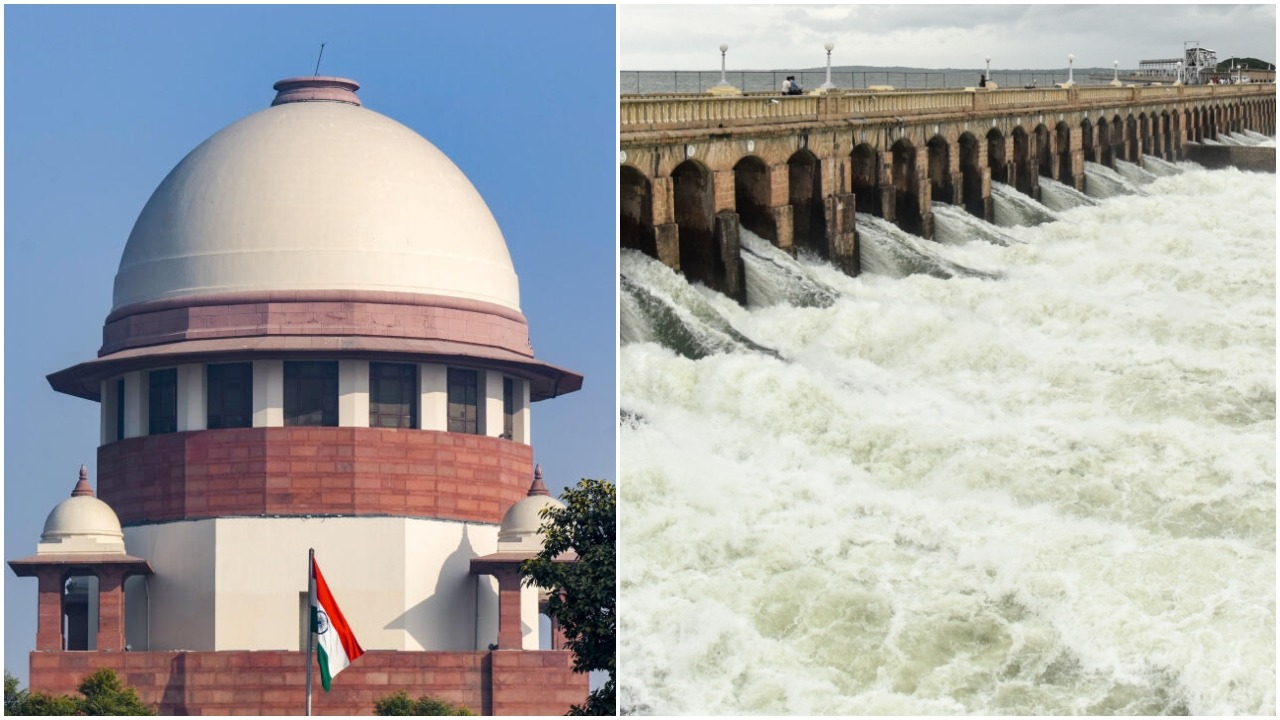
The Supreme Court is set to hear Tamil Nadu’s plea directing Karnataka to release its mandated share of Cauvery water. While Tamil Nadu emphasizes critical agricultural needs in a rain-deficient cycle, Karnataka cites severe El Niño-driven inflow deficits, framing a tense legal test for inter-state water management.
The Supreme Court will hear Tamil Nadu's petition seeking directions for Karnataka to release its due share of Cauvery water amid an ongoing dispute over distress-year allocations.
The Supreme Court of India is scheduled to hear a crucial plea filed by the Tamil Nadu government demanding directions for the neighboring state of Karnataka to immediately release its entitled share of Cauvery water. The legal proceedings, listed before a bench comprising Justices Vikram Nath and Sandeep Mehta, come amid heightened tensions over agricultural irrigation schedules and deficient monsoon inflows across the Cauvery river basin. The development is critical today as lower riparian agrarian communities face severe water deficits for seasonal crop preparations.
Legal Contentions and Reservoir Inflows
According to court filings and official petitions, Tamil Nadu approached the apex court alleging that Karnataka has failed to release adequate water volumes stipulated under regulatory frameworks. The state's legal representatives argue that despite storage availability in major upstream reservoirs such as Krishna Raja Sagara (KRS) and Kabini, the realized flows at the inter-state Biligundulu border fell significantly short of allocations mandated by the Cauvery Water Management Authority (CWMA) and the Cauvery Water Regulation Committee (CWRC).
Conversely, Karnataka has contested the directives, submitting through legal filings that the 2026-27 water year has experienced severe distress driven by El Niño weather patterns and rising Pacific Ocean temperatures. Karnataka officials maintain that reservoir inflows have dropped substantially, restricting the state's capacity to maintain normal discharge quotas while prioritizing local drinking water and basic environmental needs.
Impact on Regional Agriculture and Stakeholders
The ongoing inter-state water dispute carries direct economic and operational consequences for multiple sectors:
Farmers and Agriculturists: Cultivators in the Cauvery Delta region rely heavily on steady reservoir releases to sustain the Kuruvai paddy crop and prepare fields for the upcoming Samba season.
State Administrations: Both governments remain under intense political pressure from regional parties and farming unions to protect local agrarian livelihoods.
Consumers and Municipalities: Urban and rural settlements dependent on the river basin face potential drinking water rationing if dry conditions persist through the monsoon cycle.
Official Sources and Regulatory Frameworks
According to official announcements and regulatory filings submitted by the riparian states, supervisory bodies continue to evaluate basin-wide hydrometeorological data. The CWMA and CWRC previously reviewed the distress-sharing formula and issued periodic directives to manage the deficit.
"The Supreme Court will examine the competing submissions regarding water sharing and compliance with regulatory directives during Monday's hearing," stated court administrative listings and official case documents.
Why It Matters
The Supreme Court's handling of the Cauvery water dispute sets critical precedents for cooperative federalism and the judicial enforcement of river water allocation awards in India. For farmers, investors, and policymakers, the court's interpretation of distress-sharing formulas during climate anomalies determines the legal security of seasonal food production and inter-state resource management across southern India.
Key Facts at a Glance
Legal Forum: The matter is being heard by a Supreme Court bench comprising Justices Vikram Nath and Sandeep Mehta.
Core Dispute: Tamil Nadu seeks judicial enforcement of water release orders, citing shortfalls at the inter-state Biligundulu border.
Climate Factors: Karnataka attributes lower river flows to a rain-deficient water year and adverse El Niño conditions impacting basin inflows.
Regulatory Bodies: Oversight is maintained via the Cauvery Water Management Authority (CWMA) and the Cauvery Water Regulation Committee (CWRC).
Frequently Asked Questions (FAQ)
What is the primary issue in the current Cauvery water dispute?
Tamil Nadu has petitioned the Supreme Court alleging that Karnataka has failed to release adequate Cauvery river water as mandated by regulatory authorities during a rain-deficient agricultural season.
What role do the CWMA and CWRC play?
The Cauvery Water Management Authority (CWMA) and the Cauvery Water Regulation Committee (CWRC) monitor basin storage levels, assess rainfall data, and issue binding quantum release recommendations to the riparian states.
Why is Karnataka resisting the release of higher water volumes?
Karnataka cites severe rainfall deficits, reduced storage inflows into its four major reservoirs, and the need to preserve water for local drinking and environmental requirements under distress conditions.
Where is inter-state water flow measured?
Water flow and compliance with regulatory orders are officially measured at the Biligundulu inter-state gauge station.
Source: Supreme Court of India Cause Lists, Cauvery Water Management Authority (CWMA) Filings, The Supreme Court Records