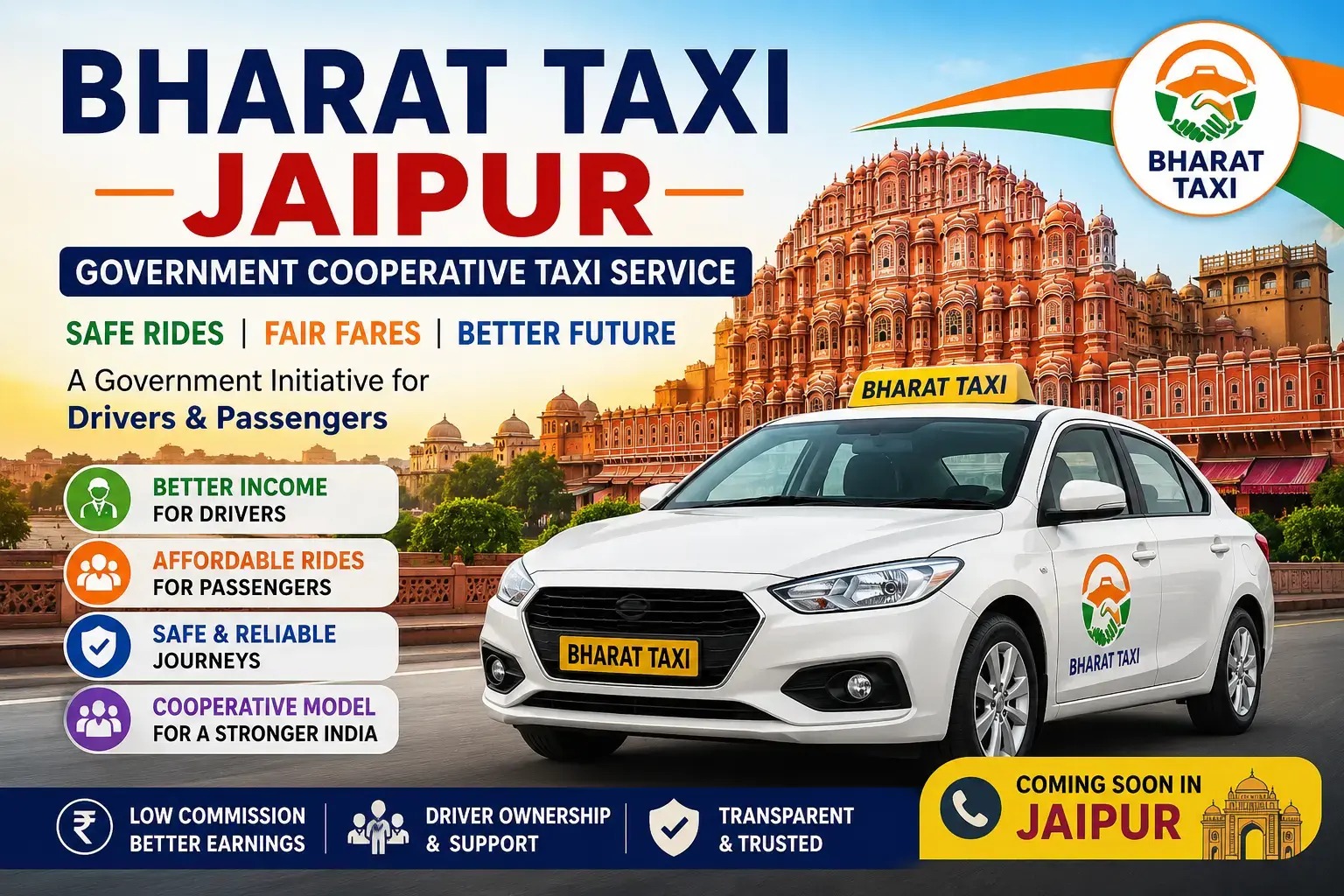
Rajasthan Chief Minister Bhajanlal Sharma inaugurated the cooperative-backed Bharat Taxi service in Jaipur, deploying an initial fleet of 100 vehicles including cabs, bikes, and autos. Operating under a cooperative model, the initiative aims to eliminate high aggregator commissions, boost driver earnings, and provide reliable public transit.
Rajasthan Launches Bharat Taxi Service in Jaipur With Fleet
Rajasthan Chief Minister Bhajanlal Sharma inaugurated the cooperative-backed Bharat Taxi service in Jaipur, deploying an initial fleet of 100 vehicles to boost employment and public mobility.
Jaipur Rolls Out Cooperative Mobility Model
In an effort to transform the urban transportation landscape, Rajasthan Chief Minister Bhajanlal Sharma officially launched the Bharat Taxi service in Jaipur on Saturday, July 25, 2026. The launch event, held at the Harish Chandra Mathur Rajasthan State Institute of Public Administration (HCM RIPA), marked a significant shift toward cooperative-driven ride-hailing models in the state. During the inaugural ceremony, the Chief Minister flagged off an initial fleet comprising 60 cabs, 20 bikes, and 20 autos, creating a multi-modal transport network designed to serve daily commuters and tourists alike.
The rollout aligns with the broader national vision of "Sahakar Se Samriddhi" (Prosperity through Cooperation), championed by Union Minister of Home Affairs and Minister of Cooperation Amit Shah. State officials noted that the initiative seeks to eliminate heavy aggregator commissions, returning higher earnings directly to drivers—locally referred to as "Sarathis"—while ensuring transparent pricing structures for everyday passengers.
Expanding Public Transit and Regional Connectivity
The deployment of Bharat Taxi in the capital city represents the first phase of a broader regional expansion strategy. According to state administrative plans, the service will gradually scale across other major urban centers and key tourism destinations in Rajasthan through active partnerships with cooperative institutions, local bodies, and public service organizations.
By incorporating two-wheelers and auto-rickshaws alongside traditional four-wheeler cabs, the cooperative framework caters to varying commuter budgets and addresses last-mile connectivity gaps inherent in urban transit networks. The model emphasizes driver ownership, ensuring that local transport operators retain operational control and financial security without facing the predatory fee structures often imposed by private venture-backed aggregators.
Impact on Citizens, Drivers, and Urban Commuters
The introduction of this state-backed transport initiative carries distinct implications across multiple demographic segments:
Local Drivers ("Sarathis"): Drivers benefit from a cooperative enterprise structure that minimizes intermediary cuts, leading to improved daily earnings and enhanced job security.
Urban Commuters: Residents gain access to reliable, transparently priced transit options across multiple vehicle formats, reducing daily commuting friction.
Tourists and Travelers: Visitors exploring Jaipur's heritage sites receive a secure, standardized booking alternative backed by government oversight.
Local Economy: The cooperative framework fosters regional self-reliance and generates structured employment opportunities within the transport sector.
Official Sources and Institutional Backing
According to official government releases from the Press Information Bureau (PIB) and statements issued by the Government of Rajasthan, the initiative is a cornerstone project designed to institutionalize fairness within the gig-economy transport sector.
"Organizers stated that Bharat Taxi would emerge as an outstanding model of cooperative enterprise, giving new direction to self-reliance, transparency, and employment generation in the transport sector."
Why It Matters
The rollout of a cooperative ride-hailing alternative addresses long-standing complaints regarding opaque surge pricing and high commission fees typical of commercial aggregator apps. By establishing a state-supported framework, Rajasthan provides a viable template for other states seeking to protect driver livelihoods while ensuring equitable, affordable, and safe mobility options for the general public.
Key Facts at a Glance
Launch Date: July 25, 2026.
Initial Fleet Size: 100 vehicles total, comprising 60 cabs, 20 bikes, and 20 autos.
Venue: Harish Chandra Mathur Rajasthan State Institute of Public Administration (HCM RIPA), Jaipur.
Guiding Framework: Inspired by the national "Sahakar Se Samriddhi" initiative under the Ministry of Cooperation.
Frequently Asked Questions (FAQ)
What is the Bharat Taxi service launched in Rajasthan?
Bharat Taxi is a government-backed, driver-owned cooperative ride-hailing service designed to provide transparent, commission-fair transport options across cabs, bikes, and auto-rickshaws.
Who inaugurated the Bharat Taxi service in Jaipur?
The service was officially inaugurated and flagged off by Rajasthan Chief Minister Bhajanlal Sharma at an event in Jaipur.
How does Bharat Taxi benefit local drivers?
By operating on a cooperative framework rather than a traditional corporate aggregator model, drivers retain a much higher share of their earnings and avoid exploitative commission structures.
Will the service expand beyond Jaipur?
Yes, state officials confirmed that the service will be expanded in a phased manner to other major cities and tourism hotspots throughout Rajasthan.
Source: Press Information Bureau (PIB), Government of Rajasthan Official Releases, and State Information Department Bulletins.